






Definition & Meaning
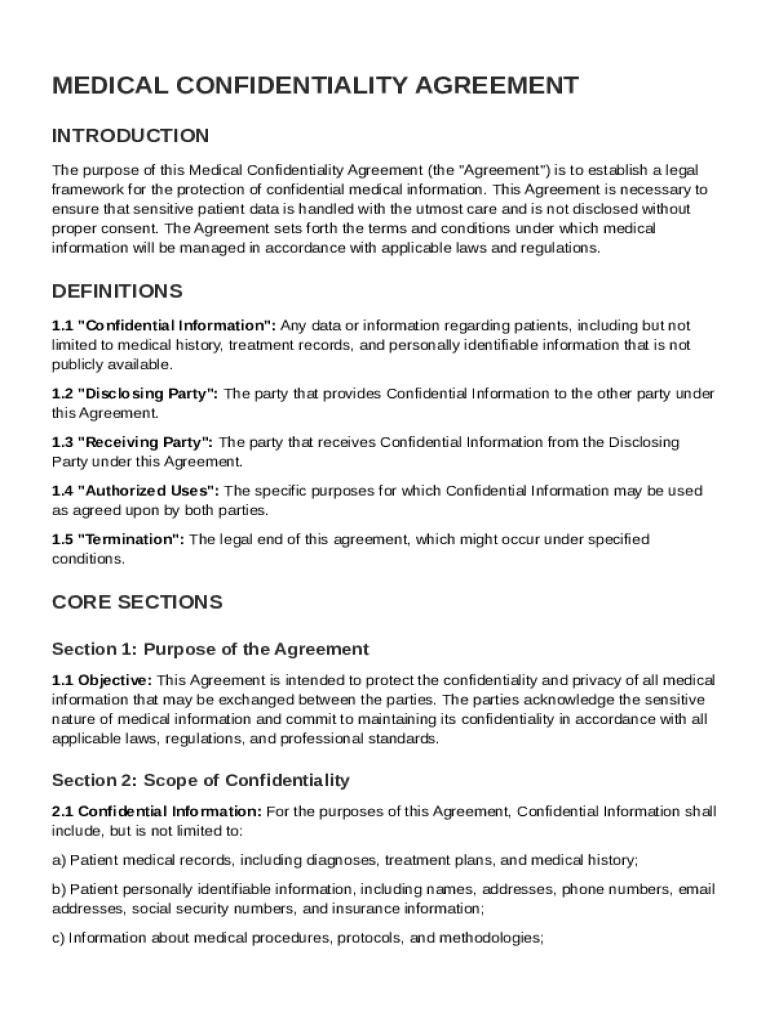
A Medical Confidentiality Agreement Template is a legally binding document designed to protect sensitive patient information. It ensures that any disclosed medical data is handled with care and not shared without the express consent of the involved parties. This template outlines the duties of both the Disclosing and Receiving Parties in maintaining confidentiality, including the conditions under which information may be disclosed. It is an essential tool for healthcare providers, legal professionals, and organizations involved in patient care, as it helps safeguard patient privacy in alignment with applicable laws, such as the Health Insurance Portability and Accountability Act (HIPAA).
Key Elements of the Medical Confidentiality Agreement Template
The Medical Confidentiality Agreement Template typically includes several critical elements to ensure comprehensive coverage of confidentiality obligations:
-
Parties Involved: Identifies the Disclosing Party (usually the healthcare provider) and the Receiving Party (could be an individual or organization receiving the patient information).
-
Scope of Confidentiality: Describes the types of information covered under the agreement, such as medical records, test results, and personal data.
-
Obligations of Parties: Details the responsibilities of both parties in maintaining confidentiality, including ensuring secure storage and restricted access to sensitive information.
-
Permissible Disclosures: Specifies conditions under which the information may be disclosed, such as legal requirements or patient consent.
-
Duration and Termination: Defines the time frame for which the confidentiality agreement is effective and the circumstances under which it can be terminated.
-
Governing Law: Indicates the legal jurisdiction governing the agreement, which is essential for dispute resolution.
How to Use the Medical Confidentiality Agreement Template
Using a Medical Confidentiality Agreement Template involves several important steps to ensure its effectiveness:
-
Identify Parties: Clearly specify the Disclosing and Receiving Parties involved in the agreement.
-
Customize Terms: Tailor the template to include specific terms and conditions relevant to the parties' relationship and the type of information being protected.
-
Review Legal Compliance: Ensure the agreement complies with federal and state regulations, such as HIPAA, governing patient data confidentiality.
-
Secure Signatures: Obtain signatures from all parties to signify their agreement to the terms, making the document legally binding.
-
Safeguard the Document: Store the signed agreement securely, either digitally or in hard copy, to maintain its integrity and availability for future reference.
Who Typically Uses the Medical Confidentiality Agreement Template
The Medical Confidentiality Agreement Template is utilized by a diverse group of professionals and organizations, primarily in the healthcare and legal fields:
-
Healthcare Providers: Including hospitals, clinics, and private practices, to protect patient data shared with employees or third parties.
-
Legal Professionals: Such as attorneys who need to access medical information for legal cases or consultations.
-
Insurance Companies: When they require medical data to process claims and need to ensure confidentiality is upheld.
-
Research Institutions: Engaging in clinical studies that require access to patient information while maintaining participant confidentiality.
-
Healthcare IT Providers: Offering information systems that store or transmit sensitive medical data.


Legal Use of the Medical Confidentiality Agreement Template
The Medical Confidentiality Agreement Template serves a crucial role in legal contexts by:
-
Protecting Patient Rights: Upholding individuals' rights to privacy regarding their medical information.
-
Mitigating Legal Risks: By providing a clear framework for handling confidential data, it reduces the risk of unauthorized disclosures that could lead to legal penalties or lawsuits.
-
Facilitating Trust: Establishes trust between healthcare providers and patients by demonstrating a commitment to safeguarding personal information.
-
Ensuring Compliance: Helps align practices with HIPAA and other legal requirements, which is crucial for avoiding regulatory fines.
Important Terms Related to the Medical Confidentiality Agreement Template
Understanding the following key terms is essential for correctly utilizing the Medical Confidentiality Agreement Template:
-
Confidential Information: Any data or information deemed sensitive and protected under the agreement.
-
Disclosure: The act of releasing, transferring, or providing access to confidential information.
-
Consent: The formal approval of a patient or individual allowing their information to be shared under certain conditions.
-
Breach: Occurs when there is an unauthorized access or disclosure of confidential information, violating the terms of the agreement.
-
Audit Trail: A record of who accessed the confidential information, when it was accessed, and what actions were performed.
Steps to Complete the Medical Confidentiality Agreement Template
Completing the Medical Confidentiality Agreement Template involves the following procedural steps:
-
Preparation: Gather all necessary information about the parties involved and the scope of confidentiality required.
-
Drafting: Fill in the template with specific details such as names, roles, and the type of confidential information covered.
-
Review: Have all parties review the agreement to ensure all terms are understood and agreed upon.
-
Legal Consultation: Consider having the agreement reviewed by a legal professional to ensure it meets all regulatory requirements and adequately protects the parties involved.
-
Finalization: Secure signatures from all parties and provide each party with a copy of the final, signed document for their records.
State-Specific Rules for the Medical Confidentiality Agreement Template
While the Medical Confidentiality Agreement Template offers a general framework, certain state-specific rules must be considered:
-
Varied Privacy Laws: Different states may have unique privacy laws that affect how patient information is handled and disclosed.
-
Additional Consent Requirements: Some states may require additional consent forms or notifications for specific types of data, such as mental health or substance abuse records.
-
Breach Notification: States may have different requirements for notifying affected parties in the event of a data breach. Ensure that these local requirements are integrated into the template.