Definition and Meaning of Management Agreement Template
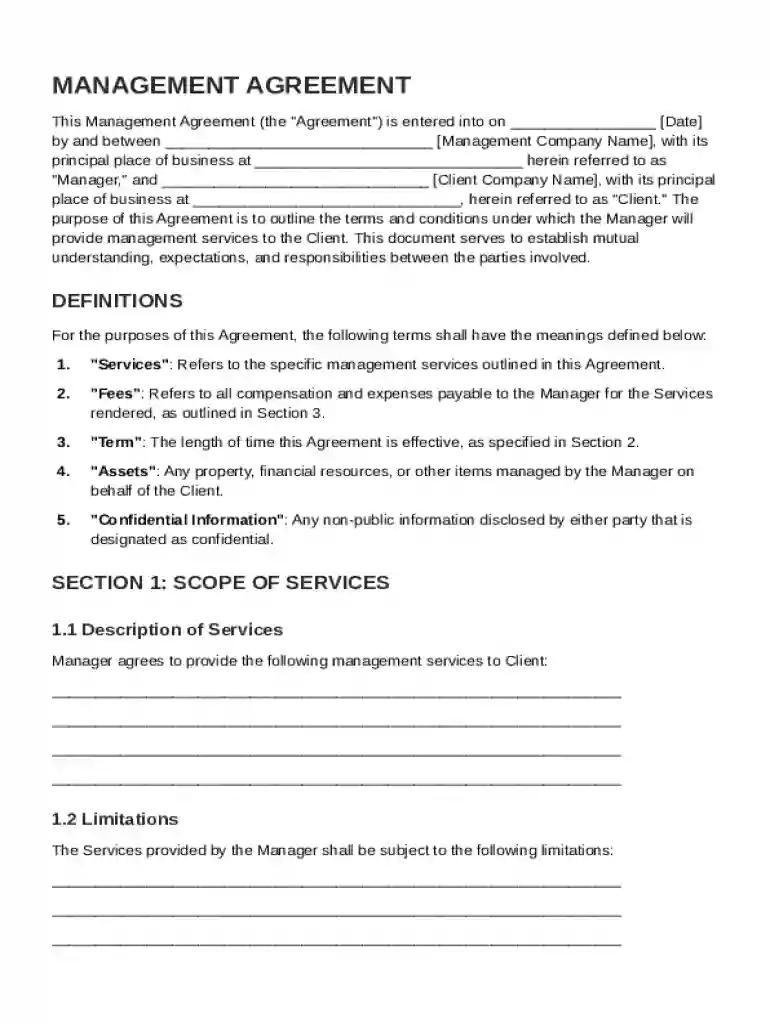
The Management Agreement Template provides a framework for outlining the terms and responsibilities between a Management Company (Manager) and a Client Company. This document serves as a legally binding contract that specifies the services to be performed, the compensation for said services, roles of the parties involved, and various legal provisions like confidentiality and dispute resolution.
Key Components of the Template
- Scope of Services: Defines the range and types of management services the Manager will provide to the Client.
- Compensation: Details how the Manager will be compensated, including rates, payment schedules, and any performance-based incentives.
- Responsibilities: Clarifies the duties and obligations each party has under the agreement, ensuring both have a mutual understanding of expectations.
- Confidentiality: Establishes the requirement to protect sensitive information shared during the contract period.
- Indemnification & Liability: Outlines provisions for protecting each party against third-party claims and limits their liability.
- Dispute Resolution: Provides methods for resolving any disputes that arise, often specifying methods like mediation or arbitration.
How to Use the Management Agreement Template
Utilizing the Management Agreement Template involves several key steps that ensure both parties are clear on the terms of the agreement and compliant with legal requirements.
Step-by-Step Instructions
- Review the Template: Both parties should thoroughly review the template to understand each clause and its implications.
- Customize Terms: Modify the template to include specific service details, unique compensation arrangements, and any supplementary clauses necessary for your business context.
- Legal Review: It is advisable to have a legal professional review the modified template to ensure compliance with federal and state regulations.
- Sign and Store Securely: Both parties should sign the agreement electronically or on paper, maintaining a copy for records and future reference.
How to Obtain the Management Agreement Template
Acquiring a Management Agreement Template is straightforward, with multiple avenues available for obtaining this essential legal document.
Sources for Obtaining the Template
- Online Platforms: Websites like dochub.com offer downloadable templates that can be accessed through a simple search or form request.
- Legal Service Providers: Many law firms and legal service websites offer templates as part of their service packages, either for free or at a nominal cost.
- Business Consultants: Consulting firms catering to businesses often provide contractual templates as a part of their advisory services.
Key Elements of the Management Agreement Template
The Management Agreement Template's effectiveness lies in covering comprehensive elements essential for a successful management relationship.
Essential Elements
- Introduction Section: Contains the date, identification of parties, and an overview of the purpose of the agreement.
- Services Description: Details the specific management services to be provided, ensuring there is no ambiguity in what is expected.
- Financial Arrangements: Includes fee structures, billing cycles, and payment methods. Clear financial terms help prevent future disputes over payment.
- Duration and Termination: Specifies contract length and conditions under which the agreement can be terminated by either party.
- Compliance and Legal Requirements: Ensures the agreement aligns with any industry-specific regulations and legal standards.
Legal Use of the Management Agreement Template
Understanding the legal framework surrounding the Management Agreement Template is crucial for maintaining enforceability and compliance.
Legal Considerations
- Binding Nature: Once signed, the agreement is legally binding, meaning failure to comply can result in legal action.
- State Law Variances: Terms might need adjustments based on state-specific contract laws; consulting a local attorney can provide guidance.
- Electronic Signatures: Platforms like DocHub allow for legally binding electronic signatures conforming to U.S. legislation like the ESIGN Act.
Examples of Using the Management Agreement Template
Real-world scenarios often provide valuable insight into how the Management Agreement Template can be effectively utilized.
Practical Applications
- Consultancy Services: Small to medium enterprises hiring management consultants to streamline operations can use the template to formalize the engagement.
- Property Management: Real estate companies frequently use management agreements to clarify the scope of services provided by property managers to property owners.
- Event Management: Organizers cement relationships with management professionals for events to delineate service expectations and performance markers.
State-Specific Rules for the Management Agreement Template
While the Management Agreement Template has universal elements, state-specific laws may require modifications for compliance.
Considerations for State Differences
- Governing Law Clauses: Specify which state's law will apply in contract interpretations to reduce legal ambiguity.
- Professional Licensure: In some states, management activities might require specific licenses or certifications. Adjustments to compliance language may be necessary.
- Dispute Forums: Some state laws prefer or mandate specific forums for dispute resolution, such as local arbitration centers.
Business Types That Benefit Most from Management Agreement Template
Certain business entities can benefit more significantly from using a Management Agreement Template due to their operational nature.
High-Utility Business Types
- LLCs and Corporations: These entities often outsource management services to operate efficiently while focusing on core business goals.
- Startups: New businesses might use management agreements to structure their operations management without incurring the burden of full-time staff.
- Franchises: As franchises grow, management agreements help maintain consistent service quality across locations by clarifying roles and responsibilities.