




01. Edit your form online
Type text, add images, blackout confidential details, add comments, highlights and more.

Type text, add images, blackout confidential details, add comments, highlights and more.

Draw your signature, type it, upload its image, or use your mobile device as a signature pad.

Send it via email, link, or fax. You can also download it, export it or print it out.
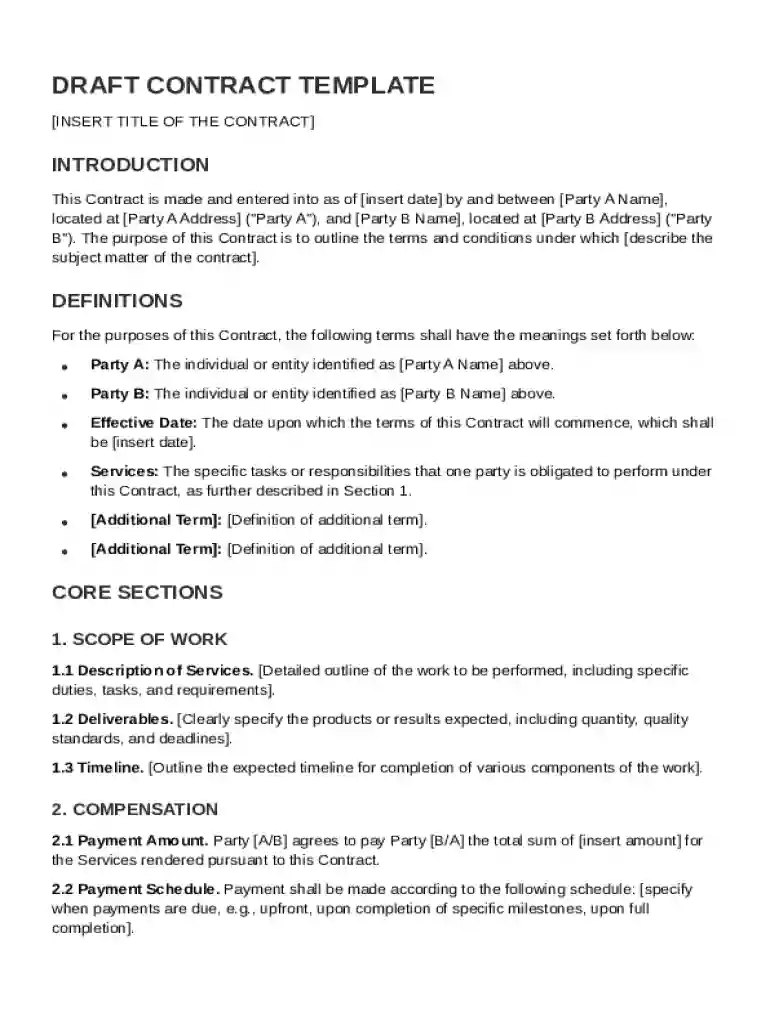
A draft contract template is a preliminary document that establishes the framework for an agreement between two parties. This template typically includes placeholders for important terms and conditions, such as parties' names, scope of work, compensation, and confidentiality clauses. It is designed to streamline the process of drafting legally binding agreements, allowing parties to modify specific sections to suit their needs while adhering to a standard format. The use of a draft contract template is particularly beneficial for ensuring consistency and reducing the time required to create agreements from scratch.
Draft contract templates consist of several crucial components that detail the terms of engagement between parties. These elements often include:
Parties Involved: Identification of the parties who are entering the agreement, typically referred to as Party A and Party B. This section ensures that there is no ambiguity about who is involved.
Scope of Work: A detailed description of the work or service that is to be delivered by one or both parties. This section often includes deliverables, timelines, and any specific tasks that must be completed.
Compensation and Payment Terms: Outlines how and when payment will be made. This includes the amount, frequency, and any conditions under which payments are disbursed.
Duration and Termination: Specifies the length of the contract and the conditions under which the contract can be terminated by either party.
Confidentiality: A clause ensuring that sensitive information shared between parties remains private and is not disclosed to third parties without consent.
Dispute Resolution: Guidelines for how disputes will be managed, potentially outlining mediation or arbitration procedures.
Using a draft contract template involves a series of steps to customize the document to the specific needs of the transaction or relationship:
Select a Template: Choose a draft contract template that closely resembles the desired agreement.
Customize Fields: Fill in the placeholders with specific information relevant to your agreement. This includes names of the parties, specific terms of the work, payment details, and deadlines.
Review Clauses: Carefully review each clause to ensure they are applicable and fair to both parties involved in the contract.
Seek Legal Review: It’s advisable to have a legal professional review the draft for compliance with applicable laws and regulations.
Finalize and Sign: Once the template is customized and reviewed, both parties can sign the contract, making it a legally binding document.
Completing a draft contract template requires attention to detail and precise information. The following steps can guide users through this process:
Gather Information: Before starting the template, gather all relevant information including party details, payment terms, and scope of work.
Fill In Basic Details: Begin by filling in the basic details such as names, addresses, and contact information for all parties involved.
Define Scope and Terms: Clearly outline the purpose of the contract, the responsibilities of each party, and the timeline for completion.
Set Payment Conditions: Specify how payments will be made, including any advance payments or payment milestones linked to work completion.
Insert Clauses: Include necessary clauses regarding confidentiality, dispute resolution, and termination conditions.
Review and Modify: Thoroughly review the filled template, making any necessary adjustments to best fit the needs of the agreement.
Finalize: Once reviewed and agreed upon, both parties should sign the document.
Draft contract templates are legally significant documents used to establish formal agreements and are recognized by law. The legal use involves:
Compliance with Laws: Ensuring that the contract complies with relevant local, state, and federal laws, which may vary.
Binding Nature: Once signed by both parties, these documents become legally binding, obligating the parties to adhere to their terms.
Enforceability: The presence of a signed contract provides the basis for legal enforcement if one party fails to meet the terms of the agreement.
Understanding the terminology used in draft contracts is essential for effective use:
Indemnity Clause: Protects one party from liability due to the acts of the other party.
Force Majeure: Refers to clauses that free both parties from liability or obligation when an extraordinary event occurs.
Breach of Contract: Defines activities that constitute a violation of the agreement terms, potentially leading to legal actions.
Amendments: Represents changes made to the contract after execution, requiring agreement from both parties.
Draft contract templates are widely used across various industries and by numerous professionals:
Business Owners: For establishing terms with suppliers, contractors, and service providers.
Freelancers and Consultants: To formalize service agreements with clients, ensuring clear definitions of scope and payment.
Legal Professionals: Utilize templates as a starting point for drafting customized contracts tailored to specific client needs.
Corporations: Use templates to standardize contracts across departments and ensure consistency in business dealings.


Draft contracts must be in compliance with state-specific laws, including:
Contractual Age: Ensuring parties are of legal age to enter contracts, which can vary from state to state.
Statutes of Limitations: Vary across states concerning how long a party has to initiate legal proceedings for breach of contract.
Governing Law: Contracts often specify which state's laws will govern the terms, critical in multi-state agreements.
This extensive coverage offers comprehensive guidance on using draft contract templates effectively, ensuring legal compliance and facilitating smooth contractual processes.
At DocHub, your data security is our priority. We follow HIPAA, SOC2, GDPR, and other standards, so you can work on your documents with confidence.

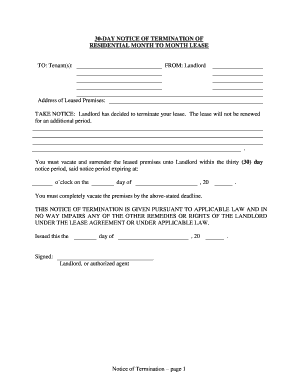

Master Templates are appropriate for Vendors who will have multiple projects in the future for which the full scope of work cannot be not fully determined
This guide provides the conventions for writing the Federal Acquisition. Regulation (FAR). The guide addresses guidelines for clear writing; structure and.
The headings and subheadings in this Contract are for convenience, do not form a part of this Contract, and shall not be used in construing this Contract.


