
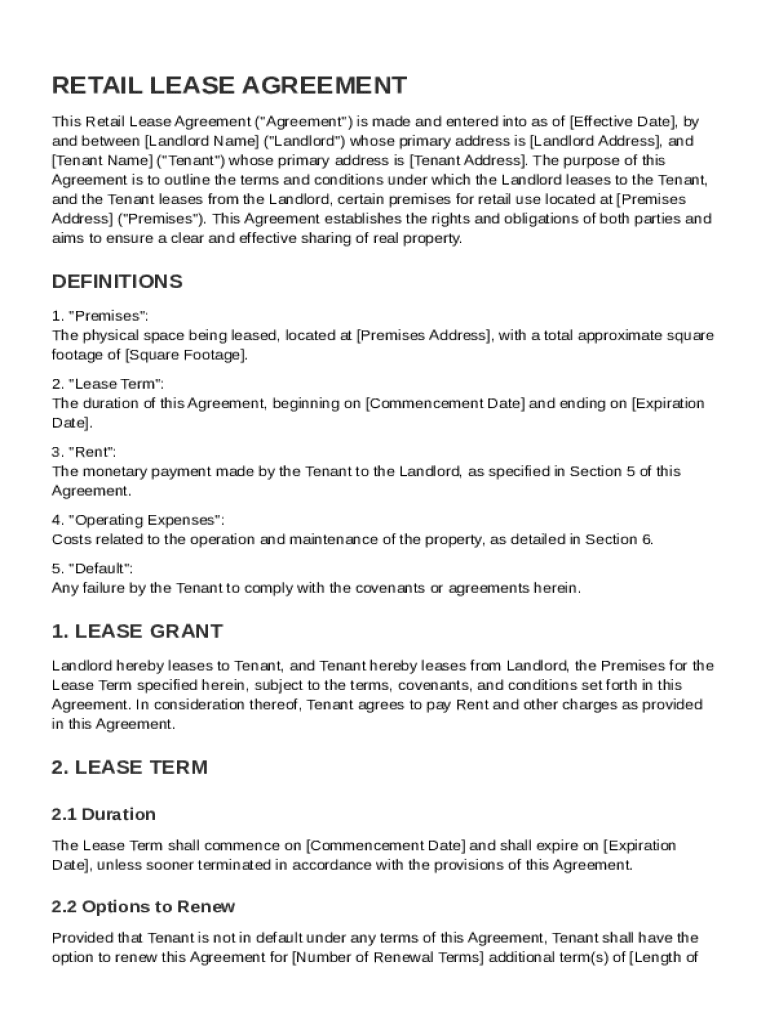







Definition & Purpose of Retail Lease Agreement Template
A Retail Lease Agreement Template is a standardized document used to formalize the leasing arrangement between a landlord and a tenant for retail premises. This template outlines crucial terms such as the duration of the lease, the rental payment structure, and other pertinent conditions necessary for both parties to have a clear understanding and agreement. It serves as a vital tool for ensuring the rights and responsibilities of both the landlord and tenant are clearly defined, minimizing disputes and fostering a strong business relationship.
Examples of what this document typically covers include the lease term, which specifies the duration for which the tenant will occupy the space, and the rent payment structure, including any escalation clauses or conditions under which rent adjustments may occur. Additionally, it details the specific maintenance responsibilities for both parties and outlines procedures for handling defaults and termination.
Key Elements of the Retail Lease Agreement Template
- Lease Duration: Specifies the term length, start and end dates, and any renewal options.
- Rent Payment Structure: Details the amount of rent, payment due dates, and any adjustments or escalations.
- Security Deposit: Outlines the amount, conditions for its return, and any use cases.
- Operating Expenses: Identifies costs associated with the premises and establishes which are tenant obligations.
- Permitted Uses: Defines acceptable business activities and restrictions.
- Maintenance and Repairs: Allocates responsibilities between landlord and tenant for maintaining the premises.
- Insurance Requirements: Specifies necessary insurance coverage for both landlord and tenant.
- Indemnification Clauses: Stipulates which liabilities each party will cover.
These elements are critical to ensuring a comprehensive understanding between both parties and assisting in the smooth operation of the tenancy.
Legal Use and Compliance
The Retail Lease Agreement Template is designed to comply with legal standards, ensuring that all included clauses are enforceable in a court of law. It's crafted to align with the Uniform Commercial Code and other relevant state statutes governing commercial leases. Legal compliance is critical as it protects both parties against potential disputes and litigations that may arise from unclear terms or non-compliance with legal requirements.
For example, the indemnification clause protects the landlord against liabilities that may arise from the tenant's activities on the premises, while the insurance obligations ensure both parties are adequately covered against potential damages or losses.
Steps to Complete the Retail Lease Agreement Template
- Gather Necessary Information: Collect details about the landlord, tenant, and the property.
- Input Lease Terms: Specify the duration, start/end dates, and rental terms.
- Define Financial Obligations: Enter details regarding rent, security deposits, and any other financial obligations.
- Outline Responsibilities: Clearly allocate maintenance and repair responsibilities.
- Include Legal Clauses: Use the template to ensure all legal clauses are accurately addressed.
- Review and Adjust: Reassess all terms to ensure accuracy and mutually beneficial conditions.
- Signatures: Ensure both parties sign the document to make it legally binding.
Each step requires careful input to ensure that the agreement is comprehensive and accurately reflects the interests of all parties involved.
Important Terms in the Retail Lease Agreement Template
- Gross Lease vs. Net Lease: Understanding the differences is essential. A gross lease includes most expenses within the rent, while a net lease separates them.
- CAM Charges: Common Area Maintenance charges may be shared among tenants, and clarity is crucial for budgeting purposes.
- Escalation Clause: Ensures all parties are aware of any potential rent increases over the lease term.
These terms are pivotal to understanding the financial and legal implications of the lease agreement.
How to Obtain the Retail Lease Agreement Template
Typically, the template can be accessed via online legal service platforms or directly from legal professionals who specialize in commercial leases. Many landlords and business owners find templates available from commercial real estate associations, which ensure they are compliant with regional and national law.
Obtaining a template from DocHub simplifies the process, providing ready access to a customizable and legally vetted document, ensuring all standard clauses are in place while offering flexibility for specific customizations.
Who Typically Uses the Retail Lease Agreement Template
The primary users of a Retail Lease Agreement Template are commercial landlords and retail business tenants. Additionally, real estate professionals, property managers, and legal advisors frequently use these templates to draft agreements efficiently.
This template is particularly beneficial for small business owners entering a new retail space, as it provides a comprehensive framework tailored for their needs without having to start from scratch.


State-Specific Considerations for Retail Lease Agreements
While the template provides a solid foundation, the specific legal requirements vary by state. Local statutes may impose additional disclosure requirements or tenant protections that need to be incorporated into the agreement.
States like California or New York may have unique regulations concerning tenant rights, rent control provisions, and environmental compliance issues that must be addressed within the lease agreement to remain legally compliant.
Understanding and adapting to these state-specific nuances is essential for ensuring the lease agreement is enforceable and meets all legal criteria.




