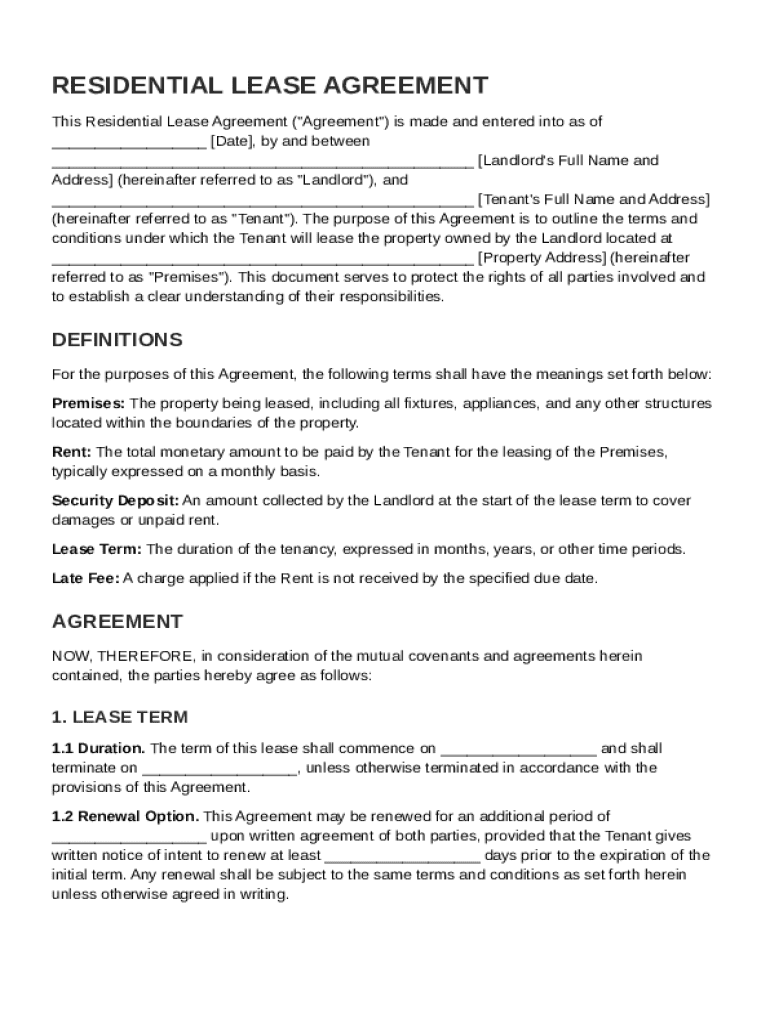







Definition & Purpose of the Residential Lease Agreement Template
A Residential Lease Agreement Template serves as a foundational document that clearly outlines the contractual relationship between a landlord and a tenant. It defines critical areas such as rent payment schedules, lease terms, and specific responsibilities of both parties. This clarity helps prevent potential disputes by detailing expectations and liabilities upfront. The template is an essential tool for standardizing agreements, ensuring that all necessary components are covered according to legal standards applicable in the United States.
How to Use the Residential Lease Agreement Template
Utilizing a Residential Lease Agreement Template is straightforward but requires attention to detail. Begin by reviewing the template to understand the information required from both parties. Fill in sections detailing the property address, lease term, rental price, and security deposit amount. It is crucial to ensure the information is accurate and complete to avoid misunderstandings. Once all sections are filled, both the landlord and tenant should review the document thoroughly before signing to confirm mutual agreement on all terms.
Key Elements of the Residential Lease Agreement Template
The Residential Lease Agreement Template is composed of several vital elements that define and govern the leasing relationship:
- Lease Term: Specifies the start and end dates of the lease agreement.
- Rent Payments: Details the monthly rental amount, payment due date, and acceptable payment methods.
- Security Deposit: Outlines the amount held as a security deposit, its use, and conditions for return.
- Maintenance and Repairs: Clarifies responsibility allocation for property repairs and maintenance.
- Entry and Inspection Rights: Defines the landlord's right to enter the property for inspections or emergencies.
Each element is crafted to meet legal requirements and protect both landlord and tenant interests, fostering a harmonious rental relationship.
Legal Use of the Residential Lease Agreement Template
The legality of a Residential Lease Agreement Template hinges on its adherence to local, state, and federal laws. It must comply with housing regulations, including fair housing laws and tenant rights statutes. The agreement should legally bind the parties involved, requiring clear identification and consent from both the landlord and tenant. Additionally, electronic signatures captured via platforms like DocHub are legally recognized under the ESIGN Act, strengthening the document’s enforceability.
Important Terms Related to the Residential Lease Agreement Template
Understanding key terms in a Residential Lease Agreement enhances comprehension and adherence to the lease:
- Sublease: Permission for the tenant to lease all or part of the property to another party.
- Eviction: Legal process for removing a tenant from the property for lease violations.
- Habitability: Obligation of the landlord to maintain a livable condition in the rental property.
These terms play a crucial role in guiding the actions and responsibilities of both parties.
State-Specific Rules for the Residential Lease Agreement Template
Leasing laws can vary significantly from one state to another, which impacts the conditions of a Residential Lease Agreement. For example, the amount a landlord can legally charge for a security deposit may differ, as well as the notice period required for terminating a lease. Customizing each template to align with state regulations helps ensure legal compliance and mitigates potential legal challenges. Consulting legal professionals familiar with state-specific laws can provide additional reassurance.
Steps to Complete the Residential Lease Agreement Template
Completing the Residential Lease Agreement Template involves several methodical steps:
- Gather Information: Collect all necessary details from both landlord and tenant, including contact information and specific property details.
- Fill in Details: Enter the gathered information into the appropriate sections of the template, ensuring accuracy.
- Review Terms: Carefully review all clauses and terms for clarity and mutual understanding.
- Negotiate Amendments: Adjust any terms as required by the mutual agreement between parties.
- Finalize and Sign: Obtain signatures from both parties, using a legally recognized method such as electronic signing.
Following these detailed steps ensures the template is completed correctly and reflects agreed-upon terms.
Examples of Using the Residential Lease Agreement Template
The Residential Lease Agreement Template is widely applicable in various scenarios:
- First-Time Leases: Ideal for new renters and property owners establishing initial leasing agreements.
- Renewals: Use it to renew existing leases with updated terms or conditions.
- Multi-Property Management: Standardizes agreements across multiple rental properties to streamline management.
Each application underscores the template's flexibility and utility in managing residential leasing transactions effectively.
Document Security and Compliance in DocHub
DocHub ensures the secure handling of a Residential Lease Agreement—important for protecting sensitive information. The platform offers 256-bit SSL encryption and options for password protection, safeguarding documents in transit and storage. Additionally, support for OAuth 2.0 secures access, while the audit trail feature provides accountability. This robust focus on security and compliance reinforces trust and demonstrates commitment to data protection.
Who Typically Uses the Residential Lease Agreement Template
A variety of individuals and entities benefit from using a Residential Lease Agreement Template:
- Private Landlords: Establishes clear leasing terms without requiring custom legal drafting.
- Property Management Companies: Streamlines management of numerous leases for efficiency.
- Real Estate Agents: Uses it as a reference to facilitate rental transactions between landlords and tenants.
The template's adaptability makes it suitable for diverse users, ensuring leasing processes are consistent, legal, and straightforward.