Definition and Meaning
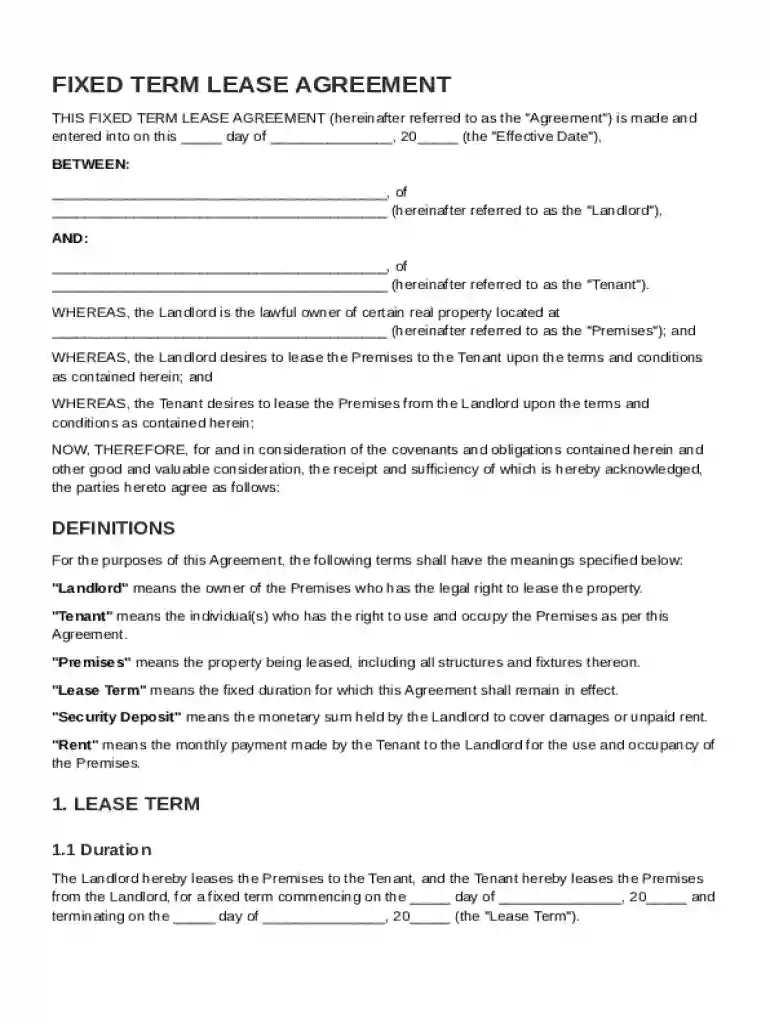
A Fixed Term Lease Agreement is a legal contract between a landlord and a tenant that sets the terms for renting a property for a specified period. Typically used for residential leases, it clearly outlines the responsibilities of both parties regarding rent payments, occupancy rules, and maintenance obligations. This agreement also specifies the start and end date of the lease, providing legal security and clarity for both the landlord and the tenant.
Essential Provisions
- Rent Payment Schedule: Details the amount of rent, due dates, acceptable payment methods, and penalties for late payments.
- Security Deposit Conditions: Specifies the amount required as a security deposit, the conditions for its return, and any deductions that may be made.
- Permitted Uses: Lists activities that are allowed or prohibited in the rental property to ensure compliance with community standards and landlord policies.
- Termination Clauses: Outlines the conditions under which the lease can be terminated prematurely by either party.
Key Elements of the Fixed Term Lease Agreement Template
Understanding the key components of a Fixed Term Lease Agreement Template is crucial for both landlords and tenants to ensure that their interests are protected while complying with legal standards.
Core Components
- Parties Involved: Identifies the landlord and the tenant, including contact information and legal names.
- Lease Duration: Specifies the fixed term of the lease, including the start and end dates.
- Property Description: Provides a clear description of the leased property, including its address and any included furnishings or appliances.
- Repair and Maintenance Protocols: Details the responsibilities of each party for property upkeep, including emergency repairs and regular maintenance duties.
Additional Clauses
- Pet Policies: Outlines whether pets are allowed, and if so, includes any associated fees or restrictions.
- Smoking Restrictions: States whether smoking is permitted on the premises and in what areas.
- Dispute Resolution: Provides methods for resolving disputes, such as mediation or arbitration, should conflicts arise during the lease term.
How to Use the Fixed Term Lease Agreement Template
Utilizing a Fixed Term Lease Agreement Template effectively reduces legal risks and provides a structured approach to property rental.
Step-by-Step Usage Guide
- Download Template: Obtain the template from a reputable source such as DocHub, ensuring it conforms to local laws and regulations.
- Customize Agreement: Tailor the template to fit the specific needs of your rental arrangement, ensuring all fields are accurately completed.
- Review for Completeness: Double-check all entries for accuracy, including rental terms, security deposits, and tenant/landlord obligations.
- Sign and Distribute: Both parties should sign the agreement, with each retaining a copy for their records. Consider using e-signature software like DocHub for convenience and legal compliance.
Implementation Tips
- Use clear language and avoid unnecessary legal jargon to ensure all parties understand the agreement's terms.
- Consider local legal advice to ensure compliance with state-specific rental laws.
State-Specific Rules for the Fixed Term Lease Agreement Template
Legal requirements for lease agreements can vary significantly by state. Complying with these rules is crucial for the enforceability of the lease.
Regional Differences
- Security Deposits: Some states have strict rules about the maximum allowable security deposit and interest payments on held deposits.
- Tenant Rights: States may have unique laws protecting tenant rights, including mandatory disclosure of certain property conditions.
Legal Compliance
- It's essential to verify that your lease agreement adheres to state-specific rental laws, such as those governing eviction procedures and habitability standards.
- Consult with a local attorney or use state-specific resources to adjust the Fixed Term Lease Agreement Template accordingly.
Examples of Using the Fixed Term Lease Agreement Template
Fixed Term Lease Agreements are utilized in various scenarios, offering distinct advantages in different contexts.
Common Scenarios
- Residential Rentals: Ideal for properties rented for one or more years, providing long-term stability for both landlords and tenants.
- Short-Term Corporate Housing: Used by companies to house employees temporarily, ensuring clarity in rental expectations and termination conditions.
Real-World Applications
In a rapidly growing metropolis, a landlord might use a Fixed Term Lease Agreement to secure rental income for a new condominium complex while clearly outlining maintenance responsibilities and tenant use of communal spaces.
Legal Use of the Fixed Term Lease Agreement Template
Ensuring the legal validity of a Fixed Term Lease Agreement is vital.
Compliance with ESIGN Act
- Electronic leases are legally binding under the ESIGN Act, allowing for digital signing via platforms like DocHub without sacrificing validity.
Appropriate Use Cases
- Rental agreements must be executed following legal standards, including offering fair rental terms and not engaging in discriminatory practices.
Steps to Complete the Fixed Term Lease Agreement Template
Filling out a lease agreement properly ensures that both landlord and tenant understand their rights and obligations.
Detailed Instructions
- Collect Essential Information: Gather all necessary details from both parties, including identification information and property specifics.
- Fill Out Template: Carefully enter information into each section of the template, ensuring clarity and accuracy.
- Double-Check Terms: Verify that financial terms, occupancy limits, and maintenance responsibilities are clearly defined.
- Execute Agreement: Facilitate the signing process through a secure online platform to capture legal signatures conveniently.
Finalization
After completion, both landlord and tenant should read the document thoroughly and save finalized copies in a secure location. This helps in resolving disputes that may arise in the future.
Important Terms Related to the Fixed Term Lease Agreement Template
Familiarity with key legal terms enhances understanding and use of lease agreements.
Terms to Know
- Lessee: The party that rents the property, commonly known as the tenant.
- Lessor: The property owner leasing out the property, known as the landlord.
- Subletting: Renting the leased property to another individual under the original lease's authority.
Clarification of Terms
Understanding these terms aids both parties in clarifying roles and responsibilities within the lease agreement.