Definition and Significance of a Music Composer Contract Template
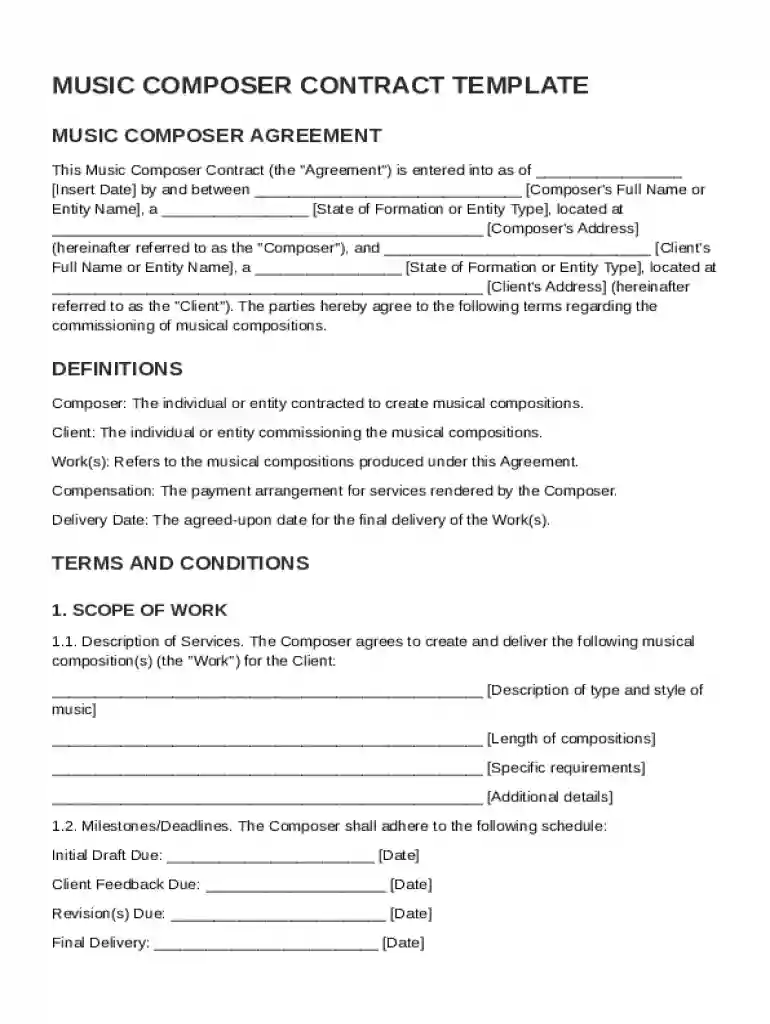
A Music Composer Contract Template is a standardized document that outlines the agreement between a music composer and a client commissioning musical compositions. This legal framework is essential as it clearly defines the expectations, responsibilities, and obligations of both parties involved. It ensures that specific terms around compensation, copyright ownership, delivery schedules, and other critical aspects are agreed upon, minimizing potential disputes later. By having a detailed contract, both the composer and the client can proceed with a clear understanding and mutual expectations.
Key Components
- Scope of Work: Provides a detailed description of the services to be rendered.
- Compensation: Outlines the payment terms, including amounts, method, and schedule.
- Rights and Ownership: Establishes who holds the copyright and any licenses.
- Revisions: Specifies the conditions under which the client can request changes.
How to Use the Music Composer Contract Template
Using a Music Composer Contract Template involves several steps to ensure it fits the specific needs of the project and parties involved. The template serves as a starting point, but adjustments may be necessary to tailor it to particular agreements.
Steps for Customization
- Review the Template: Read through the entire document to understand the sections and information required.
- Input Specific Details: Fill in names, addresses, and other identifying information.
- Outline the Music Composition Details: Describe the music project, including stylistic and technical elements.
- Specify Payment Details: Clearly state the fees, deposit requirements, and payment schedule.
- Agree on Terms: Discuss and agree on any revisions or additional clauses needed with the other party.
Practical Tips
- Ensure clarity and simplicity in language to avoid misinterpretations.
- Consult a legal advisor if uncertain about any clauses or local legal requirements.
Key Elements of the Music Composer Contract Template
The Music Composer Contract Template incorporates various critical elements that form the structure of a legally binding contract. Each section serves a unique purpose to protect the interests of both the composer and the client.
Important Sections
- Definitions: Clarifies any specific terminology used within the contract.
- Confidentiality: Ensures that any shared information remains private.
- Termination Conditions: Details the conditions under which the contract can be canceled by either party.
- Indemnification: Addresses liabilities and protection against potential legal issues.
Examples of Rights and Ownership
- Composer retains full copyright but grants the client a license for use in specific formats.
- Both parties have shared ownership depending on the contractual agreement.
Legal Use of the Music Composer Contract Template
Using a Music Composer Contract Template legally involves ensuring compliance with applicable laws and regulations in the jurisdiction where the contract is executed. This includes understanding and adhering to state-specific rules and copyright laws.
State-Specific Considerations
- Research and modify the contract to comply with state laws regarding digital contracts and electronic signatures.
- Incorporate any state-mandated clauses or disclosures.
Compliance Best Practices
- Ensure that the contract includes legally binding electronic signature capability.
- Maintain a secure record of the signed contract for reference in case of disputes.
Examples of Using the Music Composer Contract Template
Music Composer Contract Templates can be applied in various scenarios, providing structure and clarity to many types of music-related projects.
Real-World Applications
- Film Score Commission: A filmmaker hires a composer to create an original score for a movie.
- Video Game Music Creation: A gaming company contracts a composer to create background music for a game.
- Television Commercials: An advertising firm employs a composer to produce music for a commercial campaign.
Practical Insights
- Different industries may require customizations to the template to suit their unique needs.
- Each project may have varied delivery formats and timelines that need specification.
Important Terms Related to Music Composer Contract Template
Understanding specific terminology within the Music Composer Contract Template is crucial for all parties. Familiarizing yourself with these terms can provide clarity and prevent misunderstandings.
Common Terminology
- License: Permission granted by the copyright holder to use the music for specified purposes.
- Royalty: Ongoing payments made to the composer based on usage or revenue generated by the music.
Detailed Explanations
- Exclusive License: Only one licensee has rights to use the music for the contract's duration.
- Non-Exclusive License: Multiple clients can use the same composition under different agreements.
Steps to Complete the Music Composer Contract Template
Filling out the Music Composer Contract Template involves following a structured process that ensures all necessary details are captured comprehensively.
Completion Process
- Gather Information: Collect all relevant information, such as personal details, composition specifics, and financial terms.
- Draft Initial Agreement: Incorporate gathered details into the template, ensuring accuracy and completeness.
- Review and Revise: Both parties should review the draft and suggest necessary revisions.
- Sign and Execute: Once finalized, both parties sign the contract, either digitally or in print.
Common Pitfalls to Avoid
- Overlooking critical terms like deliverables or deadlines.
- Failing to double-check financial calculations such as payment terms or installment amounts.
State-Specific Rules for the Music Composer Contract Template
Different states may have unique legal requirements or customary practices regarding music contracts. Being aware of these nuances is critical for ensuring the template is legally sound.
Regional Differences
- California: Stronger emphasis on privacy terms and clauses.
- New York: May require specific language for enforceable commissions and royalties.
Adaptation Strategies
- Regularly update contract templates based on changes in state laws.
- Consult with a legal expert familiar with local regulations to avoid state-specific pitfalls.