






Definition and Importance of a Probation Agreement Template
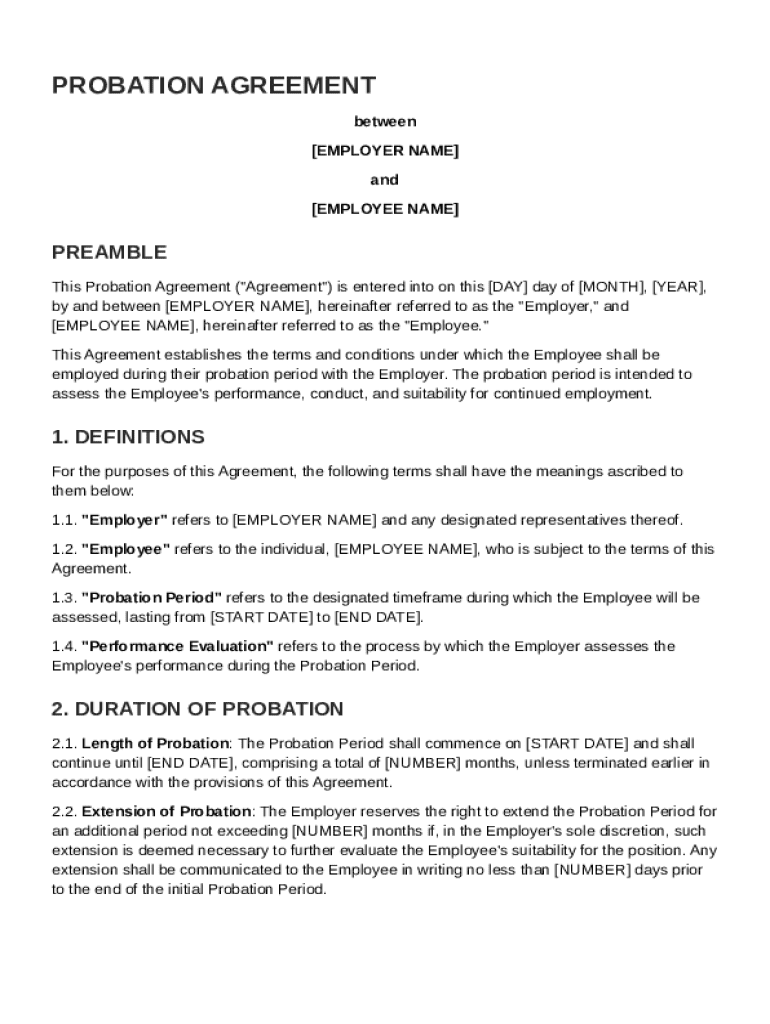
A probation agreement template serves as a formal contract between an employer and a new employee, detailing the expectations and conditions during the probationary period. This document plays a crucial role in establishing clear guidelines that define the scope of employment, performance metrics, and potential outcomes at the end of the probation. Its application is pivotal for businesses to safeguard their interests while aligning employee responsibilities and expectations.
-
Core Elements: The template typically includes the duration of the probation, specific job roles, performance standards, and evaluation processes. Confidentiality and compliance with company policies are often embedded sections, ensuring legal and ethical adherence.
-
Utility for Employers and Employees: For employers, the document provides a structured approach to assessing an employee's fit for the company. For employees, it sets a framework to understand their duties and the expectations required to secure permanent employment.
The utility of a probation agreement extends beyond its immediate application, forming an integral part of HR practices aimed at fostering a transparent and efficient work environment.
How to Use the Probation Agreement Template
Utilizing a probation agreement template effectively involves a series of steps aimed at ensuring that the document serves its intended purpose for both employees and employers.
-
Customization: Tailor the template to reflect specific job roles and organizational needs. Include the duration of the probationary period, usually ranging from one to six months, depending on the company’s policies and employee role.
-
Performance Metrics: Define clear performance indicators and standards. This allows for objective evaluation and feedback throughout the probation. Integrating measurable goals can aid both the employer and employee in tracking progress.
-
Feedback Mechanism: Establish a schedule for regular check-ins and feedback sessions. This helps in maintaining open communication, enabling timely adjustments and support if necessary.
-
Final Review Process: At the end of the probation, conduct a comprehensive review session. Utilize the gathered feedback and performance data to make an informed decision regarding the employee’s permanent position.
This structured approach ensures that both parties are aligned, reducing the likelihood of misunderstandings and fostering a supportive work culture.
Steps to Complete the Probation Agreement Template
Completing a probation agreement template involves various carefully coordinated steps, designed to maximize clarity and efficiency.
-
Initial Details: Begin with entering employee and employer details, such as names, job titles, and department identifiers. This basic information anchors the agreement contextually.
-
Specify Terms and Conditions: Articulate specific terms, including the length of the probation, expectations for conduct, and performance criteria. This section should provide a comprehensive outline of the probationary period.
-
Confidentiality and Compliance: Incorporate clauses that address confidentiality, adherence to company policies, and any legal obligations that need to be upheld.
-
Signature and Date: Ensure that both the employer and employee read and agree to the terms by signing the document. Capture the date of signing to affirm the commencement of the probationary terms.
By following these methodical steps, the completed document will serve as a binding agreement that is both legally and operationally valid.
Key Elements of the Probation Agreement Template
The probation agreement template comprises several foundational elements that collectively define its scope and applicability.
-
Duration and Scope: Specifies the length of the probationary period and outlines the role and responsibilities assigned to the employee.
-
Performance Evaluation: Lays out the metrics and methods for assessing employee performance. Regular reviews and feedback loops are integral components.
-
Confidentiality Agreement: Protects company data and proprietary information, ensuring compliance with privacy regulations.
-
Legal Compliance: Ensures adherence to federal and state labor laws, safeguarding both parties from legal repercussions.
These elements are designed to collectively provide a comprehensive framework that governs the probationary period, ensuring clarity and accountability.
Legal Use of the Probation Agreement Template
The legal framework surrounding a probation agreement template ensures its enforceability and validity, providing protection and clarity for both parties involved.
-
Governing Law: Typically, the document is governed by the employment laws applicable in the state where the company operates, aligning with any specific federal labor guidelines.
-
Modifications and Amendments: Sections allowing for amendments provide flexibility to address any unforeseen changes during the probationary period. It's crucial that any modifications are recorded formally and signed off by both parties.
-
Legal Recourse: Clearly delineated consequences for breaches of agreement provide a legal pathway for resolution. This can include termination of employment under justified contexts if probationary conditions are not met.
Incorporating these legal facets ensures that the probation agreement template aligns with universal and state-specific legal standards, thus minimizing litigation risks.
Who Typically Uses the Probation Agreement Template
A variety of stakeholders are engaged in the creation and execution of probation agreement templates, each with distinct responsibilities and interests.
-
Human Resources Departments: Often spearhead the development and maintenance of probation agreement templates. They ensure the document aligns with corporate policies and legal requirements.
-
Line Managers and Supervisors: Involved in the evaluation and feedback process during probation, aiding in performance measurement against predefined standards.
-
New Employees: Direct beneficiaries of the template, gaining clarity on expectations, roles, and responsibilities, which are crucial for their professional growth and integration into the organization.
This collaborative application of the probation agreement template ensures that it serves as an effective tool in talent acquisition and management.


State-Specific Rules for the Probation Agreement Template
Different states in the U.S. may have nuances in labor laws that affect the implementation of probation agreements.
-
At-Will Employment Variations: While many states operate under at-will employment laws, certain states impose restrictions on dismissal during the probation period, requiring just cause.
-
Minimum Probation Lengths: Some states may mandate a minimum duration for probation periods, impacting how employers structure these clauses.
-
State-Specific Protections: Employees in certain states may enjoy additional rights that influence the terms of probation agreements, including specific anti-discrimination protections.
Understanding these variations is crucial for ensuring that probation agreement templates are compliant and effective within different legal landscapes.
Examples of Using the Probation Agreement Template
Employing examples of probation agreement templates can illustrate their practical application across industries and scenarios.
-
Technology Sector: Probation agreements may emphasize innovation and adaptability as key performance metrics, due to the fast-paced nature of the industry.
-
Healthcare Industry: Often includes detailed compliance and patient care standards that employees must meet within their probation period.
-
Manufacturing and Production: Performance metrics might focus on efficiency and adherence to safety protocols, reflecting the operational focus of the industry.
Through such targeted applications, probation agreement templates demonstrate their versatility in addressing industry-specific requirements and goals.