






Definition & Meaning
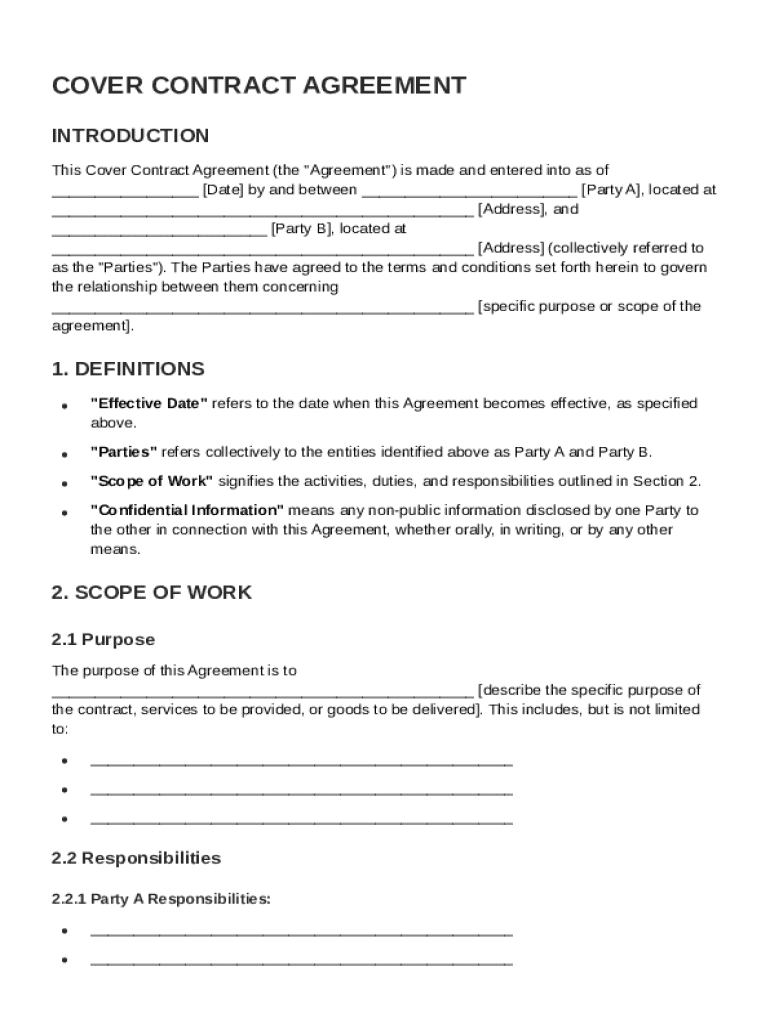
A Cover Contract Template acts as a foundational document outlining the terms and conditions under which two parties agree to collaborate. It sets the framework for legal obligations, addresses the scope of work, and defines payment terms. This document ensures that both parties understand their roles and responsibilities, offering legal protection and clarity on liabilities and potential termination clauses. By establishing detailed parameters, a Cover Contract Template minimizes misunderstandings and lays the groundwork for successful collaboration.
Key Elements of the Cover Contract Template
Understanding the key components of a Cover Contract Template is essential for drafting a comprehensive agreement. Typically, the template includes:
- Definitions: Clarifies specific terms used in the agreement to avoid ambiguity.
- Scope of Work: Detailed description of the tasks, responsibilities, and deliverables from each party.
- Payment Terms: Outlines compensation, payment schedule, and any financial obligations.
- Confidentiality: Specifies the handling of proprietary information and trade secrets.
- Liability and Indemnity: Sets forth the liability limits and indemnification clauses to manage risks.
- Termination: Conditions and procedures for terminating the agreement, including exit strategies.
Real-world application could involve a freelance consultant and a corporate client agreeing on project deliverables and payment milestones, ensuring the contract captures all agreed details for mutual protection.
How to Use the Cover Contract Template
Using a Cover Contract Template effectively requires a methodical approach to customization. Here are the steps to tailor the template to your needs:
- Review Pre-filled Sections: Initially, examine the standard clauses within the template to see which ones apply to your situation.
- Fill in Specifics: Add the relevant details such as names of parties involved, project specifics, timelines, and payment details.
- Customize Clauses: Adjust sections like confidentiality and liability based on the unique requirements of your agreement.
- Legal Review: Consider having a legal professional review the contract to ensure compliance with relevant laws.
This systematic approach ensures that personalized needs are met while still maintaining legal efficacy, offering a balance of diligence and adaptability.
Steps to Complete the Cover Contract Template
Completing the Cover Contract Template involves several detailed steps to ensure thoroughness:
- Initiate with Basic Information: Enter the names and contact details of the contract parties.
- Detail the Project Scope: Clearly define the scope, including tasks, timelines, and deliverables.
- Set Financial Terms: Specify payment terms, amounts, billing methods, and due dates.
- Include Legal Protections: Add clauses for confidentiality and intellectual property rights.
- Agree on Termination Terms: Outline the circumstances and procedures for termination or renewal.
- Proofread and Validate: Ensure the accuracy of all details and obtain mutual agreement on the document content.
Practical examples include confirming the scope of services between a contractor and client, often preventing future disputes by setting clear expectations upfront.
Important Terms Related to Cover Contract Template
Familiarity with terms often included in such templates is crucial for interpretation:
- Indemnity: A promise to cover loss or damage incurred by the other party.
- Force Majeure: Refers to unforeseeable circumstances that prevent contract fulfillment.
- Breach of Contract: An act of breaking the terms set in the contract.
- Arbitration: A method for resolving disputes outside of court.
Examples of these elements in action might involve an unexpected natural disaster delaying service delivery which would invoke force majeure considerations.
Legal Use of the Cover Contract Template
The Cover Contract Template should be used in accordance with legal standards to ensure enforceability. Generally, it must satisfy certain conditions:
- Mutual Consent: Both parties must agree willingly to the terms.
- Consideration: There must be value exchanged or promised.
- Capable Parties: Parties entering the contract must have the authority and capacity to do so.
For instance, a business agreement between a startup and a supplier must legally bind both parties, with clear obligations and entitlements that comply with state-specific regulations, such as New York’s specific commercial laws.
Who Typically Uses the Cover Contract Template
The Cover Contract Template is widely used across various professional fields. Typical users include:
- Freelancers: Define project scope and payment terms with clients.
- Small Businesses: Regularly establish agreements with service providers.
- Corporations: Framework for partnerships, joint ventures, and supplier contracts.
- Consultants: Set terms for advisory services provided to companies.
In a practical case, a freelance graphic designer might use this template to formalize project expectations with a corporate client, ensuring clarity and security in compensation and deliverables.


Examples of Using the Cover Contract Template
Examples of implementing the Cover Contract Template highlight its versatility:
- Consulting Agreements: A management consultant uses the template to detail deliverables for a client engagement.
- Supplier Contracts: A small retail business drafts agreements with product suppliers to outline delivery schedules and payment terms.
- Service Contracts: A software company uses the template to set expectations with IT service providers on support scope and response times.
Each scenario emphasizes the template's flexibility in adapting to varied business needs, ensuring that every critical area is addressed to facilitate smooth, professional relationships.
State-Specific Rules for the Cover Contract Template
Compliance with state-specific rules is paramount in ensuring the template's validity:
- Governing Law Clause: Specifies which state's laws apply, helpful in case of disputes.
- Notary Requirements: Some states may require notarization for certain contract types.
- Specific Clauses: States like California may impose additional clauses for labor regulations or confidentiality terms.
Understand these nuances is critical; for instance, a technology service agreement in California might require clauses addressing specific cyber privacy concerns, reflecting state-specific legal mandates.
Software Compatibility
Ensuring the Cover Contract Template's compatibility with various software systems is crucial for seamless integration into business operations:
- PDF and DOC Formats: Commonly used for universal accessibility.
- Cloud-Based Platforms: Integrates with DocHub for easy modification and collaboration.
- Legal Software: Compatible with legal management systems to store and manage signed agreements.
- Accounting Software: Used alongside accounting systems for tracking invoices and payments, such as with QuickBooks.
Real-world usage often involves merging contract management systems into existing software environments, facilitating efficient tracking and retrieval of contract information.
Penalties for Non-Compliance
Failing to adhere to the terms of the Cover Contract Template can result in several penalties, including:
- Financial Penalties: Compensation for losses caused by breach of contract.
- Injunctions: Court orders to perform or cease certain actions.
- Legal Action: Potential lawsuits or arbitration claims.
- Termination: Contracts may be terminated if conditions are not met.
A scenario may involve a service provider failing to meet deadlines, resulting in penalties stipulated in the contract, demonstrating the importance of abiding by the agreed terms to avoid legal ramifications.