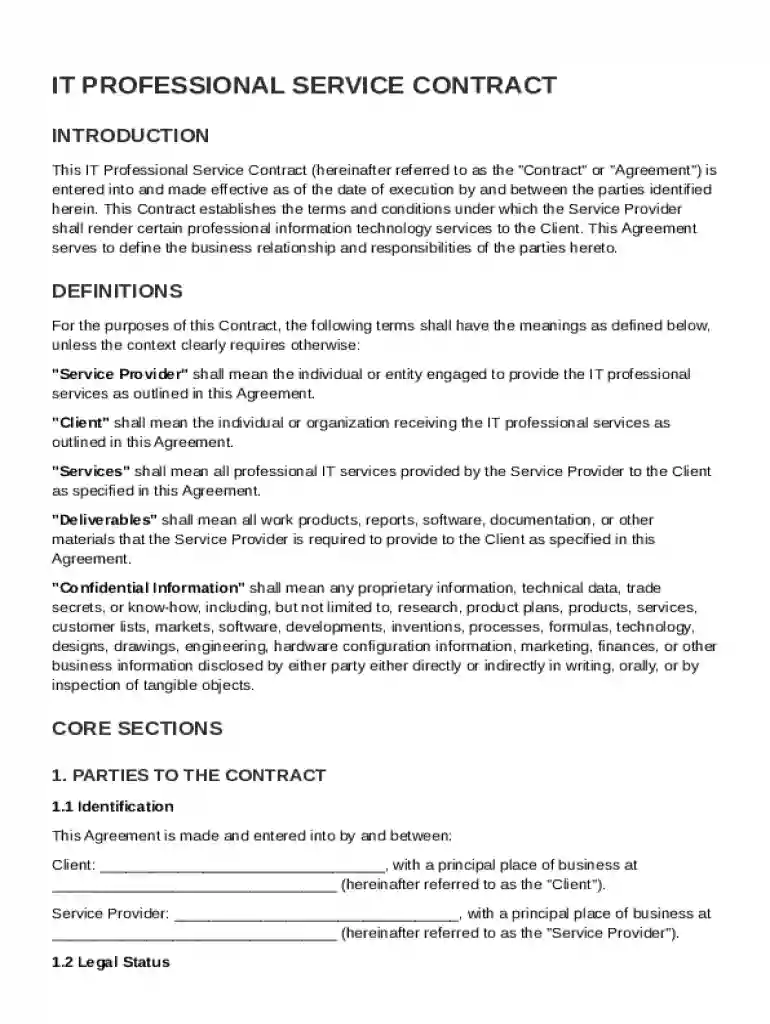
Definition and Core Elements of the IT Professional Service Contract Template
The IT Professional Service Contract Template is a legal document that outlines the terms and conditions for the provision of information technology services by a service provider to a client. Key elements typically included are:
- Parties Involved: Identifies the service provider and the client, establishing clear roles and responsibilities.
- Scope of Services: Details the specific IT services to be provided, ensuring mutual understanding of deliverables and expectations.
- Payment Terms: Describes the compensation structure, including rates, invoicing schedules, and payment deadlines.
- Confidentiality Obligations: Ensures that sensitive information is protected by both parties through non-disclosure agreements.
- Intellectual Property Rights: Clarifies ownership rights of software, data, and other creative works produced during the contract.
- Warranties and Indemnification Clauses: Outlines the assurances and liability protections between the parties.
- Termination Conditions: Specifies the grounds for ending the contract and any consequences or procedures involved in termination.
These components form the backbone of a professional relationship between an IT service provider and their client, helping to mitigate risks and prevent misunderstandings.
How to Use the IT Professional Service Contract Template
Utilizing the IT Professional Service Contract Template involves several steps to ensure it meets the specific needs of both parties:
- Customization: Tailor the template to match the particular services and expectations of the involved parties. This might involve adding bespoke service descriptions or adjusting financial terms.
- Legal Review: Have a legal professional review the contract to ensure it complies with relevant laws and adequately protects both parties’ interests.
- Discussion and Negotiation: Both parties should discuss any adjustments or clauses that require negotiation and mutual agreement.
- Finalization and Signing: Once both parties agree on the contract terms, sign the document using legally binding electronic signatures. This process can be facilitated through a platform like DocHub.
- Distribution and Storage: Share the signed contract with all involved parties and securely store a copy for future reference.
This methodical approach ensures that both parties have a clear understanding of their obligations and rights, fostering a smooth professional relationship.
Who Typically Uses the IT Professional Service Contract Template
The IT Professional Service Contract Template is commonly used by:
- Freelance IT Professionals: Individuals offering specialized services such as software development, network setup, or cybersecurity.
- IT Consulting Firms: Agencies providing a range of IT services, from strategy development to implementation and support.
- Corporate Clients: Companies of various sizes that require the expertise of IT professionals to fulfill specific technical needs.
- Small and Medium Enterprises (SMEs): Businesses that seek to outsource IT functions due to resource constraints.
- Non-Profit Organizations: Entities that require IT support for mission-driven activities but lack in-house capabilities.
These users rely on the template to formalize their professional relationships while detailing expectations and responsibilities.

Key Elements of the IT Professional Service Contract Template
A well-defined contract template includes several critical components:
- Service Delivery Timelines: Specifies deadlines and milestones for deliverables to ensure timely completion of services.
- Performance Standards: Establishes benchmarks for service quality and performance metrics that the service provider must meet.
- Client Obligations: Outlines the client’s responsibilities, such as providing necessary resources or access required by the service provider.
- Conflict Resolution Mechanisms: Details procedures for addressing disputes or disagreements, reducing the potential for escalation.
- Force Majeure Clauses: Protects both parties in the event of unforeseen circumstances that prevent contract fulfillment.
- Insurance Requirements: States any necessary insurance coverage for liability, errors, or omissions.
These facets create a robust framework for service agreements, ensuring each party understands their duties and rights clearly.
Legal Use of the IT Professional Service Contract Template
Ensuring the legal integrity of the IT Professional Service Contract Template involves:
- Compliance with Federal and State Laws: Confirming that contract terms adhere to applicable employment, intellectual property, and contract laws.
- Inclusion of Dispute Resolution Clauses: Specifying processes such as arbitration or mediation for handling legal disputes.
- Clear Contract Language: Using unambiguous, plain English to reduce misunderstanding and potential litigation.
- Regular Updates: Keeping the template updated with any changes in regulatory requirements or industry standards.
These measures help forestall potential legal issues, safeguarding the interests of both service providers and clients.
How to Obtain the IT Professional Service Contract Template
Acquiring a reliable IT Professional Service Contract Template can be done through several avenues:
- Professional Associations: Many industry groups offer templates as a resource for their members.
- Legal Document Platforms: Websites like DocHub provide access to customizable, legally vetted document templates.
- Legal Counsel: Attorneys specializing in IT law can draft personalized templates tailored to specific business needs.
- Online Marketplaces: Several online portals sell templates crafted by legal professionals.
Each sourcing method provides varying levels of customization, legal assurance, and industry relevance.
Benefits of Using the IT Professional Service Contract Template
Utilizing this template offers numerous advantages:
- Clarity and Consistency: Provides clear expectations, reducing the likelihood of disputes or misunderstandings.
- Efficiency: Saves time by providing a ready-to-use framework that requires only minor modifications.
- Professionalism: Demonstrates a commitment to structured, formal agreements, enhancing reputation with clients.
- Risk Management: Reduces potential liabilities by clearly outlining responsibilities, obligations, and protective clauses.
These benefits underscore the value of using structured templates in professional engagements, promoting successful collaboration.
Business Types That Benefit Most from IT Professional Service Contracts
Certain business types see significant advantages from utilizing these contracts:
- Start-Ups: Often require IT expertise without stacking up overheads associated with full-time hires.
- E-Commerce Ventures: Rely heavily on digital technology and require fluctuations in IT support as they scale.
- Tech Companies: Frequently require niche IT services not present within their existing team.
- Health Care Providers: Require secure IT solutions due to the sensitive nature of digital health data.
Employing these contracts allows these businesses to maintain agility while accessing essential technical services.