




Definition and Purpose of a Long Term Lease Agreement Template
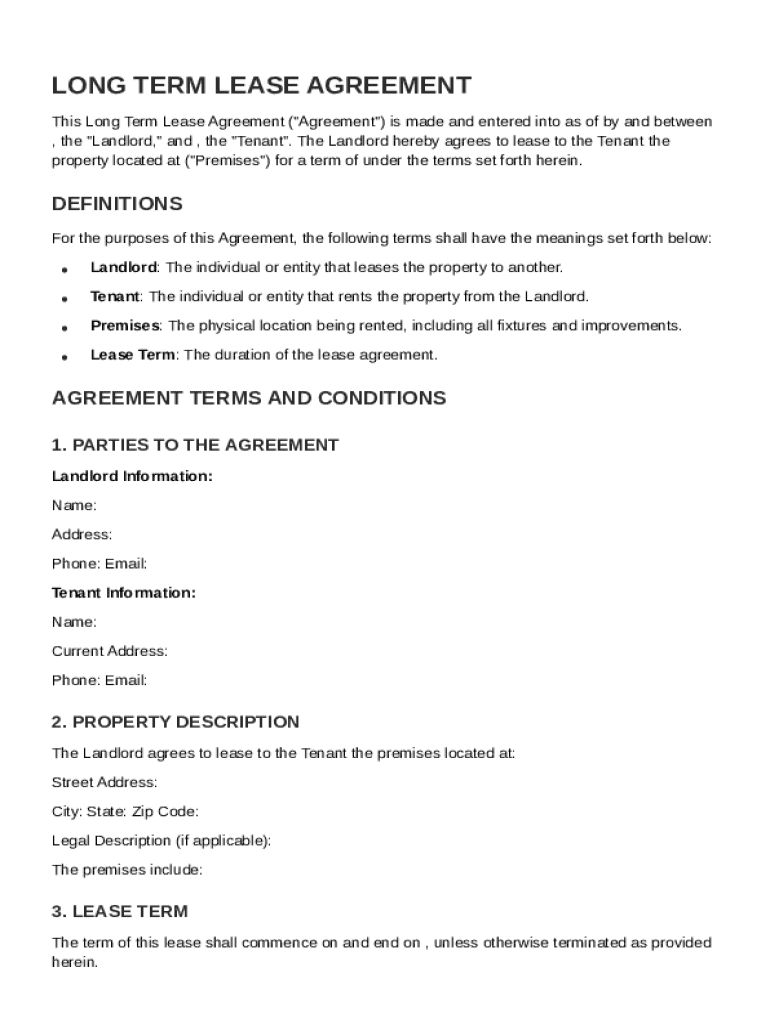
A Long Term Lease Agreement Template serves as a comprehensive document outlining the conditions under which a landlord leases property to a tenant for an extended period. This template simplifies the process of creating a legally binding document by providing a standardized format. The agreement typically includes key terms such as the property description, lease duration, rent payment details, security deposit requirements, tenant and landlord responsibilities, usage limitations, termination conditions, and applicable governing laws. By utilizing this template, parties can ensure that all necessary legal and practical aspects are covered in a structured manner.
How to Use the Long Term Lease Agreement Template
Using a Long Term Lease Agreement Template involves several crucial steps to ensure that the document accurately reflects the agreement between the landlord and tenant. Begin by filling in the basic information about the involved parties, including full names and contact details. Next, specify the property address and provide a detailed property description to avoid any ambiguity. Insert the lease term, clearly stating the start and end dates, and outline the rent schedule, including due dates and acceptable payment methods. Ensure that any additional clauses, such as pet policies or maintenance responsibilities, are included and clearly articulated.
Step-by-Step Process
- Gather Information: Collect all relevant details about the parties and property.
- Fill Basic Information: Enter names, contact information, and property address.
- Define Lease Terms: Specify start and end dates, rent amount, and payment terms.
- Include Additional Clauses: Add clauses for deposits, maintenance, and property use.
- Review for Accuracy: Carefully check the document for completeness and accuracy.
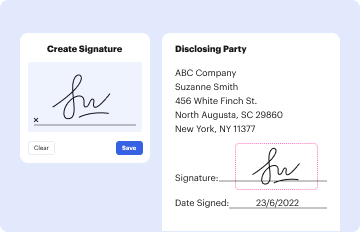
- Sign: Both parties should sign and date the agreement to make it legally binding.
Required Elements of a Long Term Lease Agreement Template
Essential elements of the Long Term Lease Agreement Template ensure clarity and legal compliance. Important components include the identification of parties, property details, lease duration, rental terms, and conditions for renewal or termination. Additionally, security deposit stipulations, responsibilities for utilities and maintenance, and permitted uses of the premises should be detailed. State-specific legal requirements may also be necessary, depending on the property's location.
Additional Required Components
- Security Deposit: Outline deposit amount and conditions for its return.
- Utilities and Maintenance: Define responsibilities for utilities and general upkeep.
- Renewal Options: Specify any options for lease renewal and associated terms.
- Termination Procedures: Detail the process for termination by either party.
- Governing Law: Include which state’s laws will apply to the lease.
Legal Use and Compliance Considerations
Implementing a Long Term Lease Agreement Template correctly requires understanding its legal implications. Landlords and tenants must ensure the agreement complies with local and state laws to prevent potential legal disputes. This involves confirming that the lease terms are allowable under applicable housing laws, and any additional stipulations adhere to jurisdiction-specific regulations. The use of this template can help in maintaining legal standards.
Compliance Guidelines
- Review Local Laws: Understand the landlord-tenant laws specific to the property's location.
- Fair Housing Compliance: Ensure lease terms do not violate fair housing laws.
- Modify for State Regulations: Adjust the template to conform to state-specific requirements.
Steps to Complete the Long Term Lease Agreement Template
Filling out the Long Term Lease Agreement Template can be broken down into identifiable steps that guide users from start to finish. Begin by drafting the preliminary details, progress through financial aspects, and integrate specific clauses unique to the agreement's context. Review for comprehensive accuracy before finalization.
Detailed Completion Instructions
- Start with Identification: List the landlord and tenant information accurately.
- Insert Lease Details: Include specific terms for lease length and conditions.
- Add Financial Terms: Specify rent, due dates, and payment methods.
- Clarify Obligations: Outline responsibilities for maintenance and repairs.
- Finalize and Sign: Review all sections before signing to validate the agreement.
State-Specific Variations in Lease Agreements
While the Long Term Lease Agreement Template provides a standard format, certain terms may need adaptations based on state-specific landlord-tenant laws. These variations could impact guidelines for security deposits, rent increases, and eviction procedures, ensuring that the agreement meets all legal obligations within the specific jurisdiction.
Examples of State Differentiations
- California: Includes specific statutes on eviction and required disclosures.
- New York: Details the maximum allowable rent increase percentages.
- Texas: Provides distinct policies on security deposit returns and property maintenance.
Who Typically Utilizes the Long Term Lease Agreement Template
This template is primarily used by landlords, property managers, and property management companies. It is also useful for tenants who wish to understand the lease structure more thoroughly. Real estate professionals and legal advisors may also employ this template to create standardized leasing documents for their clients.
Target Audience Use Cases
- Landlords seeking to formalize agreements with tenants.
- Tenants who need to familiarize themselves with lease contents and obligations.
- Property managers creating consistent documentation for multiple properties.
Key Terms and Conditions Related to the Long Term Lease Agreement Template
Understanding and including key terms are crucial to the effectiveness of any lease agreement. Terms such as "default," "security deposit," and "lease term" must be clearly defined to eliminate ambiguity. Additionally, mutual responsibilities, like maintenance, should be explicitly laid out to prevent misunderstandings.
Important Key Terms
- Default: The conditions under which the lease may be broken by either party.
- Security Deposit: Funds held as security against property damage or lease violations.
- Lease Term: The agreed duration for which the lease is valid.