







Definition and Purpose
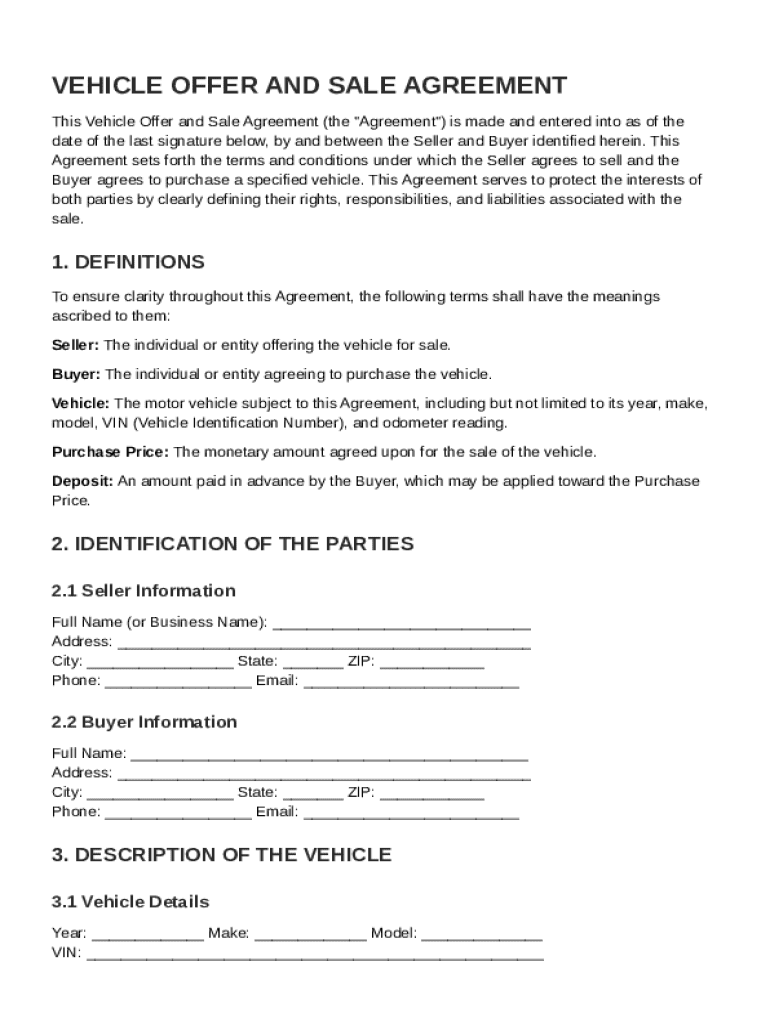
The Vehicle Offer and Sale Agreement Template is a legal document that establishes the terms and conditions of a vehicle sale between a buyer and a seller. This contract outlines critical elements, including the identification of the parties involved, detailed descriptions of the vehicle, the purchase price, and all relevant payment terms. Furthermore, the agreement includes representations and warranties from both parties, ensuring that each has accurate information about the vehicle's condition and history. The primary objective of this template is to protect both parties' interests by clearly defining their rights and obligations, thereby reducing the risk of disputes.
How to Use the Vehicle Offer and Sale Agreement Template
To effectively use the Vehicle Offer and Sale Agreement Template, follow these steps:
- Download the template: Obtain the template from a trusted source that provides legal documents.
- Review the document: Before filling out any information, carefully read through the entire agreement to understand all its provisions.
- Customize the agreement: Fill in the necessary details, such as the buyer's and seller's names, vehicle information, purchase price, and other specific terms.
- Seek legal advice when necessary: If any section of the agreement is unclear, consider consulting with a legal professional to ensure full understanding.
- Finalize and sign: Once the agreement is completed and reviewed, both parties should sign the document. Ensure all signatures are clear and dated.
By following these steps, you can ensure that the template serves its purpose effectively, reducing legal and financial risks.
Steps to Complete the Vehicle Offer and Sale Agreement Template
Completing the Vehicle Offer and Sale Agreement Template involves the following steps:
- Enter the buyer's and seller's contact information, including full names, addresses, and phone numbers. This section should also include the date the agreement is drafted.
- Describe the vehicle in detail, including the make, model, year, color, VIN (Vehicle Identification Number), and any other pertinent details such as mileage or special features.
- Specify the purchase price and payment terms, stating the total sale amount and any conditions related to payments, such as deposits or installment plans.
- Include representations and warranties, whereby the seller attests to the vehicle's condition and history, and the buyer acknowledges their understanding of these assertions.
- Outline the dispute resolution process, indicating how disputes will be handled, such as mediation or arbitration.
- Review miscellaneous provisions, which might include clauses regarding confidentiality or severability.
- Sign and date the agreement: Both parties should ensure their signatures are clearly written and the document is dated to make the agreement legally binding.
Key Elements of the Vehicle Offer and Sale Agreement Template
This template typically contains the following key elements:
- Identification of parties: Full details of the buyer and seller.
- Vehicle details: Comprehensive information about the vehicle sold.
- Purchase price: Agreed amount for the transaction.
- Payment terms: How and when the payments will be made.
- Representations and warranties: Assurances from both parties about the vehicle’s condition.
- Dispute resolution procedures: Established methods for resolving any disagreements.
- Miscellaneous provisions: Additional terms like severability or governing law.
These elements are crucial in defining the agreement's legality and clarity.
State-Specific Rules for the Vehicle Offer and Sale Agreement Template
Each state in the U.S. may have its own regulations regarding vehicle sales, affecting the template’s use.
- Title transfer requirements: Some states have specific procedures for transferring a vehicle's title that must be included or referenced in the agreement.
- Disclosure requirements: Certain states require the seller to disclose specific information about the vehicle's history, such as past accidents or lienholders.
- Sales tax implications: Understanding the local tax responsibilities for both parties can help avoid legal complications after the sale.
Be sure to incorporate any state-specific rules into the template to ensure compliance with local laws.
Examples of Using the Vehicle Offer and Sale Agreement Template
Here are a few practical scenarios where this template can be used:
- Private vehicle sale: An individual seller and buyer finalize the terms of a car sale.
- Dealership transactions: A car dealership uses the template to formalize sales agreements with customers, ensuring consistency and legality.
- Vehicle auctions: Auctions may provide this template to facilitate transactions where the details of the sale must be effectively documented.
In each usage scenario, the template assists in formalizing the sale process, making it an essential tool for both buyers and sellers.
Legal Use of the Vehicle Offer and Sale Agreement Template
The legal use of this template ensures that all parties’ rights are protected and the transaction is conducted legally.
- Binding contract: Once signed, the agreement becomes a legally binding document that can be enforced in court if necessary.
- Proof of transaction terms: The template serves as evidence of the terms agreed upon by both parties, useful in resolving any post-sale disputes.
Ensure that the template is completed accurately and understand that any fraudulent information or misrepresentation could legally void the agreement or result in penalties.
Important Terms Related to the Vehicle Offer and Sale Agreement Template
Understanding certain terms in the template is essential:
- As-is sale: Selling a vehicle in its current condition without warranties, often reflected in the agreement.
- Lienholder: A third party, often a financial institution, that might have legal rights to the vehicle until the loan or lien is satisfied.
- VIN (Vehicle Identification Number): A unique code that identifies the vehicle, usually required in the agreement for authenticity.
Each term has implications on the transaction and should be clearly understood by all parties involved.




