




Key Elements of the Lease Back Agreement Template
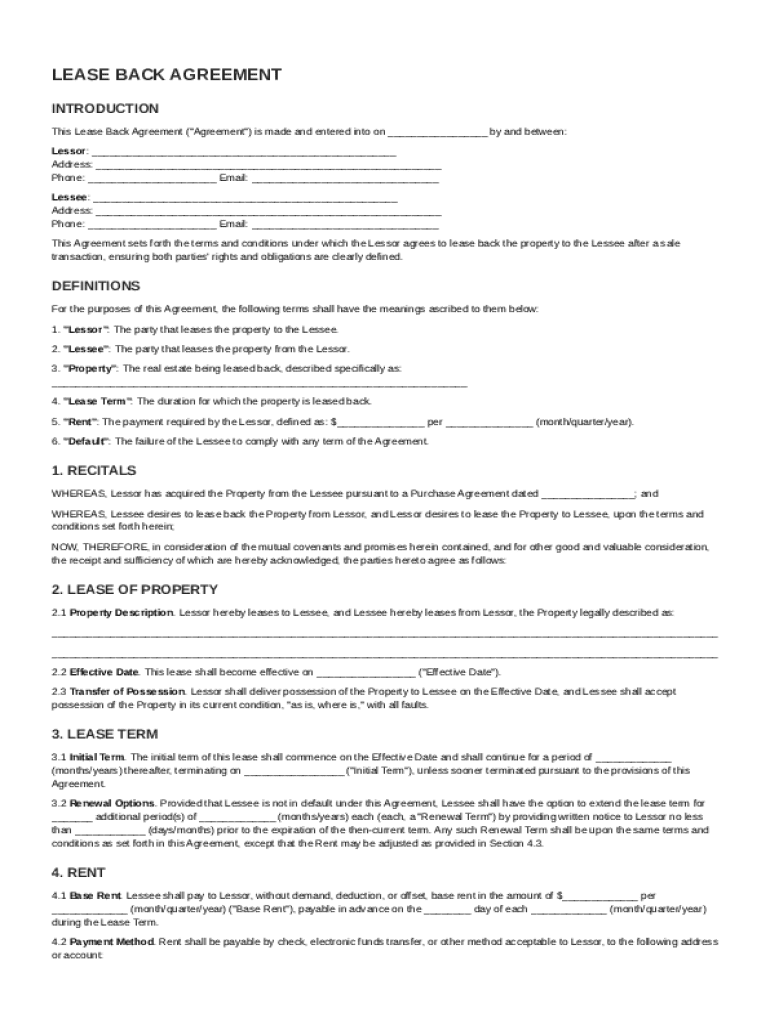
The Lease Back Agreement Template outlines essential components that define the relationship between a lessor and a lessee. Key elements include the lease duration, which specifies the length of time the lessee will lease the property back from the lessor. Rent payment details outline the amount, frequency, and payment method. Maintenance responsibilities identify the parties' obligations regarding repairs and upkeep. The agreement also describes remedies for default, providing solutions if one party fails to meet their obligations. Additionally, the template incorporates indemnification clauses, governing law provisions, and amendment procedures to protect both sides.
Steps to Complete the Lease Back Agreement Template
Completing the Lease Back Agreement Template involves a structured process to ensure all necessary details are accurately captured. First, gather information about both parties, including names, addresses, and contact information. Next, define the lease terms, such as duration, rent payment details, and any specific conditions or requirements. Ensure that maintenance responsibilities are clearly outlined to avoid future disputes. Discuss and incorporate clauses related to remedies for default, indemnification, and governing laws. Finally, review the completed template, confirm mutual agreement on all terms, and both parties should sign the agreement.
Identifying Parties and Property
- Lessor and lessee information: full names, addresses, and contact details
- Property description: address, specific details, or identifying numbers
Determining Financial Obligations
- Rent amount: predetermined monthly or yearly payment
- Payment schedule: frequency and due dates
Important Terms Related to Lease Back Agreement Template
Understanding key terms within the Lease Back Agreement Template helps to clarify each party's rights and responsibilities. "Lessor" refers to the property owner who leases it back to the "lessee," who is the individual or business leasing the property. The "lease term" specifies the duration of the lease, and "rent" refers to the agreed-upon payment for using the property. "Maintenance obligations" dictate who is responsible for property upkeep, while "indemnification" provides protection against legal claims. "Default" outlines actions taken if a party fails to fulfill their obligations.
Legal Use of the Lease Back Agreement Template
The Lease Back Agreement Template must comply with specific legal requirements to ensure enforceability. Adhering to state or local laws is essential, as regulations vary by location. This agreement is legally binding when all parties provide informed consent and willingly sign the document. The agreement should incorporate clauses about indemnification, ensuring that neither party faces unwarranted liability. Furthermore, the document should abide by relevant consumer protection laws and disclose all necessary information. Including a governing law clause designates the specific legal jurisdiction that will oversee any disputes arising from the contract.
State-Specific Rules for the Lease Back Agreement Template
Each state may have distinct rules and regulations affecting lease back agreements. It's crucial to examine these state-specific guidelines to ensure compliance. Some states require additional disclosures about property condition, while others may have regulations on permissible lease durations. Rent control laws might dictate rent increase limits, and environmental regulations could impact property use. Understanding these specific requirements can help tailor the Lease Back Agreement Template to ensure it meets legal obligations. Consulting with legal professionals familiar with local laws can provide guidance on adapting the template for state-specific rules.
Who Typically Uses the Lease Back Agreement Template
The Lease Back Agreement Template is often used by property owners who sell their property but wish to continue residing in it. Real estate investors may utilize it to manage properties acquired through sale-leaseback arrangements. Businesses that aim to free up capital from their real estate assets while maintaining operational continuity also find this template beneficial. Leaseback agreements can be attractive to individuals seeking to unlock property equity without relocation. Legal and real estate professionals often advise clients on using such agreements during real estate transactions to optimize financial and operational benefits.

Examples of Using the Lease Back Agreement Template
Practical use cases of the Lease Back Agreement Template illustrate its flexibility and utility across diverse scenarios. A homeowner who sells their property to downsize their real estate portfolio can use the template to stay on the premises by leasing it back. Businesses that sell their office buildings while continuing operations can enter leaseback arrangements for sustained occupancy. Real estate investors leveraging sale-leaseback transactions to monetize property assets are common. Each example underscores the template's role in maintaining continuity while transitioning ownership.
Why Use a Lease Back Agreement Template
Using a Lease Back Agreement Template provides several advantages. It facilitates smoother transitions in ownership while ensuring continuity for the lessee. The lessor can unlock the liquidity tied up in real estate assets, offering financial flexibility. This template simplifies negotiation by establishing clear terms, duties, and rights for both parties. The template protects both lessor and lessee interests through legally sound clauses, reducing potential disputes. Utilizing the template also assures compliance with legal standards, as it can be customized to mirror applicable regulations and parties' mutual requirements.