




01. Edit your form online
Type text, add images, blackout confidential details, add comments, highlights and more.

Type text, add images, blackout confidential details, add comments, highlights and more.

Draw your signature, type it, upload its image, or use your mobile device as a signature pad.

Send it via email, link, or fax. You can also download it, export it or print it out.
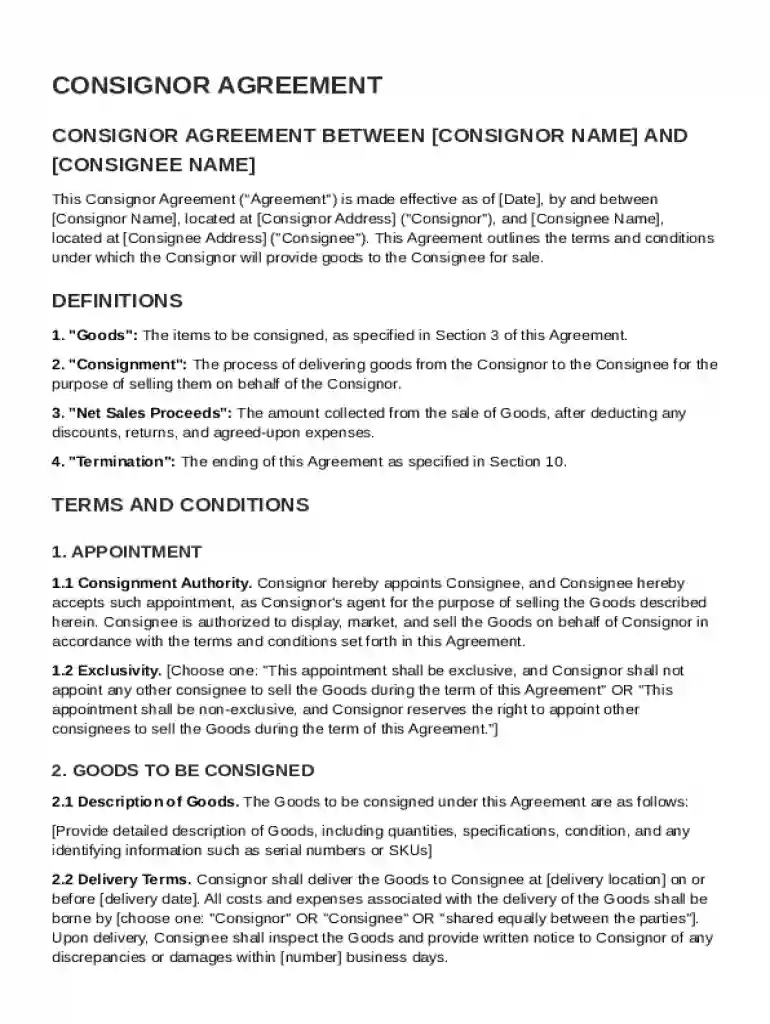
A Consignor Contract Template serves as a legally binding agreement between a consignor and a consignee. Its primary purpose is to outline the terms and conditions under which goods are consigned for sale. This agreement typically includes a comprehensive set of terms that define the roles and responsibilities of each party involved in the consignment process. Key components often covered within this template include definitions, the consignor's and consignee's duties, the description of goods, sales and payment terms, title and risk of loss, and confidentiality obligations.
The use of such a template ensures that both parties are clear on their obligations and rights, thereby minimizing potential disputes. By establishing a formal agreement, it facilitates smooth and efficient transactions, laying down clear instructions on handling consigned goods. For businesses operating in industries like art galleries, thrift stores, or boutique consignment shops, utilizing a Consignor Contract Template is integral to maintaining a streamlined consignment process.
Using the Consignor Contract Template involves several steps to ensure all details are correctly captured and agreed upon. Here's a step-by-step guide to make the most out of the template:
Review and Customize: Begin by reviewing the entire template to understand its structure and content. Customize the template to fit the specific requirements of your consignment arrangement. This includes inserting unique details such as the consignor and consignee's names, contact information, and the type and description of goods consigned.
Define Terms Clearly: Clearly define all terms used within the agreement, such as "goods," "sale price," and "consignment period." This clarity prevents misunderstandings and sets precise expectations for both parties.
Specify Payment Terms: Outline the payment terms, including how and when the consignee will pay the consignor. Specify any commission rates or fees applicable to the sale of goods.
Set Duration and Termination Conditions: Indicate the duration of the consignment period and outline specific conditions that allow either party to terminate the contract early, ensuring flexibility in unforeseen circumstances.
Finalize and Sign: After customizing the template and reviewing it with all involved parties, ensure that both the consignor and consignee sign the agreement. This signature can be done electronically through platforms like DocHub, ensuring the document is legally binding and easily accessible.
A robust Consignor Contract Template should include several critical elements to protect both parties involved:
Goods Description: A detailed description of the items being consigned, including quantity, quality, and any identifying features or serial numbers.
Consignment Terms: Clearly stated terms regarding how the goods will be priced, sold, and displayed by the consignee.
Payment Details: Specifics on how payments will be calculated, the timing of payments to the consignor, and the method of payment.
Title and Risk of Loss: Provisions detailing when the title of the goods passes to the consignee and who bears the risk of loss or damage during the consignment period.
Duties of Parties: Responsibilities and duties assigned to both the consignor and consignee, including insurance, marketing efforts, and the return of unsold goods.
The Consignor Contract Template must comply with applicable legal standards to ensure enforceability. It adheres to the governing laws of the state in which the consignment occurs, ensuring that the rights of both parties are protected under U.S. law. The template should include:
Compliance Clauses: Details that ensure the agreement does not conflict with any state regulations or legal standards.
Confidentiality Obligations: Clauses necessitating the protection of proprietary or confidential information exchanged during the transaction.
Dispute Resolution: Provisions for resolving disputes amicably, potentially through mediation or arbitration, avoiding costly litigation.
Different states may have specific regulations and rules governing consignment agreements. It is crucial that the Consignor Contract Template adhere to these state-specific regulations. Businesses should:
Research Specific Laws: Before finalizing the agreement, verify any unique consignment laws in your state. This may involve restrictions on items admissible for consignment or regulations on the consignment period.
Customization for Compliance: Tailor the template to reflect any state-specific legal requirements, ensuring that the agreement is legally sound and enforceable.
Regular Updates: Keep abreast of any legislative changes that may affect consignment practices in a particular state and update the contract template accordingly.
Completing the Consignor Contract Template involves systematic steps that ensure accuracy and legal compliance:
Gather Required Information: Collect all necessary details regarding the consignor, consignee, and goods to be consigned.
Complete the Template: Fill in the template with all relevant information, making necessary adjustments to terms and conditions.
Legal Review: Consider consulting with a legal professional to review the completed contract for compliance with applicable laws and regulations.
Share and Finalize: Both parties should have ample opportunity to review the final terms. After any required revisions, the contract is ready for signing.
The Consignor Contract Template is typically employed by a variety of stakeholders involved in the consignment process, including:
Retail Companies and Boutiques: Businesses that sell goods on consignment such as clothing, furniture, and artwork.
Individual Sellers: Individuals looking to sell personal goods through consignment shops or online platforms.
Consignment Shops and Dealers: Entities that offer consignment as a primary business model, accepting goods from consignors to sell for a commission.
Art Galleries: Galleries that consign artworks from artists, establishing terms on exhibition and sales.


Understanding the terminology within a Consignor Contract Template is critical for both parties. Here are some key terms often found within such agreements:
Consignor: The owner of the goods who is placing them into consignment for sale.
Consignee: The party responsible for selling the goods on behalf of the consignor and often retaining a commission for their services.
Commission: The fee earned by the consignee, typically a percentage of the sale price, for selling the consignor's goods.
Net Sales Proceeds: The amount remaining after deducting agreed-upon expenses like storage fees or insurance from the gross sales proceeds.
By understanding and accurately implementing these terms and sections, the Consignor Contract Template remains a powerful tool for ensuring fair and legally compliant consignment transactions.
At DocHub, your data security is our priority. We follow HIPAA, SOC2, GDPR, and other standards, so you can work on your documents with confidence.


The Contract constitutes the entire agreement between the Parties and replaces any prior agreement between them with regard to its subject. 24. RELATIONSHIP OF
Consignment Agreement. WHEREFORE,. , owner and Consignor of certain items more particularly described hereinafter and Harper College as owner and operator


