




01. Edit your form online
Type text, add images, blackout confidential details, add comments, highlights and more.

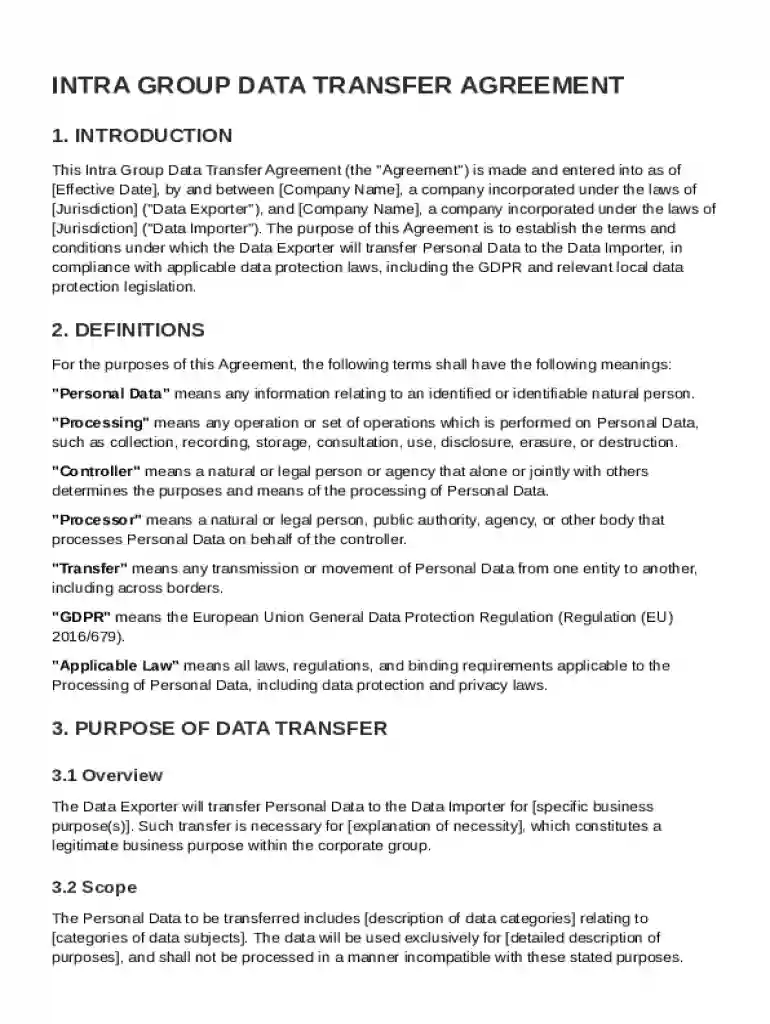
Type text, add images, blackout confidential details, add comments, highlights and more.

Draw your signature, type it, upload its image, or use your mobile device as a signature pad.

Send it via email, link, or fax. You can also download it, export it or print it out.
An Intra Group Data Transfer Agreement (IGDTA) is a legal contract that defines the rules and obligations for exchanging personal data between entities within the same corporate group. Typically, this agreement ensures compliance with international data protection regulations, such as the General Data Protection Regulation (GDPR) in the European Union. The IGDTA serves as a protective measure, outlining responsibilities of both the Data Exporter and Data Importer, including data security, accuracy, confidentiality, and compliance with data subject rights. It also covers issues such as sub-processing, international transfers, termination, indemnity, liability limitations, and governing law.
Creating a comprehensive Intra Group Data Transfer Agreement involves including several critical components that ensure thorough compliance and clarity:
Purpose and Scope: Clearly define the purpose of the data transfer and the types of personal data involved.
Parties Involved: Identify the Data Exporter and the Data Importer, including their roles and responsibilities.
Data Protection Measures: Detail the security measures that will be implemented to protect personal data during transfer and processing.
Data Subject Rights: Establish procedures for handling requests related to data subjects' rights, such as access, rectification, erasure, and restriction.
Third-Party Sub-Processors: Outline conditions under which sub-processors can be engaged, along with their obligations.
International Transfers: Address the legal requirements for data transfers across country borders.
Liability and Indemnity: Define liabilities in case of data breaches and any indemnification provisions.
Termination Clause: Set terms for agreement termination, including provisions for data return or destruction.
Identify Parties and Their Roles: Start by listing the group entities involved, specifying which is the Data Exporter and the Data Importer.
Draft the Purpose and Scope: Clearly articulate the rationale for the data transfer and the specific data types involved.
Detail Data Protection Measures: Include processes for encryption, access controls, and regular audits to safeguard data during transfer.
Establish Data Subject Rights Protocols: Provide a mechanism for handling data subject requests in accordance with applicable laws.
Define Sub-Processing Conditions: If third-party processors are involved, outline the approval process and monitoring requirements.
Outline International Transfer Provisions: Ensure compliance with specific regulations governing cross-border data transfers.
Finalize Liability and Indemnification Terms: Clearly delineate responsibilities regarding potential data breaches or misuse.
Set Termination Criteria: Establish how and when the agreement can be terminated, including post-termination data handling.
The IGDTA is legally binding and crucial for demonstrating compliance with data protection laws. It mitigates the risk of data breaches and legal penalties by:
Providing Documentation: Offers evidence of adherence to data protection standards if audited or questioned.
Clarifying Liability: Establishes which party is responsible for any data breaches or non-compliance incidents.
Regulating Cross-Border Data Flows: Ensures that international data transfers comply with necessary legal frameworks like GDPR.
Intra group data transfer agreements are mainly used by multinational corporations with multiple subsidiaries or business units across different jurisdictions. These entities benefit from IGDTA by ensuring data protection standards are consistently applied throughout their global operations. Departments within such corporations, including legal, IT, compliance, and data privacy offices, are typically responsible for drafting, reviewing, and enforcing these agreements.


Using an IGDTA template provides numerous advantages:
Standardization: Ensures uniformity and compliance across multiple entities of a corporate group.
Efficiency: Saves time in drafting and finalizing complex legal documents from scratch.
Risk Management: Helps in identifying and mitigating potential risks related to data protection and processing.
Regulatory Compliance: Assists in meeting global and regional data protection laws, thereby reducing legal liabilities.
Understanding specific terms within the IGDTA is crucial for effective implementation:
Data Exporter: The entity within the group transferring personal data to another entity.
Data Importer: The recipient entity within the group that receives personal data for further processing.
Personal Data: Any information related to an identified or identifiable natural person within the group.
Data Subject: Individuals whose personal data is transferred and processed.
Sub-Processing: Engaging third-party processors for specific operations concerning the data.
Indemnification: Provisions in the agreement that specify compensation for damage due to data breaches.
While data protection legislations like GDPR are international, certain U.S. states have their own specific requirements that may impact an IGDTA:
California: The California Consumer Privacy Act (CCPA) provides broad rights to consumers regarding their personal data, requiring additional clauses for data subject rights.
New York: The NY SHIELD Act mandates specific data security requirements and needs consideration when data is transferred from entities within New York.
These state-specific rules must be reviewed carefully and incorporated into the agreement to ensure full compliance with local laws.
At DocHub, your data security is our priority. We follow HIPAA, SOC2, GDPR, and other standards, so you can work on your documents with confidence.
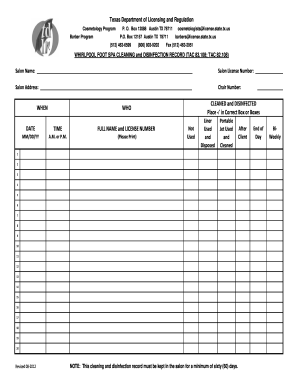

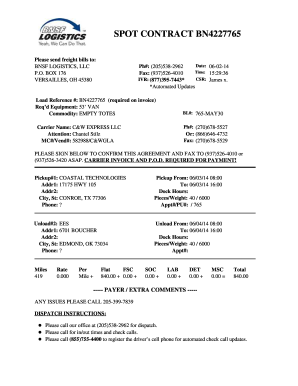
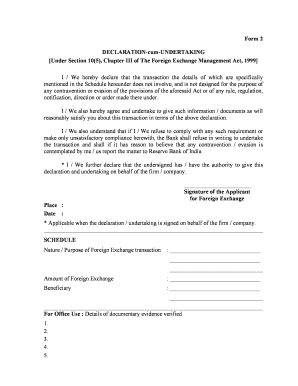



Data Transfer Agreement. Agreement relating to the Intra-Group Transfer of Personal Data in Accordance with Directive 95/46/EC on the Protection of
Dec 27, 2022 While intra-group provision of ICT services entails specific risks and benefits, it should not be automatically considered less risky than the


