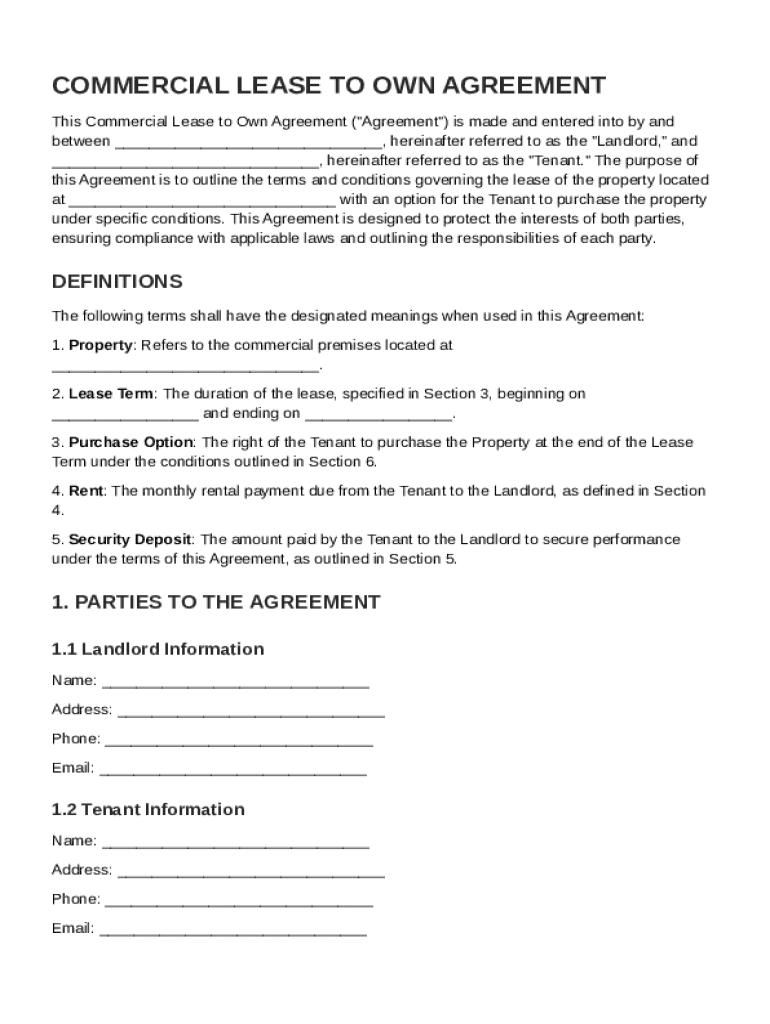







Definition and Meaning of a Commercial Lease to Own Agreement
A Commercial Lease to Own Agreement is a legally binding contract between a landlord and a tenant that outlines the conditions for leasing a commercial property with an option for the tenant to purchase it later. This agreement combines elements of a traditional lease and a purchase option, offering flexibility for tenants who may wish to own the property eventually. Key components include the lease term, the option price, maintenance responsibilities, and conditions under which the tenant may execute the purchase option. This type of agreement can benefit businesses looking to establish long-term premises without immediate high capital expenditure.
How to Use the Commercial Lease to Own Agreement Template
Utilizing a Commercial Lease to Own Agreement Template involves several steps to customize it according to the specific needs of both parties. Here's how you can effectively use the template:
-
Customize Parties and Property: Enter the full names and contact information of the landlord and tenant. Specify the address and detailed description of the commercial property in question.
-
Define Lease Terms: Include the lease commencement and expiration dates, along with renewal options if applicable. Specify the rent amount, due dates, and acceptable payment methods.
-
Establish Purchase Option: Clearly articulate the conditions under which the tenant may exercise the option to purchase, including the option price, deadline for decision, and any applicable credits from rent paid.
-
Outline Responsibilities: Detail maintenance, repair obligations, and insurance requirements for both landlord and tenant. Include clauses about property alterations and utility responsibilities.
-
Include Legal Clauses: Ensure the agreement covers default and termination conditions, dispute resolution procedures, and governing law to prevent future conflicts.
-
Execution: Both parties should review the completed agreement, make any final amendments, and sign the document in the presence of a notary if needed to ensure legality.
Steps to Complete the Commercial Lease to Own Agreement Template
Completing a Commercial Lease to Own Agreement Template involves a thorough and systematic approach. Here’s a step-by-step guide:
-
Gather Information: Collect all necessary information, including party details, property specifics, and financial obligations.
-
Fill Out the Template: Use the template to input gathered data, starting with the names and addresses of involved parties and continuing through each section methodically.
-
Review Key Terms: Double-check that all critical lease and purchase option terms are clear, correct, and mutually agreed upon.
-
Clarify Maintenance Roles: Clearly document the maintenance responsibilities and outline how the costs will be allocated between tenant and landlord.
-
Affirm Legal Protections: Include default and termination clauses, ensuring compliance with applicable laws to protect both parties’ interests.
-
Sign and Notarize: Have both parties sign the agreement. Opt for notarization to add legal robustness, especially if the agreement involves significant financial transactions.
-
Distribute Copies: Provide each party with a signed copy for their records and future reference.
Key Elements of the Commercial Lease to Own Agreement Template
When drafting a Commercial Lease to Own Agreement, several key elements must be highlighted:
- Lease Duration and Rent Payment: Start and end dates of the lease, rent amount, payment schedules, and penalties for late payment.
- Purchase Option Terms: Specific conditions and timelines for exercising the purchase option, including how the option fee is applied.
- Property Description: Detailed description of the leased property, including any specific features or conditions.
- Maintenance and Repairs: Division of maintenance duties between tenant and landlord, specifying routine maintenance versus major repairs.
- Insurance Obligations: Requirements for property and liability insurance coverage and who bears these responsibilities.
- Dispute Resolution: Established means for resolving disputes, such as mediation or arbitration, to avoid litigation.
- Amendment and Assignment Conditions: Clauses covering how the lease can be amended or transferred to another party.
State-Specific Differences in Lease to Own Agreements
While the core components of a Commercial Lease to Own Agreement remain consistent, state-specific laws can influence its administration:
-
Option to Purchase Terms: States may have different regulations on how option fees are applied and the timeline for exercising purchase rights.
-
Tenant Rights and Protections: States like California and New York have stringent tenant protection laws that must be integrated into the agreement.
-
Legal Requirements for Disclosure: Certain states mandate specific disclosures related to property conditions, environmental hazards, or historical significance.
-
Tax Implications and Reporting: Each state may differ in how lease payments and option fees are taxed, affecting financial planning.
Legal Use of the Commercial Lease to Own Agreement Template
The legal effectiveness of a Commercial Lease to Own Agreement requires:
- Compliance with State Law: Adherence to state-specific landlord-tenant laws ensures the agreement's validity.
- Mutual Agreement and Consideration: Both parties must voluntarily agree and provide mutual consideration, such as payment against possession and the option to purchase.
- Clear Documentation: Documenting all modifications and communications related to the agreement to prevent disputes.
This agreement should be used as a legally recognized tool to secure both tenant and landlord interests, offering a clear path to property ownership.
Important Terms Related to Commercial Lease to Own Agreement
Understanding specific terms enhances comprehension and execution of the agreement:
- Option Fee: A non-refundable fee sometimes paid by the tenant for the right to buy the property in the future.
- Lease Term: The duration for which the tenant agrees to lease the property.
- Fair Market Value: The agreed price for purchasing the property, often related to its current market value.
- Default Provisions: Clauses detailing what constitutes a breach of contract by either party.
- Non-disturbance Agreement: Ensures tenant's lease rights are respected if the landlord changes ownership or defaults on their mortgage.
Examples of Using a Commercial Lease to Own Agreement
Exploring practical applications of the agreement offers valuable insights:
- Expanding Business: Businesses uncertain about future space needs may lease with an option to buy, minimizing immediate financial commitment.
- New Market Entry: Businesses penetrating new locations can use the lease to assess the market viability before committing to ownership.
- Credit Building: A lease-to-own strategy may benefit businesses with insufficient credit history, allowing them to build a record of reliable payment over the lease term.
These examples demonstrate the flexibility and strategic advantages offered by the Commercial Lease to Own Agreement, making it a versatile tool for many business scenarios.