




01. Edit your form online
Type text, add images, blackout confidential details, add comments, highlights and more.

Type text, add images, blackout confidential details, add comments, highlights and more.

Draw your signature, type it, upload its image, or use your mobile device as a signature pad.

Send it via email, link, or fax. You can also download it, export it or print it out.
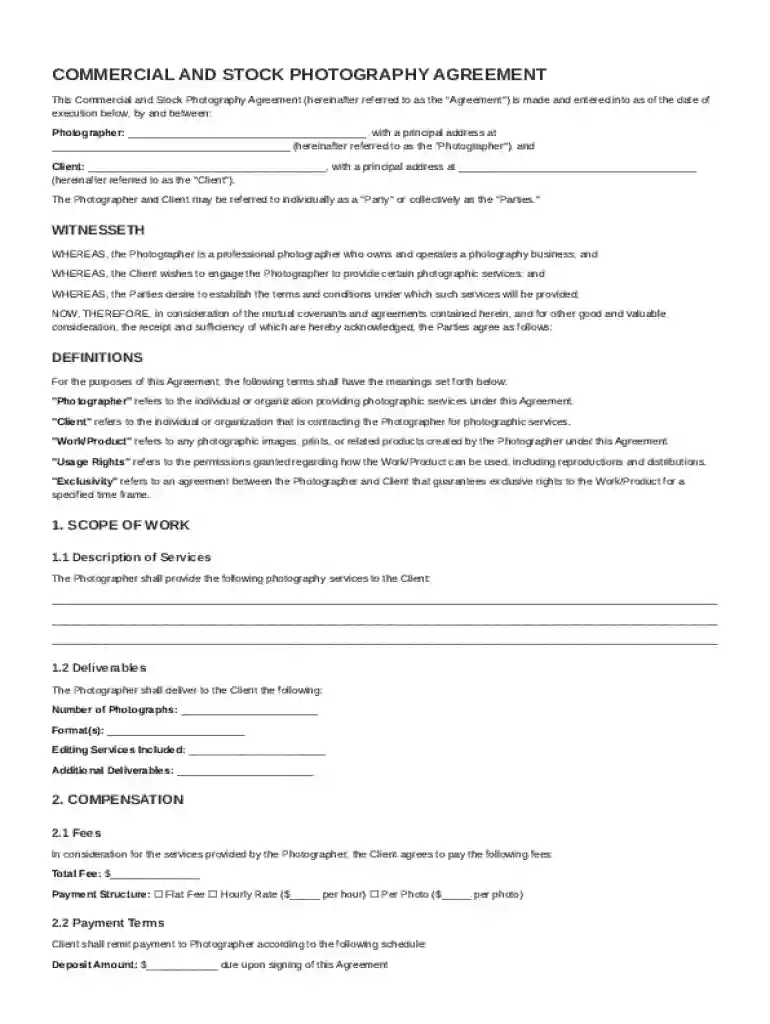
A Commercial or Stock Photography Contract is a legal document that outlines the terms and conditions under which a photographer provides photographic services to a client. This agreement is crucial because it establishes the rights and responsibilities of both parties, helping to prevent misunderstandings and legal disputes. The contract details various elements such as the scope of work, compensation, and image usage rights. By defining these aspects clearly, the agreement serves as a framework that ensures both the photographer and the client know what to expect from each other, thereby protecting their respective interests.
This type of contract is particularly important in the commercial photography industry, where images are often used for advertising, marketing, and other promotional purposes. A well-drafted contract ensures that photographers retain the rights necessary to manage how their work is used and distributed, while clients understand their obligations and rights concerning the usage of the photographs.
The Commercial or Stock Photography Contract Template typically includes several critical components that must be addressed to ensure comprehensive coverage. Here are the key elements generally found within this type of contract:
Definitions and Scope of Work
Compensation Details
Rights and Ownership
Credit and Attribution
Model Release Responsibilities
Legal Protections
Completing the Commercial or Stock Photography Contract Template requires careful attention to detail to ensure all parties' expectations and obligations are clearly documented. Here is a step-by-step guide to completing the template:
Fill in Basic Information
Detail the Scope of Work
Outline Payment Terms
Assign Rights and Licensing
Address Model Releases
Add Legal and Miscellaneous Provisions
Review and Sign
The Commercial or Stock Photography Contract Template is broadly utilized by a range of professionals and businesses within the photography and creative industries. Those commonly using this template include:
By utilizing this template, these professionals and organizations can protect their interests and establish a clear, formal foundation for their working relationships.
Given that a Commercial or Stock Photography Contract serves as a legally binding agreement, it is essential to ensure compliance with applicable laws. These contracts are generally governed by state laws, so it is vital for the Photographer and Client to understand any jurisdictional requirements that may affect their agreement. Here are some legal considerations:
While there are general practices for photography contracts, state-specific regulations can impact certain aspects of a contract's enforceability. Photographers and clients should account for:
Understanding these regional considerations is crucial for creating a legally sound document that accomplishes its intended goals.
At DocHub, your data security is our priority. We follow HIPAA, SOC2, GDPR, and other standards, so you can work on your documents with confidence.



Jun 30, 2012 Is the contract the right size for my business? Will this clash with any existing or upcoming work? It is risky to bid if a tender value is more.
This contract covers professional photography services, deliverables, a term, payment on a time and materials basis, and a defined term.


