Definition and Meaning
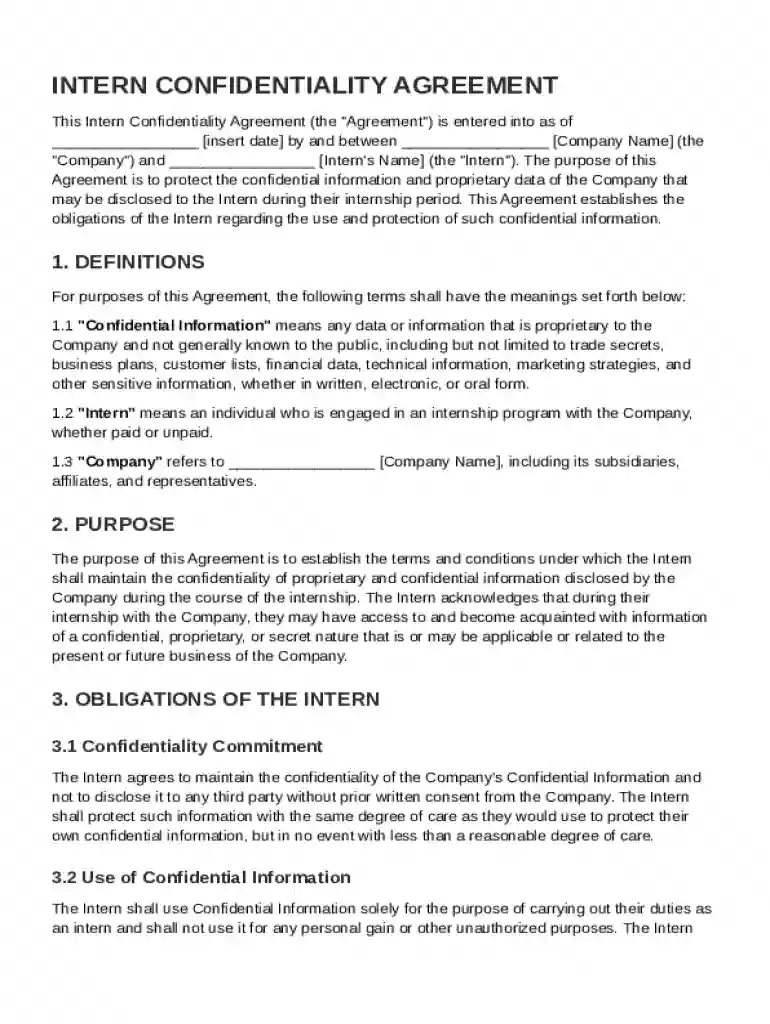
An Intern Confidentiality Agreement is a legal document designed to protect a company's confidential and proprietary information. It outlines the responsibilities of the intern regarding the safeguarding of sensitive data both during their engagement and post the internship period. Typically, it defines what constitutes 'Confidential Information,' ensuring that all parties have a mutual understanding of what needs to be protected. The agreement is crucial in maintaining the integrity of the company's operations and safeguarding competitive advantages. It also clarifies that the agreement does not confer any rights to the intern over the company's intellectual property.
Key Elements of the Intern Confidentiality Agreement Template
Central to an Intern Confidentiality Agreement are several critical clauses that must be meticulously crafted to ensure comprehensive protection. These elements include:
- Definition of Confidential Information: Clearly outlines what is considered confidential, such as trade secrets, business strategies, client lists, and proprietary data.
- Obligations of the Intern: Details the specific duties of the intern to maintain confidentiality, including restrictions on sharing information with unauthorized parties.
- Duration of Confidentiality: Specifies how long the confidentiality obligations remain in effect, often extending beyond the termination of the internship.
- Return or Destruction of Materials: Requires interns to return or destroy any confidential materials upon the conclusion of their internship.
- Intellectual Property Rights: Confirms that any intellectual property developed by the intern during their assignment belongs to the company.
Steps to Complete the Intern Confidentiality Agreement Template
Completing the Intern Confidentiality Agreement involves a sequence of methodical steps to ensure accuracy and legal compliance.
- Review the Template: Thoroughly examine the template to understand its provisions and ensure it aligns with the company's requirements.
- Personalize the Document: Insert specific details such as the company's name, intern's name, and any particular confidentiality terms applicable to the engagement.
- Define Confidential Information: Clearly list what constitutes confidential information, tailoring it to the company's specific context.
- Assign Signatories: Identify the necessary parties required to sign the agreement, which usually includes the intern, a company representative, and any witnesses if needed.
- Execution of the Agreement: All parties should review, agree, and sign. It's recommended to distribute copies to all signatories for their records.
Important Terms Related to Intern Confidentiality Agreement Template
Understanding the terminology within the confidentiality agreement is vital for all parties involved:
- Proprietary Information: Data that is owned by the company and is not publically known or accessible.
- Non-Disclosure Agreement (NDA): An overarching term that includes confidentiality agreements, representing a legal contract to protect secret information.
- Breach of Contract: This term denotes any violation of the agreement, which can result in legal actions against the intern.
- Remedies: Legal solutions available to the company should a breach occur, including injunctions or monetary damages.
Legal Use of the Intern Confidentiality Agreement Template
The legal framework of an Intern Confidentiality Agreement ensures that the document adheres to jurisdictional laws and is enforceable by the courts:
- Governing Law: Specifies which state laws will apply to the agreement. It’s crucial this is aligned with the company's primary location to maintain jurisdictional authority.
- Compliance with Federal Laws: Ensures adherence to overarching federal regulations in the United States, such as data protection laws.
- Enforcement: Defines how the agreement will be enforced in cases of dispute, including arbitration or litigation processes.
Examples of Using the Intern Confidentiality Agreement Template
The application of these agreements can be illustrated by various scenarios:
- Tech Startups: A newly formed tech company requires interns to work on confidential coding projects, ensuring innovations remain proprietary.
- Financial Institutions: Banks engaging interns for research roles may use NDAs to protect sensitive financial data and client information.
- Healthcare Providers: Hospitals incorporating interns might need confidentiality agreements to safeguard patient records and medical research.
State-Specific Rules for the Intern Confidentiality Agreement Template
Different states may have disparate interpretations and requirements for confidentiality agreements:
- California: Notoriously stringent on non-compete clauses, requiring companies to be particularly detailed about what confidentiality entails.
- New York: Provides robust frameworks for the protection of trade secrets under its business laws.
- Texas: Permits broader confidentiality terms but requires specific language to be included for enforceability.
These state-specific nuances ensure the confidentiality agreement is legally sound across various jurisdictions while being tailored to regional legal standards.