
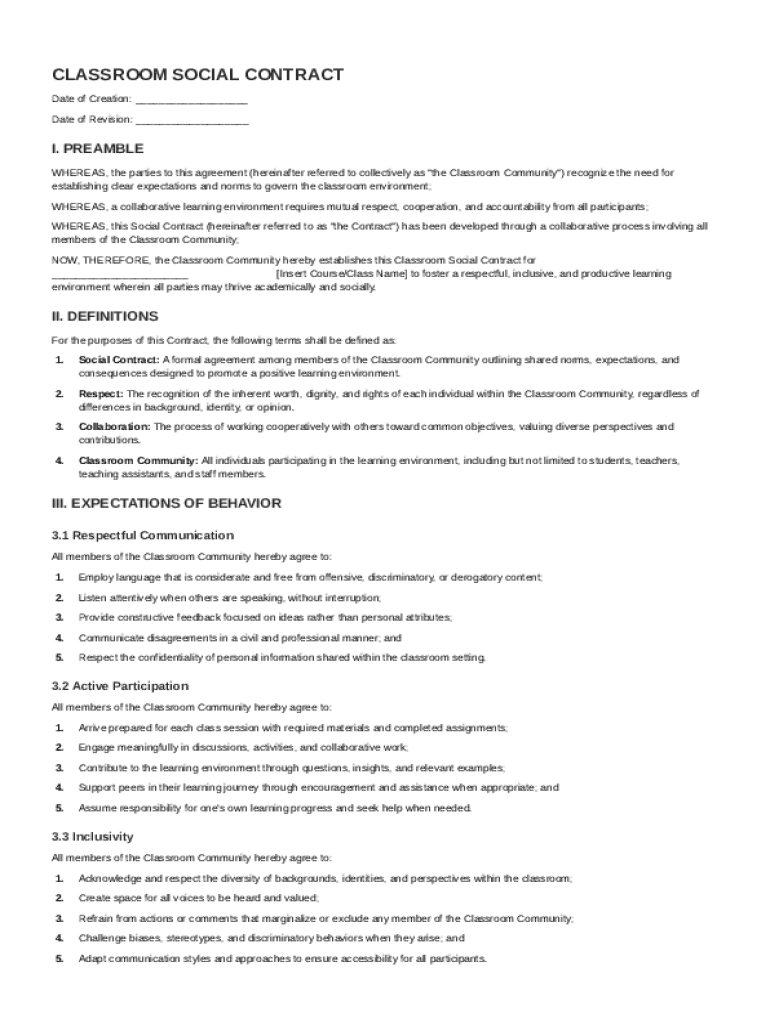







Definition & Meaning
The Classroom Social Contract Template is a structured framework designed to establish a set of shared norms, expectations, and responsibilities within a classroom environment. This template serves as a foundational document created collaboratively by students and teachers to foster a respectful, inclusive, and productive learning atmosphere. By clearly outlining behavioral standards and mutual obligations, the contract aims to create a community where every member is empowered to contribute positively. Such a document emphasizes the importance of mutual respect and cooperation, ensuring all classroom activities are conducted smoothly.
How to Use the Classroom Social Contract Template
To effectively use the Classroom Social Contract Template, begin by assembling all relevant members of the classroom community. This includes teachers, students, and any other educational support staff who play a role in the learning environment. The collaborative nature of the template means every participant should have a voice in its development. Discuss the values, norms, and behaviors that align with the community's objectives. Use the template as a guide to document these discussions into structured agreements. Promptly address any discrepancies through open dialogue, ensuring the final contract reflects the collective input of all contributors.
Key Elements of the Classroom Social Contract Template
The Classroom Social Contract Template contains several critical components that ensure clarity and mutual understanding. These elements include:
- Expectations: Define what is expected from both students and teachers in terms of behavior, participation, and attitudes.
- Responsibilities: Clearly outline the specific duties of students and teachers, emphasizing accountability and shared ownership of the classroom environment.
- Norms: Establish agreed-upon guidelines for interpersonal interactions, fostering an atmosphere of mutual respect and inclusion.
- Consequences: Detail the repercussions for failing to adhere to the established contract, ensuring a fair approach to discipline and conflict resolution.
Steps to Complete the Classroom Social Contract Template
- Initial Planning: Gather insights and suggestions from students and teachers regarding desired norms and behavioral expectations.
- Draft Creation: Use the gathered inputs to draft the initial version of the contract, adhering closely to the template's guidelines.
- Review Session: Conduct a group review of the draft, inviting feedback and addressing any concerns or suggestions for amendments.
- Finalization: Integrate the proposed changes and finalize the content of the contract.
- Communication: Ensure that the completed contract is communicated clearly to all members and that each person acknowledges their understanding and agreement.
Examples of Using the Classroom Social Contract Template
Within an elementary classroom, the contract might emphasize empathy, teamwork, and taking turns during discussions. In a high school setting, it could focus on academic honesty, respect for diverse viewpoints, and responsible social media use. An effective contract reflects the unique dynamics and goals of its specific environment, adapting elements like language complexity and focal issues to accommodate varying educational stages and cultural contexts.
Who Typically Uses the Classroom Social Contract Template
Educators across multiple levels, including elementary, middle, high school, and even higher education settings, utilize this template to foster cohesive and positive learning environments. It's equally beneficial for special education classrooms, extracurricular groups, and any setting where group interactions require structured cooperation and understanding. Teachers and administrators are the primary drivers in the creation process, ensuring the contract suits the educational context.

Legal Use of the Classroom Social Contract Template
While the Classroom Social Contract carries no formal legal authority, it acts as a voluntary ethical agreement that facilitates accountability within the educational setting. The template ensures practices align with institutional policies and educational laws, contributing to a structured, rule-abiding classroom culture. It's also a reflective tool for mediation and conflict resolution, providing a clear reference point for addressing behavioral issues.
Versions or Alternatives to the Classroom Social Contract Template
Different educational systems may have variations of the Classroom Social Contract Template tailored to their unique cultural, administrative, or pedagogical needs. Some alternatives might focus specifically on anti-bullying, digital citizenship, or inclusive education principles. These variations retain the core principles of the contract but adapt specific focus areas and language to better serve the evolving dynamics of a growing and diverse student population.




