01. Edit your form online
Type text, add images, blackout confidential details, add comments, highlights and more.

Type text, add images, blackout confidential details, add comments, highlights and more.

Draw your signature, type it, upload its image, or use your mobile device as a signature pad.

Send it via email, link, or fax. You can also download it, export it or print it out.
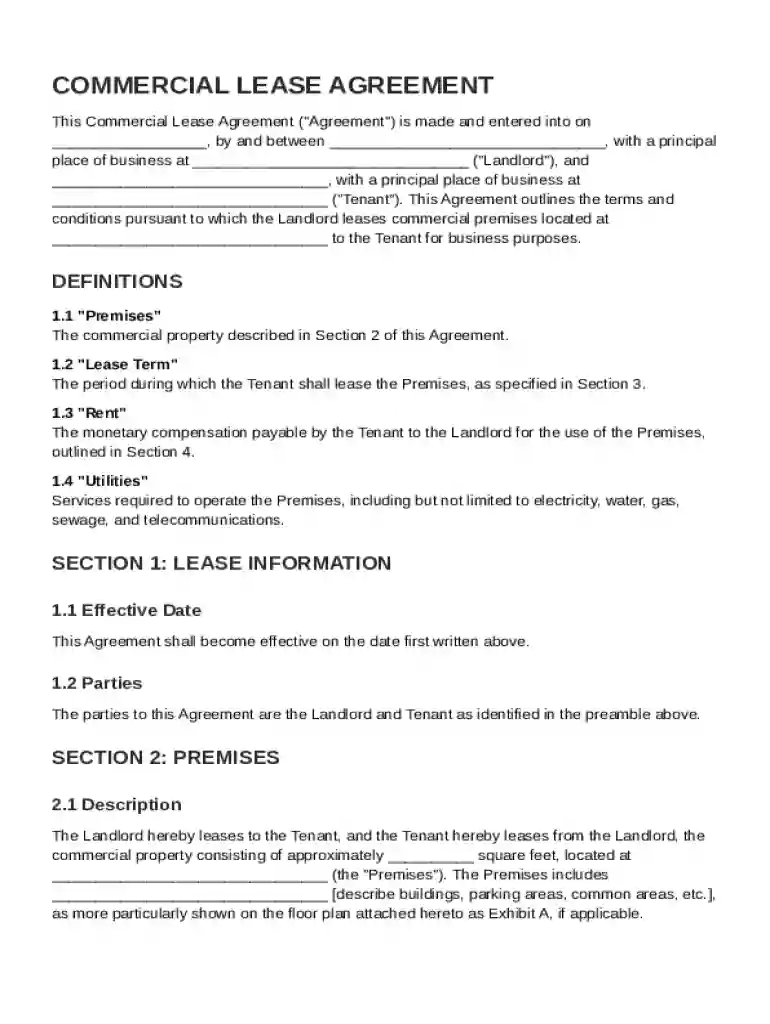
A Generic Commercial Lease Agreement Template is a standardized form that outlines the agreement between a landlord and a tenant pertaining to the rental of commercial property. This document serves as a legal framework that details the rights and responsibilities of both parties. Typical uses include retail spaces, office buildings, and industrial properties. The template typically includes sections on lease terms, rent payments, security deposits, maintenance responsibilities, and permitted uses of the property.
Completing a Generic Commercial Lease Agreement Template involves several key steps to ensure compliance and clarity. Each step is crucial for creating a binding document that protects the interests of both the landlord and tenant.
Gather Required Information:
Define Lease Terms:
Establish Security and Maintenance Terms:
Review Legal Provisions:
Finalize and Execute:
Understanding the essential components of the lease agreement template helps ensure all critical aspects are covered, fostering a complete and enforceable document.
Utilizing a Generic Commercial Lease Agreement Template requires an understanding of legal implications and compliance with state and federal laws to ensure its enforceability.
Illustrating real-world applications of a Generic Commercial Lease Agreement Template can help visualize its use and adaptability across different business contexts.
Retail businesses can use the template to secure spaces in shopping centers or standalone locations, ensuring both parties agree on use restrictions and operational hours.
Companies requiring office premises can utilize the template to delineate shared space maintenance, define parking rights, and establish amenities accessible to the tenant.
For manufacturing or storage facilities, the template is vital in addressing issues such as environmental compliance, machinery installation rights, and utility responsibilities.
The rules governing commercial leases can vary significantly by state, affecting various aspects of the agreement. Understanding these differences is crucial for compliance.
Certain states impose restrictions on how often and by how much rent can be increased. Landlords should check local laws to ensure provisions are appropriately included.
State-specific laws may dictate the maximum security deposit amount, terms for its return, and acceptable reasons for deductions, which should be outlined in the lease.
States often have distinct requirements regarding advance notice for lease termination, eviction processes, and other significant changes to lease terms.
Familiarity with common terms used in commercial lease agreements can aid in understanding the document's content and implications for both parties.
Understanding these terms helps both landlords and tenants engage effectively in lease negotiations, ensuring clarity and preventing disputes.
At DocHub, your data security is our priority. We follow HIPAA, SOC2, GDPR, and other standards, so you can work on your documents with confidence.