




Definition and Purpose of the Guest Speaker Contract Template
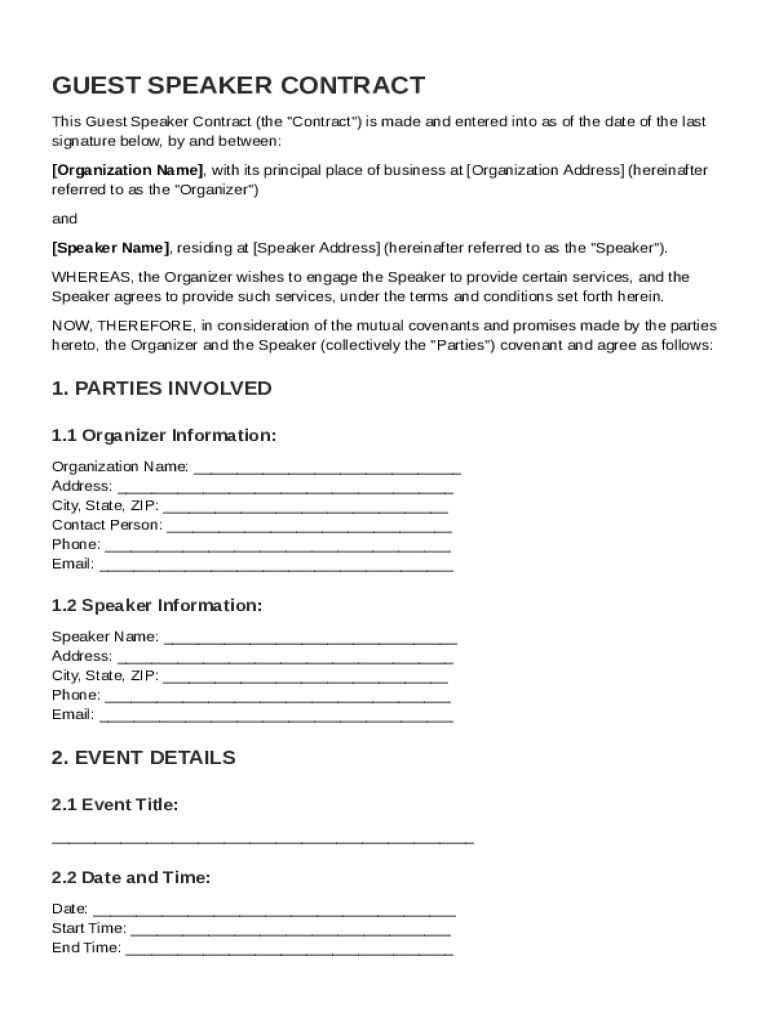
The Guest Speaker Contract Template is a formal agreement that outlines the expectations, responsibilities, and terms between an event organizer and a guest speaker. It details the scope of the speaker's engagement, ensuring both parties have a clear understanding of their obligations. This document serves as a legal safeguard, preventing potential misunderstandings that might arise during or after the event. It typically incorporates elements such as compensation, travel arrangements, and cancellation policies, making it an essential tool for professional engagements.
Key Components
- Parties Involved: Clearly identifies the organizer and the speaker, including their respective roles.
- Event Details: Specifies the date, venue, and nature of the event to provide context.
- Speaker Responsibilities: Outlines duties, including speaking topics and session length.
- Compensation: Details payment terms, including fees and schedules.
- Travel Arrangements: Addresses travel and accommodation requirements.
- Confidentiality: Stipulates the protection of proprietary information.
- Cancellation Terms: Sets conditions under which either party can terminate the agreement.
How to Use the Guest Speaker Contract Template
To effectively utilize the Guest Speaker Contract Template, begin by customizing it to fit the specific needs of your event. Ensure that all sections relevant to your agreement are filled out accurately. This includes adjusting compensation details, adding travel specifics, and incorporating any additional clauses necessary to address unique considerations of the engagement.
Step-by-Step Customization
- Download the Template: Obtain the template from a reputable source that offers legally vetted documents like DocHub.
- Input Event Information: Fill in specifics about your event, including date and location.
- Specify Speaker’s Deliverables: Detail topics, timelines, and expected outcomes.
- Adjust Financial Terms: Include honorarium, whether it is a flat fee or based on performance metrics.
- Clarify Travel Obligations: Who is responsible for booking flights/accommodations?
- Review Legal Clauses: Ensure sections on liability, indemnity, and intellectual property align with your needs.
- Share with the Speaker: Allow for a review period before signatures.
Importance of the Guest Speaker Contract Template
Using a Guest Speaker Contract Template is crucial, primarily because it provides legal protection while fostering clear communication between parties. This prevents potential disputes and maintains professional relationships. Contracts ensure that spoken agreements are made binding, clearly outlining what each party can expect from the other.
Benefits of Using a Template
- Consistency: Provides a structured format that helps avoid omissions of essential terms.
- Efficiency: Saves time on drafting new contracts from scratch for each engagement.
- Professionalism: Demonstrates serious commitment to collaborators.
- Customizability: Adjust the template to fit the unique demands of different events.
Who Typically Uses the Guest Speaker Contract Template
This template is commonly utilized by event organizers, conference coordinators, and businesses that host speaking events. It is also valuable for educational institutions, nonprofit organizations, and industry associations looking to bring in experts to enrich their programs.

Typical Users
- Corporate Event Planners: For conferences and seminars.
- Academic Institutions: For lectures and symposiums.
- Nonprofits: Hosting workshops or motivational events.
- Professional Associations: During annual meetings or member events.
Legal Use of the Guest Speaker Contract Template
Ensuring the legal validity of a Guest Speaker Contract is crucial for protecting your rights and enforcing obligations. The agreement should conform to local and federal laws, making its clauses enforceable in court if necessary. Consulting with a legal professional can help tailor the document to meet jurisdictional requirements.
Legal Considerations
- Jurisdiction: Determine which state law governs the contract.
- Legally Binding Signatures: Ensure electronic or physical signatures comply with legal standards.
- Compliance with Regulations: Include any industry-specific regulations, if applicable.
- Modification Terms: Specify how amendments to the contract are made.
Key Elements of the Guest Speaker Contract Template
A comprehensive Guest Speaker Contract Template includes several critical components that ensure clarity and enforceability. Below is an outline of the most vital sections and their functions:
Essential Sections
- Introduction: State purpose and parties involved.
- Terms of Engagement: Detailed description of speaker’s role.
- Payment and Expenses: Break down of fees, reimbursements, and payment schedule.
- Force Majeure: Conditions under which parties are excused from obligations.
- Notice Requirements: Procedure for notifying about changes or cancellations.
- Signature Lines: Spaces for all parties to sign, making the contract binding.
Examples of Using the Guest Speaker Contract Template
A variety of scenarios illustrate the importance and application of the Guest Speaker Contract Template. By seeing it in practice, stakeholders can understand its versatility and necessity.
Real-World Applications
- Industry Conference: Organizers can use this template to book keynote speakers, ensuring they deliver agreed content.
- University Lecture Series: Professors can establish their compensation and required subject matter.
- Workshops for Nonprofits: Explicitly detail the speaker's role in reaching organizational objectives.
- Corporate Training Sessions: Define expectations for skills training programs led by external experts.
State-Specific Rules for the Guest Speaker Contract Template
Since contract law can vary significantly from one state to another, it is essential to tailor the Guest Speaker Contract Template to align with particular state rules and regulations. Familiarity with regional legal frameworks enhances legal enforceability and compliance.
Considerations by State
- Governing Law Clauses: Specify which state’s law will apply to the contract.
- Different Statutes: Be aware of any state-specific statutes that affect contract interpretation.
- Localization Requirements: Adjust contract language to meet local legal standards.
- Venue for Disputes: Include clauses determining where legal disputes will be settled.