






Definition and Meaning
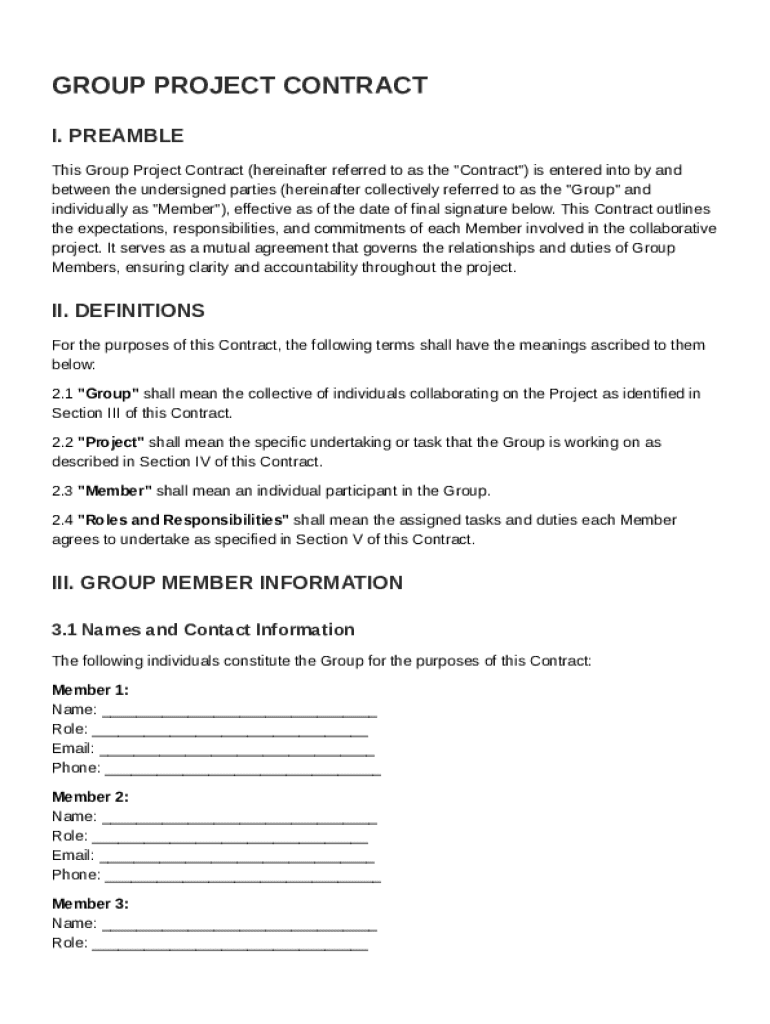
A Group Project Contract Template is a structured document that outlines the terms, expectations, and commitments of all members involved in a collaborative project. It serves as a formal agreement that details each group member's responsibilities, communication guidelines, roles, and conflict resolution methods. This template is vital for ensuring a unified understanding of the project's objectives and functions as a safeguard against misunderstandings or disputes. Such contracts are often used in academic, corporate, and organizational settings where teamwork is essential for the successful completion of tasks.
How to Use the Group Project Contract Template
To effectively utilize the Group Project Contract Template, follow these steps:
-
Gather Group Information: Begin by collecting basic information about each group member, including their names, contact information, and relevant roles or expertise.
-
Define Project Goals and Objectives: Clearly outline the project's primary goals and desired outcomes to ensure every member understands the objectives.
-
Assign Roles and Responsibilities: Specify the role each member will play in the project, detailing their tasks and responsibilities.
-
Set Communication Guidelines: Establish how the group will communicate, including preferred tools (like email, messaging apps, or regular meetings) and response time expectations.
-
Outline Conflict Resolution Strategies: Agree on a process for addressing disagreements or conflicts, taking into account the group's preferences and dynamics.
By systematically filling out the template, each member is held accountable, which minimizes the chances of disputes and enhances collaboration.
Key Elements of the Group Project Contract Template
The Group Project Contract Template includes several critical components to provide clarity and structure:
-
Project Objectives: A clear statement of goals and timelines.
-
Member Information: Contact details and assigned roles of each participant.
-
Responsibilities: Specific duties assigned to each group member.
-
Communication Protocols: Agreed-upon methods and frequency of communication.
-
Conflict Resolution: Steps for resolving disagreements and ensuring smooth progress.
-
Confidentiality Agreements: Provisions for sensitive information, if applicable, ensuring all members adhere to privacy standards.
-
Amendment Procedures: Guidelines for making changes to the contract as the project evolves.
Together, these elements create a comprehensive framework that guides the group's interaction and progress throughout the project lifecycle.
Steps to Complete the Group Project Contract Template
Completing the Group Project Contract Template involves several critical steps for thoroughness:
-
Complete Basic Details: Enter project title, start date, and expected end date.
-
Fill in Member Information: List each member's name and contact information.
-
Define Objectives: Clearly state the main goals and deliverables of the project.
-
Distribute Roles: Assign specific tasks and responsibilities to each member, considering their strengths and expertise.
-
Establish Communication Norms: Decide on communication tools and the frequency of updates.
-
Add Conflict Management Steps: Include strategies for dealing with potential conflicts, such as voting, mediation, or escalation processes.
-
Finalize the Document: Review the contract collectively to ensure all members agree on its terms before signing.
Each step ensures that the template is fully completed and serves its intended purpose of guiding the group toward its goals.
Legal Use of the Group Project Contract Template
The Group Project Contract Template is legally useful in various contexts, ensuring that team projects are conducted with clarity and accountability.
-
Enforceability: While the template functions primarily as a guide, it can also serve as a referential document if disputes arise.
-
Protection: It protects all parties by providing a written record of agreed-upon terms and responsibilities.
-
Confidentiality Compliance: Ensures that any sensitive information shared is protected by enforceable confidentiality agreements.
Groups should be aware of the legal implications of these contracts, especially in professional or academic contexts where terms should be adhered to strictly.
Who Typically Uses the Group Project Contract Template
The Group Project Contract Template is versatile and used by a variety of groups, including:
-
Students: For academic projects requiring collaboration, this template ensures that roles and responsibilities are clear from the outset.
-
Professionals: In corporate settings, teams working on joint initiatives use such contracts to enhance efficiency and accountability.
-
Non-Profit Organizations: For volunteer teams working on events or initiatives, this document provides structure and clarity.
-
Remote Teams: Virtual teams spread across different locations benefit from a contract that delineates individual contributions and communication guidelines.
It ensures that projects in diverse environments and with different objectives maintain organization and fairness.


Software Compatibility
The Group Project Contract Template can be edited and shared using several document processing tools, ensuring flexibility and convenience:
-
DocHub: Works seamlessly with PDF and other document formats, allowing dynamic editing and sharing.
-
Google Docs: Facilitates real-time collaboration and cloud storage, making it ideal for team use.
-
Microsoft Word: Offers a robust platform for creating and editing documents offline and online.
These tools enable easy customization and distribution of the contract, allowing group members to access and modify it conveniently.
Examples of Using the Group Project Contract Template
Practical scenarios for using a Group Project Contract Template include:
-
Academic Projects: An MBA group uses the template to outline contributions for a marketing plan, setting expectations for research, writing, and presentation roles.
-
Corporate Team Meetings: A product development team utilizes the template to define roles among designers, engineers, and marketers for launching a new product.
-
Non-Profit Event Planning: Volunteers for a fundraising event use the contract to clarify tasks related to promotions, logistics, and finance management.
These examples highlight the template's adaptability to various groups and circumstances, ensuring organized efforts and successful outcomes.