
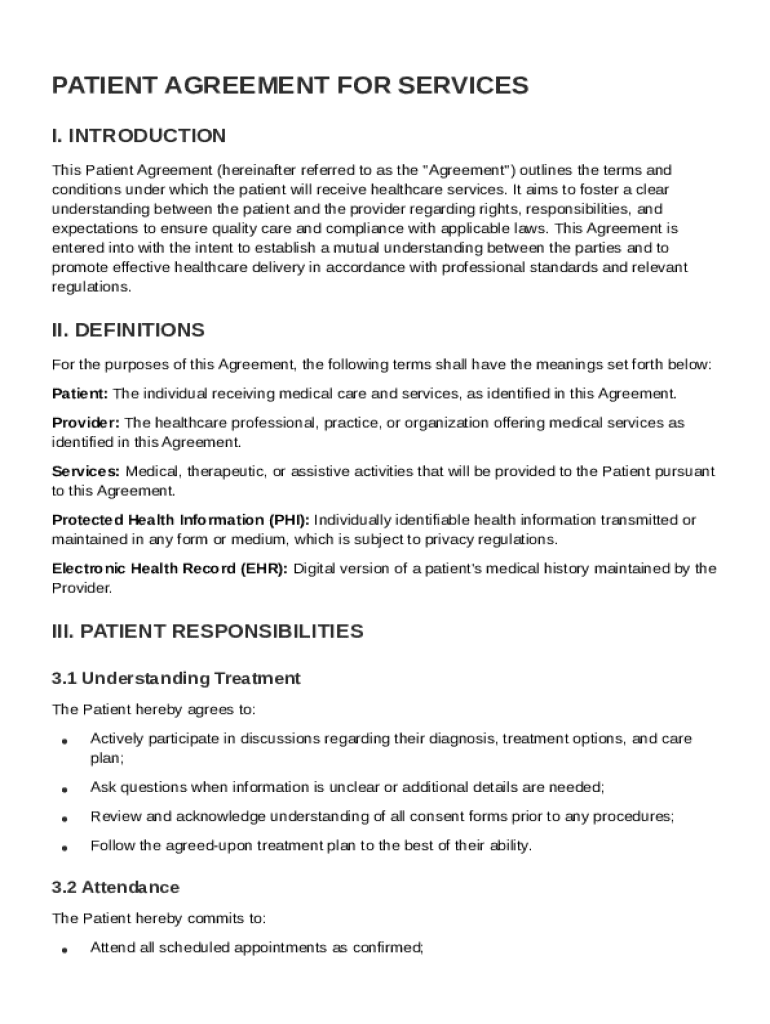







Definition and Meaning of the Patient Agreement Template
The Patient Agreement Template is a formal document used in healthcare settings to delineate the terms of service between patients and healthcare providers. It ensures that both parties clearly understand the mutual obligations, which typically include patient responsibilities, healthcare provider commitments, financial obligations, and the confidentiality of medical records. This template aims to support effective care delivery while complying with healthcare laws. By setting standard terms and conditions, it helps reduce misunderstandings and disputes, fostering a more transparent patient-provider relationship.
How to Use the Patient Agreement Template
Utilizing the Patient Agreement Template involves several steps to customize it according to specific healthcare services. Start by:
- Reviewing the template to understand its structure and sections.
- Editing general sections to include facility-specific policies, such as privacy practices or patient billing procedures.
- Inserting detailed information regarding patient responsibilities, like scheduling appointments or updating contact information.
- Defining provider responsibilities clearly to outline the scope of care and services offered.
- Finalizing the document by adding a space for signatures to signify agreement and consent.
It's crucial that the language remains clear and accessible, avoiding jargon that could confuse the patient. Ensure that the final document is reviewed by legal counsel to verify compliance with state-specific healthcare regulations.
Key Elements of the Patient Agreement Template
The Patient Agreement Template typically encompasses several key components integral to forming a comprehensive agreement:
- Patient Responsibilities: Details the expected behavior and actions of patients, such as adhering to treatment plans, respecting appointment schedules, and providing accurate health information.
- Provider Responsibilities: Outlines the services to be provided, ensuring clarity on what patients can expect concerning care delivery and provider availability.
- Financial Obligations: Includes information on payment methods, billing cycles, insurance claims processes, and policies related to outstanding balances.
- Confidentiality of Medical Records: Describes the protection of patient data according to regulations like HIPAA, emphasizing the importance of patient consent for information sharing.
By clearly outlining these elements, the template serves as a foundational document that helps maintain a professional and legally sound relationship between healthcare providers and patients.
Legal Use of the Patient Agreement Template
The Patient Agreement Template is legally adopted to establish enforceable terms between the patient and the healthcare provider. To ensure its legal sufficiency:
- Compliance with Healthcare Laws: Ensure the document adheres to federal and state laws, including HIPAA for privacy and security of patient information.
- Informed Consent: Clearly define the consent process, ensuring patients are aware of how their data will be used and shared.
- Mutual Agreement: Both parties must voluntarily sign the agreement, indicating informed consent and understanding of their respective obligations.
Healthcare providers typically consult legal professionals to validate the template's legal integrity and ensure it is current with any changes in healthcare legislation.
Steps to Complete the Patient Agreement Template
Completing the Patient Agreement Template involves specific steps designed to ensure all necessary information is accurately captured:
- Download or Access Template: Obtain the template from your healthcare institution's resources or the DocHub platform.
- Enter Patient Information: Include full patient details, such as name, contact information, and insurance details.
- Customize Provider Information: Fill in the provider's contact details and any specific service-related clauses.
- Review Terms and Conditions: Go through each section thoroughly to ensure accuracy and completeness.
- Signatures: The patient and healthcare provider should sign the document to confirm mutual agreement.
- Retention: Store the finalized agreement securely, both in physical and digital formats, for future reference.
This process helps streamline document management and ensures all agreements are appropriately documented and accessible.
Who Typically Uses the Patient Agreement Template
The Patient Agreement Template is primarily used by healthcare providers across various settings, including:
- Hospitals and Medical Centers: To formalize patient admissions and service terms.
- Private Practices: For individual or small group practices to manage patient relationships and set service expectations.
- Mental Health Clinics: Where clarity in service scope and patient privacy is critical for compliance and trust.
- Specialized Health Services: Such as physiotherapy or dietary clinics, where clear expectations are essential for treatment efficacy.
By deploying this template, these institutions can enhance their operational efficiency and patient satisfaction through clearer communication and documentation.


Examples of Using the Patient Agreement Template
PraCtical examples highlight how the Patient Agreement Template functions in real-world settings:
- Scenario in a Pediatric Clinic: In a pediatric environment, the agreement includes specific provisions about parental responsibilities and consent for minors, ensuring parents understand their role in the treatment process.
- Application in Telehealth Services: With the rise of telehealth, providers use this form to define terms about virtual appointments, privacy in digital communications, and telemedicine consent.
- Use in Elective Surgery Centers: Where patients acknowledge understanding of the surgery process, associated risks, and follow-up care protocols.
These scenarios demonstrate the template's adaptability across different healthcare contexts, ensuring both patient and provider align on terms of service.
State-Specific Rules for the Patient Agreement Template
When implementing the Patient Agreement Template, healthcare providers must consider state-specific regulations that might affect the document:
- Varying Consent Laws: States differ in their laws regarding consent for minors' medical treatments; thus, templates must adapt accordingly.
- Data Protection Requirements: Some states have unique data protection laws beyond federal regulations, like California's CCPA, influencing how patient data is handled.
- Insurance Clauses: States might have particular mandates about insurance billing disclosures and patient notification protocols.
By tailoring the template to meet these specific regulatory requirements, healthcare providers can maintain compliance and reduce the risk of legal issues.




