
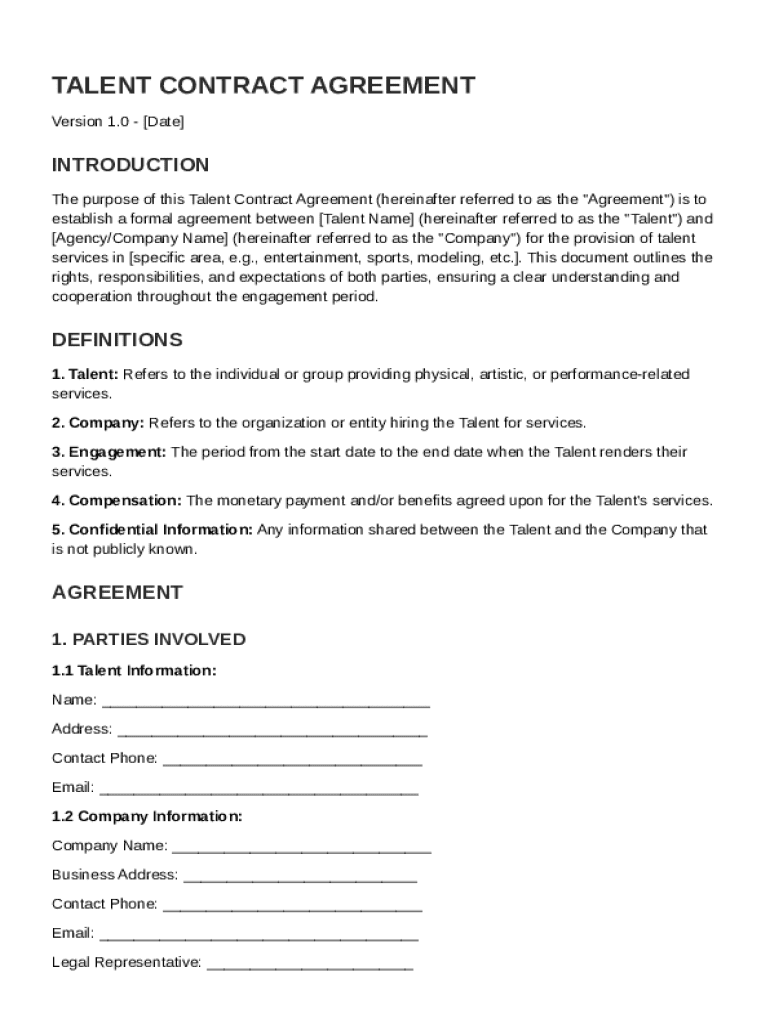







Definition and Purpose of a Talent Contract Template
A Talent Contract Template serves as a foundational document for formalizing the engagement between an individual talent and a company seeking their services. It defines the relationship by detailing essential components such as the scope of services, compensation agreements, and tenure of the contract. Furthermore, it lays out the rights and responsibilities of both parties, ensuring mutual understanding and minimizing the risk of disputes. Typically, this contract includes sections on confidentiality, intellectual property rights, and conditions for termination, providing comprehensive coverage of the engagement's legal and operational aspects.
How to Utilize the Talent Contract Template
Using the Talent Contract Template effectively involves customizing it to match the specific agreement between the talent and the hiring entity. Start by identifying the principal parties and define their roles clearly. Ensure that the scope of services is explicitly described to prevent any ambiguity about deliverables. Adjust the compensation terms to reflect the agreed-upon payment structure, whether it's hourly, per project, or commission-based. As you progress, incorporate clauses that address confidentiality and intellectual property. Finally, review the document with legal counsel to ensure compliance with relevant laws.
Steps to Complete the Talent Contract Template
- Identify the Parties: Clearly state the names and addresses of the talent and the company.
- Define the Scope of Services: Specify the tasks, responsibilities, and objectives the talent is expected to fulfill.
- Detail Compensation Terms: Outline the payment method, schedule, and any additional expenses covered by the company.
- Set Contract Duration: Indicate the start and end dates, including any provisions for renewal or termination.
- Include Legal Provisions: Add clauses related to intellectual property, confidentiality, and dispute resolution.
- Review and Finalize: Consult with legal counsel to ensure all terms comply with applicable laws and reflect mutual consent.
Key Elements of the Talent Contract Template
- Scope of Services: Detail the specific services or tasks to be provided by the talent.
- Compensation Structure: Clearly outline how and when the talent will be compensated.
- Duration and Termination: Define the length of the contract and the conditions under which it can be terminated.
- Confidentiality Agreements: Include clauses that protect sensitive information shared during the engagement.
- Intellectual Property Rights: Specify ownership of any intellectual property created during the contract term.
Important Terms Related to Talent Contracts
Understanding key terms in a talent contract is critical for ensuring clear communication. For example, "compensation" refers to the payment terms for services rendered, while “confidentiality” pertains to the obligation to protect sensitive information. "Intellectual property" defines the ownership rights of creative works. Terms such as "termination" and "renewal" outline the conditions under which a contract can be ended or extended. Each of these terms holds significant importance in delineating the legal boundaries and expectations within the contract.
Legal Use and Compliance of the Talent Contract Template
Talent Contract Templates must comply with state and federal laws to be legally enforceable. They should acknowledge and adhere to essential legal frameworks to ensure that both parties are protected. This involves aligning with employment laws, confidentiality standards, and intellectual property rights. It's advisable to seek legal advice to modify the template in accordance with jurisdictional requirements, particularly when the contract crosses state lines or involves international parties.
State-Specific Rules and Considerations
While the Talent Contract Template provides a general framework, state-specific laws may necessitate additional considerations. For instance, some states mandate specific language for non-compete clauses or require specific notices about worker classification. Research the legal requirements in the respective state where the services are to be rendered to ensure compliance. Understanding these nuances can help avoid legal pitfalls and ensure that the contract is enforceable across varying jurisdictions.
Software Compatibility and Integration
A Talent Contract Template is often shared and managed digitally, making software compatibility crucial. Platforms like DocHub can facilitate easy editing, sharing, and signing of the contract. They offer integration with cloud services such as Google Drive, Dropbox, and OneDrive, ensuring seamless access and collaboration. When choosing a platform for contract management, ensure it provides robust security features and easy-to-use tools for editing and signing documents electronically.




