




Definition & Meaning
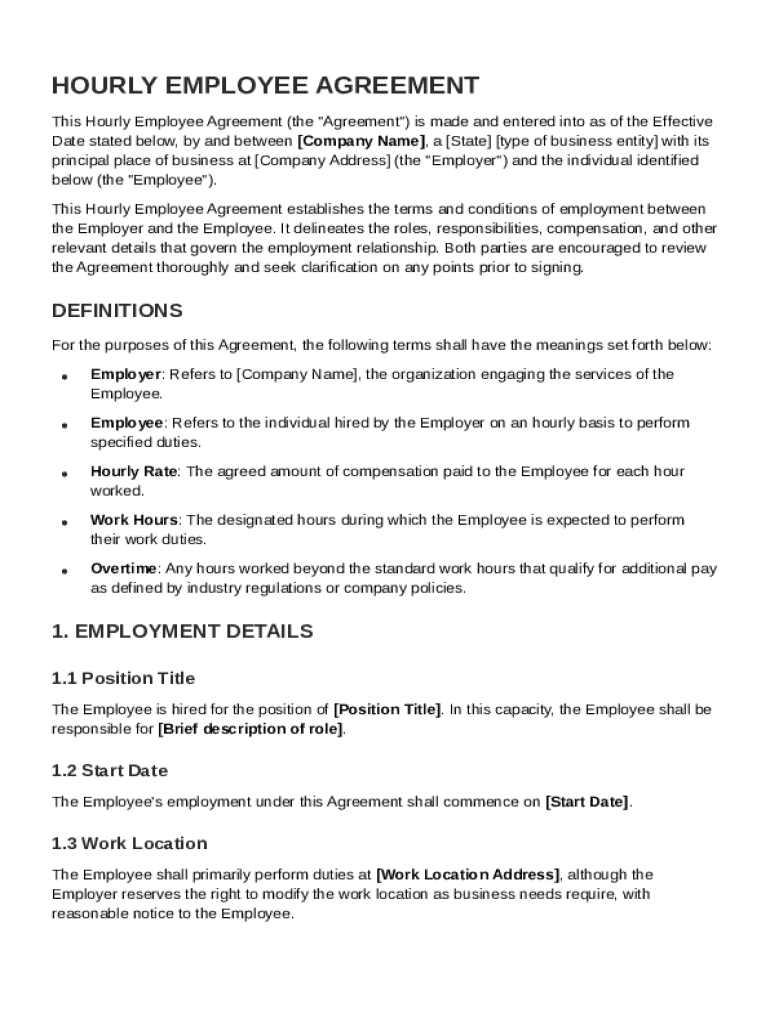
The Hourly Employee Agreement Template is a standardized document that serves as a contractual agreement between an employer and an hourly-based employee. This template outlines the essential terms and conditions of employment, including the roles and responsibilities of the employee, the employer's expectations, wage details, and work hours. It's an essential tool to ensure that both parties have a clear understanding of their rights and obligations. The agreement helps prevent misunderstandings and provides a legal framework in case of disputes.
How to Use the Hourly Employee Agreement Template
Using the Hourly Employee Agreement Template involves a series of straightforward steps to tailor the document to specific employment situations. Here are the primary steps:
-
Download or Access the Template: Obtain the Hourly Employee Agreement Template from an online platform such as DocHub.
-
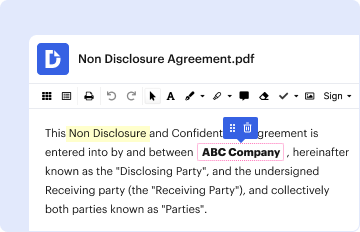
Customize the Template: Fill in the blanks with specific information regarding the employment terms, including the employee's name, job title, start date, compensation rate, and schedule.
-
Include Specific Job Duties: Clearly outline what is expected from the employee in terms of responsibilities and duties.
-
Review and Finalize: Ensure all sections are filled accurately. Review the agreement for completeness and clarity.
-
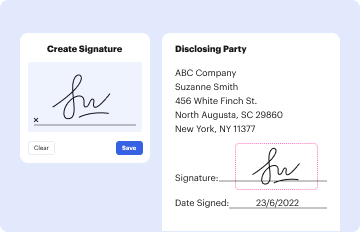
Obtain Signatures: Both parties should sign the document to confirm their agreement to the outlined terms. Utilize electronic signatures if the document is shared digitally.
Steps to Complete the Hourly Employee Agreement Template
Completing the Hourly Employee Agreement Template requires careful attention to detail. Follow these steps to ensure a comprehensive agreement:
-
Input Employee Information: Begin by inserting the names, addresses, and contact details of both the employer and the employee.
-
Define Employment Terms: Specify the employment start date and, if applicable, the expected end date or period of employment.
-
Detail Compensation and Work Hours: Clearly state the hourly rate of pay, the expected working hours per day or week, and any overtime pay structure.
-
Specify Benefits: Include details about available employee benefits, such as health insurance, paid time off, and retirement plans.
-
Outline Termination Conditions: Define situations that can lead to termination of employment, including misconduct or breach of agreement terms.
-
Add Confidentiality Clauses: If applicable, include provisions related to confidentiality and proprietary information.
-
Legal Review: Consider having a legal professional review the document to ensure compliance with labor laws.
Key Elements of the Hourly Employee Agreement Template
The Hourly Employee Agreement Template is composed of several critical sections, each serving a specific function:
- Job Description: Outlines the specific tasks and responsibilities expected from the employee.
- Compensation Section: Details the hourly wage, payment frequency, and any performance bonuses.
- Work Schedule: Specifies standard working days and times, including any overtime policies.
- Benefits and Perks: Lists any additional compensations like healthcare, commuter benefits, or holiday pay.
- Termination Policy: Explains the conditions under which either party may terminate the agreement.
- Confidentiality Agreement: Protects proprietary information and intellectual property.
- Governing Law Clause: Indicates which state's laws will manage the agreement.
Important Terms Related to Hourly Employee Agreements
Understanding certain terminology is essential when engaging with an Hourly Employee Agreement Template. Here are key terms:
- At-Will Employment: Indicates that the employment can be terminated by either party at any time without cause.
- Non-Disclosure Agreement (NDA): A legal promise to keep specified information confidential.
- Probation Period: A trial period during which the employer evaluates the employee's performance before making a permanent hire.
- Overtime: Additional hours worked beyond the standard work week, often compensated at a higher pay rate as dictated by state and federal laws.
- Collective Bargaining Agreement: A contract negotiated between an employer and a union representing the employees, which may impact terms in the agreement.
Legal Use of the Hourly Employee Agreement Template
The Hourly Employee Agreement Template helps establish a legally binding relationship under U.S. employment law. It serves multiple purposes:
- Clarifies Employment Terms: Clearly defined terms and conditions protect both parties from disputes.
- Ensures Compliance: Adhering to state and federal regulations, including wage and hour laws.
- Provides Legal Recourse: In the event of a dispute, the agreement can be used as evidence to enforce employment terms.
State-Specific Rules for the Hourly Employee Agreement Template
State laws can significantly influence the content and enforcement of hourly employee agreements. Consider the following state-specific factors:
- Minimum Wage Laws: Different states have variable minimum wage requirements that must be adhered to.
- Overtime Provisions: State-specific rules might determine how overtime is calculated and compensated.
- Employment Termination: States can have different laws regarding notice periods and acceptable grounds for termination.
- Paid Leave: States may have specific requirements concerning sick leave and paid time off.
Employers should consult state labor statutes or a legal professional to ensure compliance with relevant local regulations.
Who Typically Uses the Hourly Employee Agreement Template
The Hourly Employee Agreement Template is used by various individuals and entities involved in hourly employment. Typical users include:
- Small Businesses: Organizations with hourly employees use this template to formalize employment terms efficiently.
- Human Resources Departments: HR personnel draft and modify these agreements during the onboarding process for new hires.
- Freelancers or Contractors: Hourly contracts may be used when engaging temporary workers or consultants.
- Individual Employers: Homeowners hiring domestic staff like nannies or housekeepers often use such templates to outline working terms.

Examples of Using the Hourly Employee Agreement Template
Exploring practical examples illustrates the utility and flexibility of the Hourly Employee Agreement Template:
- Retail Industry: Stores hire sales associates on an hourly basis to manage shifts and workloads, using agreements to confirm wage rates and work hours.
- Healthcare Sector: Nursing assistants or aides often work on an hourly basis, where agreements specify shift patterns and night work premiums.
- Hospitality Business: Restaurants employ waitstaff and kitchen help hourly, requiring specific terms around seasonal work and tips.
- Education: Tutors or administrative assistants engaged on an hourly basis benefit from clear agreements outlining payment schedules and duties.
These examples showcase how the template facilitates clear communication and legal assurance in various employment scenarios.