






Definition and Meaning
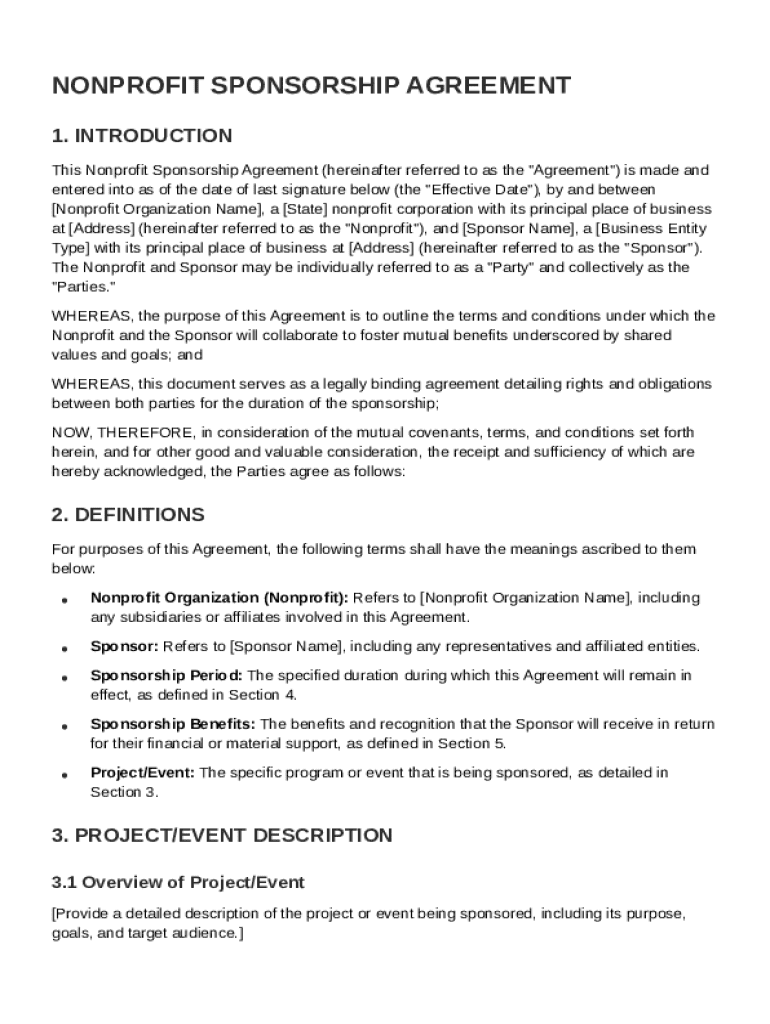
The Nonprofit Sponsorship Agreement Template is a legal document utilized by nonprofit organizations to formalize the terms of collaboration with sponsors. It specifies the responsibilities, financial contributions, and sponsorship benefits, ensuring both parties have a clear understanding of their respective obligations. This agreement is essential for establishing a formal partnership, detailing the benefits sponsors receive in return for their support, such as recognition and promotional opportunities. By outlining provisions for termination, indemnification, confidentiality, and dispute resolution, the template serves as a safeguard, ensuring legal protection and clarity for both the nonprofit and the sponsor.
Key Elements of the Nonprofit Sponsorship Agreement Template
A thorough Nonprofit Sponsorship Agreement Template should include several key components to ensure a comprehensive understanding between the involved parties:
- Parties Involved: Clearly identify the nonprofit organization and the sponsor, including their official names and contact information.
- Purpose and Scope: Describe the specific project or event that the sponsorship will support, outlining the cooperative effort's goals and expected outcomes.
- Financial Details: Specify the sponsor's financial contributions, including payment schedules and any conditions attached to the funding.
- Sponsorship Benefits: Detail the benefits provided to the sponsor, such as branding opportunities, event participation, or advertising in organizational materials.
- Duration and Termination: Set the agreement's time frame and stipulate conditions under which termination may occur.
- Confidentiality and Indemnification: Outline the obligations regarding sensitive information and legal liabilities.
- Dispute Resolution: Identify procedures for resolving disputes, such as mediation or arbitration, to prevent litigation.
Steps to Complete the Nonprofit Sponsorship Agreement Template
Completing the Nonprofit Sponsorship Agreement Template requires attention to detail and a step-by-step approach to ensure accuracy and comprehensiveness:
- Gather Information: Collect all necessary details concerning the nonprofit and sponsor, including legal names and addresses.
- Define Objectives: Clearly define the purpose and goals of the sponsorship, ensuring alignment between the nonprofit's needs and the sponsor's interests.
- Outline Financial Contributions: Specify the amount and schedule of contributions, addressing any conditions related to the funding.
- Detail Sponsorship Benefits: List the benefits the sponsor will receive, ensuring they are commensurate with their support.
- Draft Legal Terms: Use precise language to outline termination, confidentiality, indemnification, and dispute resolution clauses.
- Review and Revise: Examine the document for clarity and completeness, potentially seeking legal advice to verify its accuracy.
- Sign and Date: Obtain signatures from all parties to make the agreement legally binding.
Legal Use of the Nonprofit Sponsorship Agreement Template
The template should be used in compliance with applicable laws to ensure its legality and enforceability:
- Contract Law: As a legal document, the agreement should adhere to basic contract law principles, such as offer, acceptance, and consideration.
- Local and Federal Regulations: Review state-specific requirements and federal laws affecting nonprofit organizations and sponsorships.
- Nonprofit Compliance: Ensure that the sponsorship aligns with the nonprofit’s mission and legal obligations, preventing conflicts of interest.
Consult legal expertise to confirm that the document meets all necessary legal standards and does not conflict with existing rules.
Important Terms Related to Nonprofit Sponsorship Agreement Template
Understanding key terms is crucial for drafting an effective agreement:
- Sponsorship: A mutually beneficial arrangement where a sponsor supports a nonprofit financially or in-kind in exchange for recognition or other benefits.
- Indemnification: The process by which one party agrees to protect another from certain damages or legal liabilities.
- Confidentiality Clause: Ensures private information shared during the sponsorship is protected from unauthorized disclosure.
- Termination Clause: Defines conditions under which the agreement can be ended prior to the agreed-upon date.
These terms help shape a clear and enforceable agreement, protecting all parties involved.
Who Typically Uses the Nonprofit Sponsorship Agreement Template
This template is used by various parties involved in nonprofit activities:
- Nonprofit Organizations: Looking to secure funding and support for projects or events.
- Sponsors: Companies or individuals seeking to contribute to nonprofits while receiving exposure or other benefits.
- Legal Advisors: Assisting in drafting and reviewing the agreement to ensure legal compliance.
- Event Planners: Facilitating partnerships between nonprofits and sponsors for fundraising events.
Understanding who uses this template can provide context for its application and relevance across different sectors.


Examples of Using the Nonprofit Sponsorship Agreement Template
Real-world examples demonstrate the template's utility:
- Charity Events: Nonprofits securing event sponsors to fund the logistics and execution of charity dinners, auctions, or walks, in exchange for promotional opportunities at the event.
- Educational Programs: Organizations partnering with businesses to sponsor educational workshops or seminars, where sponsors receive recognition in course materials or during the event.
- Cultural Festivals: Establishing sponsorships for arts or cultural festivals, granting sponsors advertising space and logo placement.
These scenarios illustrate the template’s adaptability in various contexts, highlighting its value for different nonprofit initiatives.
State-Specific Rules for the Nonprofit Sponsorship Agreement Template
Certain states may have unique regulations affecting nonprofit sponsorships:
- Registration Requirements: Some states require nonprofits to register sponsorship agreements with regulatory agencies.
- Charitable Solicitation Laws: Ensure compliance with state laws governing fundraising and solicitations.
- Tax Implications: Consider state-specific tax benefits or obligations for sponsorship contributions.
Understanding these variations can ensure adherence to legal standards and optimize the agreement's effectiveness.
Software Compatibility
To maximize the utility of the Nonprofit Sponsorship Agreement Template, consider software compatibility:
- Document Editing Software: Use platforms like DocHub to edit and sign agreements seamlessly, with accessibility from Google Drive or your computer.
- Integration with Accounting Software: Ensure compatibility with tools like QuickBooks to track financial contributions accurately.
- Cloud Storage: Save agreements securely in cloud storage platforms like Dropbox or OneDrive for easy accessibility and sharing.
Selecting the right software ensures streamlined processes and maintains the agreement’s integrity throughout its lifecycle.