






Definition and Meaning
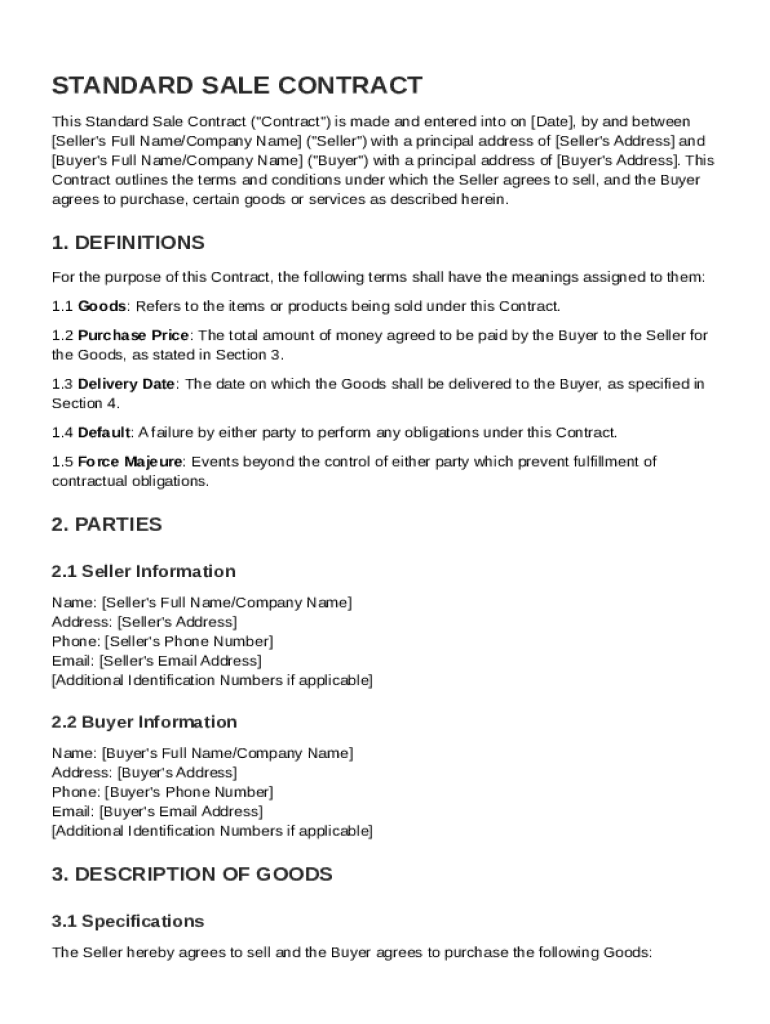
A Standard Sale Contract Template serves as a legal framework outlining the terms and conditions for the sale of goods or services between a seller and a buyer. The template includes critical components such as the definitions of terms used throughout the document, which help ensure both parties clearly understand the language in the contract. It defines the parties involved, typically the buyer and the seller, and their respective roles and responsibilities in the transaction. This document is pivotal in outlining the legal obligations and rights of both parties to prevent any misunderstandings or disputes regarding the sale.
Examples and Applications
The template is widely used in various industries, ranging from real estate to consumer goods, and can be adapted to specific transactions. For instance, in real estate, it could detail property descriptions, purchase price, and payment terms, while in the sale of consumer goods, it might focus more on delivery conditions and warranty provisions. This versatility makes it a valuable tool for businesses aiming to streamline their sales processes.
Key Elements of the Standard Sale Contract Template
A comprehensive Standard Sale Contract Template typically consists of numerous key elements that are essential for clear communication and legal accountability. These elements include:
- Description of Goods/Services: Detailed outline of what is being sold.
- Purchase Price: Specific amount the buyer agrees to pay.
- Payment Terms: Information on how and when payments will be made.
- Delivery Conditions: Specifies how the goods/services will be delivered.
- Inspection Rights: Details the buyer's right to inspect goods upon receipt.
- Warranty Provisions: Outlines any warranties provided by the seller.
- Default Remedies: Steps that may be taken if one party fails to meet their obligations.
Practical Examples
Consider a situation where a company sells office equipment; the contract would specify each item's condition, ensuring the buyer knows precisely what to expect before purchase. Any warranties, such as repair or replacement guarantees, would also be explicitly stated to protect both parties.
How to Use the Standard Sale Contract Template
To effectively utilize the Standard Sale Contract Template, follow a structured approach:
- Identify the Parties: Clearly state the identities of the buyer and the seller.
- Detail the Transaction: Provide a comprehensive description of the goods or services, including any unique identifiers or descriptions necessary for specificity.
- Clarify Terms and Conditions: Explicitly outline payment terms, delivery procedures, and inspection rights.
- Define Legal Protections: Ensure warranty provisions, default remedies, and other legal protections are clearly written to safeguard the interests of both parties.
Step-by-Step Process
- Review the Template: Understand each section thoroughly.
- Customize as Required: Modify any sections to better fit the specific context of your transaction.
- Seek Legal Advice: For transactions of significant value, consult a legal professional to ensure compliance with relevant laws.
Legal Use of the Standard Sale Contract Template
The Standard Sale Contract Template is legally binding and compliant with pertinent laws, provided it is filled out correctly. It should adhere to contractual requirements like mutual consent, legal purpose, and the capability of both parties to engage in a contract.
Ensuring Compliance
- Mutual Agreement: Ensure both parties have an understanding and agreement.
- Capacity and Legality: Verify that both the buyer and seller are legally able to enter a contract.
- Legal Counsel: Consider having a lawyer review the final document before use.
Who Typically Uses the Standard Sale Contract Template
Businesses of various sizes and sectors frequently employ the Standard Sale Contract Template. These contracts are essential for:
- Real Estate Agents: To formalize property sales.
- Manufacturers and Wholesalers: Ensuring terms of sale are clear and enforceable.
- Small Business Owners: Protecting interests when selling goods or services directly to consumers or other businesses.


Business Benefits
Using a standardized template can reduce the time spent drafting contracts and minimizes legal risks through clear, consistent documentation. It aids in maintaining professionalism and reliability in business dealings.
Important Terms Related to the Standard Sale Contract Template
Understanding the terminology used within a Standard Sale Contract Template is crucial:
- Consideration: Something of value exchanged between the parties.
- Breach of Contract: A violation of any of the agreed-upon terms.
- Force Majeure: A clause to protect against unforeseeable events like natural disasters that prevent contract fulfillment.
Contextual Applications
These terms often play a critical role when disputes arise. For example, if a delivery date is missed due to unforeseen weather events causing delays, invoking a force majeure clause might protect the seller from default allegations.
Steps to Complete the Standard Sale Contract Template
Completing the Standard Sale Contract Template involves several steps to ensure accuracy and compliance:
- Gather Information: Collect all necessary data about the goods/services and the parties involved.
- Fill in Details: Enter the specific details in each section of the template.
- Review for Accuracy: Double-check all entries to ensure accuracy and completeness.
- Sign the Document: Once reviewed, both parties should sign the document to make it legally binding.
Detailed Instructions
- Information Gathering: Prioritize accuracy in data collection.
- Double-Check Terms: Review payment terms and delivery dates thoroughly.
- Legal Review: Engage a legal professional if needed for critical transactions.
State-Specific Rules for the Standard Sale Contract Template
When using a Standard Sale Contract Template in the United States, it's important to account for state-specific laws that may impact the enforceability or requirements of the contract. Some states might have unique regulations regarding sales tax inclusions, buyer's right to rescind, or format of essential clauses.
State-by-State Differences
- California: Requires explicit notices for warranty terms.
- Texas: May have specific provisions related to agriculture or energy sectors.
Understanding these differences can prevent legal complications and ensure the contract is enforceable across different jurisdictions. Always consult with a legal advisor familiar with the state's laws where the contract is executed.