






Definition and Meaning
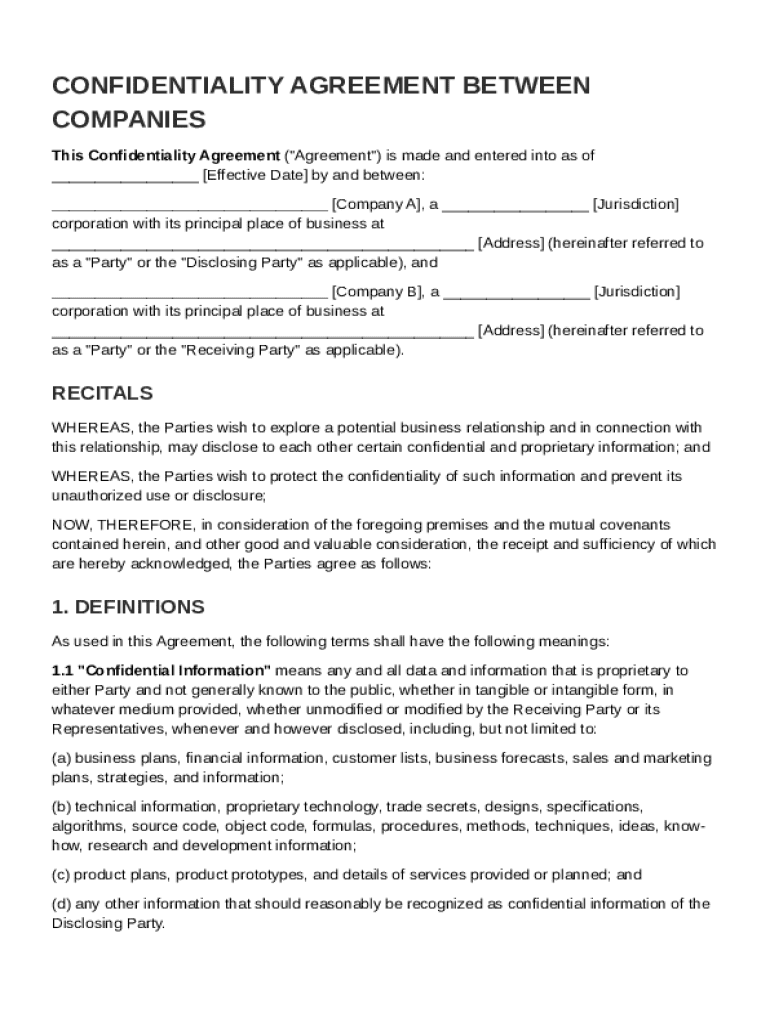
A Confidentiality Between Companies Agreement Template outlines the terms for sharing sensitive information between two entities, usually a Disclosing Party and a Receiving Party. This legal document ensures that proprietary details exchanged during potential business negotiations are kept confidential. It defines what constitutes 'Confidential Information,' sets protection obligations, and specifies any exclusions to confidentiality. Furthermore, it dictates how the information must be returned or destroyed once the agreement ends, preventing unauthorized use or disclosure.
Key Elements of the Agreement Template
This agreement template features several critical components, each designed to protect the interests of both parties:
- Confidential Information: Clearly defines what information needs protection, including business strategies, financial data, intellectual property, and other sensitive details.
- Obligations: Specifies the responsibilities of each party regarding the protection of the disclosed information.
- Exclusions: Outlines what information is not considered confidential, such as data already in the public domain.
- Return/Destruction Clause: Requires the return or destruction of confidential materials after the termination of the agreement.
How to Use the Confidentiality Between Companies Agreement Template
Utilizing this template involves several straightforward steps to ensure smooth transactions:
- Identify Parties: Clearly list the Disclosing and Receiving Parties.
- Define Scope: Outline the type of information to be shared and protected.
- Customize Terms: Adjust the clauses to fit specific business needs, including any additional provisions.
- Finalize Agreement: After both parties agree on the terms, execute the agreement with electronic signatures.
Practical Example:
A technology company sharing proprietary software code with a potential partner would use this agreement to prevent unauthorized disclosure.
Who Typically Uses the Confidentiality Between Companies Agreement Template
Different entities utilize this template based on their business interactions:
- Corporations: To protect proprietary technologies and trade secrets during mergers.
- Small Businesses: For safeguarding sensitive financial data when negotiating supplier contracts.
- Start-ups: To protect innovative business models or technological inventions when seeking investors.


Detailed Scenarios:
- A start-up discussing funding with a venture capital firm.
- A manufacturing company outsourcing a component design.
Legal Use of the Agreement Template
This template ensures adherence to legal standards, thus maintaining the integrity of confidential exchanges. It's essential for preventing unauthorized information distribution, which could lead to business losses or reputational damage. Legal enforceability provides peace of mind, knowing that there is recourse should a breach occur.
Steps to Complete the Agreement Template
Utilizing a step-by-step approach ensures all areas are sufficiently covered:
- Draft Initial Agreement: List out vital clauses based on the transaction's nature.
- Review with Legal Counsel: Ensure compliance with legal standards.
- Obtain Signatures: Use electronic signatures to validate the document.
- Distribute Copies: Share with both parties and securely store for records.
Important Terms Related to the Template
Understanding the terminology is vital for proper usage:
- Non-Disclosure: Commitment to not sharing specific data with third parties.
- Proprietary Information: Data exclusive to the Disclosing Party.
- Termination Clause: Rules governing the end of the confidentiality period.
Examples of Using the Confidentiality Agreement Template
Real-world applications illustrate the template's versatility:
- Healthcare Firms: Sharing patient data with service providers while ensuring compliance with HIPAA.
- Research Partnerships: Universities and corporations collaborating on projects needing intellectual property protection.
- Supply Chain Collaborations: Protecting manufacturing processes shared between companies.
This diverse application underscores the importance of these agreements in different contexts, ensuring sensitive information remains secure across various industries and scenarios.