






Definition & Purpose of a Contract Between Two Parties
A contract between two parties is a legally binding agreement that outlines the terms of an arrangement involving the exchange of goods or services. This type of document is quintessential in setting clear expectations and responsibilities between the entities involved. Typically, it encompasses sections detailing the working scope, payment terms, confidentiality clauses, and processes for dispute resolution. Having a formal contract ensures that both parties understand their commitments, thereby reducing potential conflicts and facilitating smoother interactions.
Examples of Common Usage
- Service Exchanges: Contractors providing services like repairing, consulting, or designing.
- Supply Agreements: Manufacturers entering an agreement with vendors for raw materials.
- Lease Contracts: Landowners and tenants agreeing upon rental terms and property conditions.
How to Use the Between Two Parties Contract Template
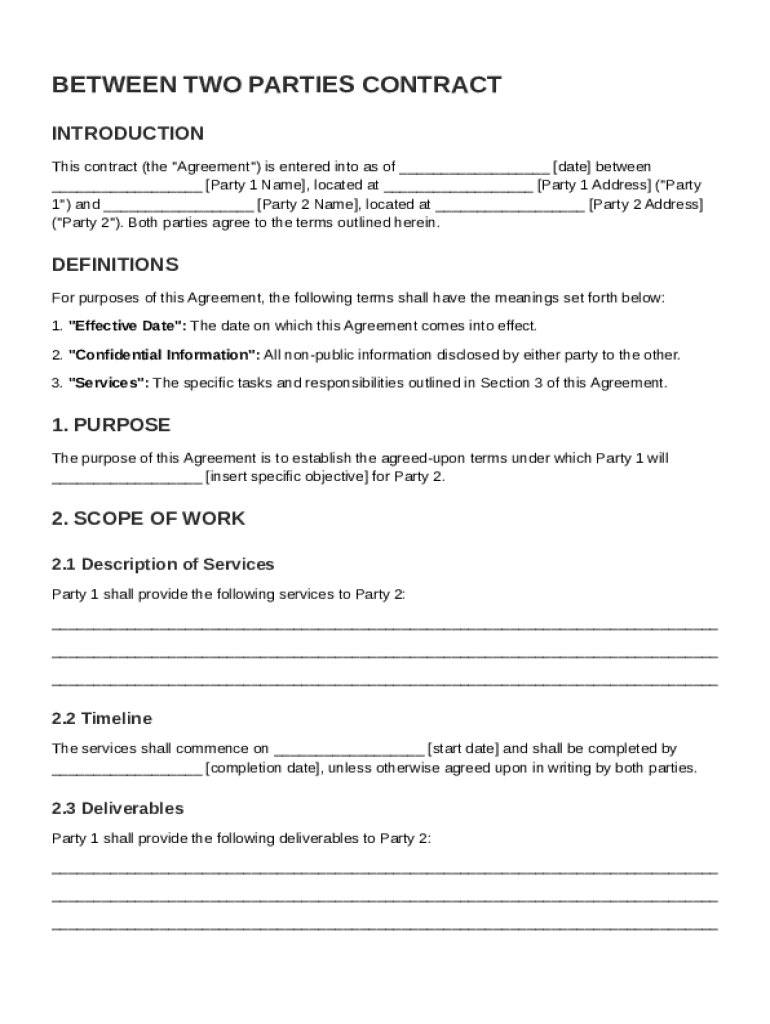
This template provides a structured framework that can be customized according to specific agreements. Start by filling in the details regarding each party, including legal names and contact information. Follow by defining the scope of work, which outlines the expected outcomes, timelines, and deliverables in clear, concise terms. Adjust the payment section to reflect the agreed compensation structure, specifying due dates and mechanisms, such as bank transfers or online payment systems.
Practical Steps for Customization
- Identify Parties: Clearly state the full legal names and addresses of all parties involved.
- Define Scope: Outline precise services or products to be rendered, including deadlines.
- Set Payment Terms: Specify amounts, due dates, and payment methods to ensure clarity.
- Include Necessary Clauses: Add clauses for confidentiality, liability, and termination conditions.
Important Terms Related to Contract Templates
Understanding the language used within contracts is vital to prevent misunderstandings and legal disputes. Key terms often found in these documents include:
- Confidentiality: A clause ensuring information shared will not be disclosed without consent.
- Indemnification: Obligating one party to compensate for losses incurred by the other due to specific issues.
- Termination: Conditions under which the contract can be voided prior to its fulfillment.
- Force Majeure: Conditions allowing for contract suspension due to unforeseen events beyond control.
Key Elements of the Between Two Parties Contract Template
A standard contract includes several essential sections to comprehensively outline the agreement:
- Definitions & Interpretations: Clearly describe technical terms and abbreviations.
- Contract Duration: Specify the start and end dates, including any renewal options.
- Liability & Indemnification: Detail the responsibilities each party has towards potential risks or damages.
- Governing Law: The jurisdiction or legal system governing the terms, often based where the parties operate.
Additional Considerations
- Dispute Resolution: Incorporate mechanisms such as arbitration or mediation clauses to manage disagreements efficiently.
- Amendments: Describe how changes to the contract will be documented and agreed upon.
Legal Use of the Between Two Parties Contract Template
Ensuring that a contract template meets legal standards is crucial for its enforceability. Typically, contracts adhere to the principles of offer, acceptance, and mutual consent. They should comply with state and federal laws, which may vary depending on jurisdiction.
Steps to Ensure Legal Compliance
- Consult Legal Expertise: Prior to using, consult with a lawyer familiar with the jurisdiction-specific laws.
- Verify All Signatories: Ensure all parties signing the contract are authorized representatives.
- Gather Witnesses or Notarization: Depending on the contract's nature, certain agreements may require witnessing or notarization to be legally binding.
Steps to Complete the Contract Template
Completing a contract template involves several clear steps that ensure both validity and clarity throughout the document. By addressing each section carefully, the accuracy and enforceability of the contract are maintained.
Step-by-Step Guide
- Gather Necessary Information: Include full names, addresses, and contact information for all parties.
- Draft Detailed Scope of Services/Products: Describe all deliverables, including quality standards and expectations.
- Detail Payment Information: Clearly state the payment amounts, schedules, and acceptable methods.
- Review Legal Clauses: Verify that all clauses, such as confidentiality, are present and appropriate.
- Sign & Secure Copies: Once finalized and reviewed, gather signatures from all parties and distribute copies for record-keeping.
Examples of Using a Contract Template
Here are scenarios where having a well-drafted contract template is beneficial:
- Freelance Designers: Protect intellectual property and ensure payment upon project delivery.
- Consultants: Define scope and service terms to secure payments after achieving milestones.
- Small Businesses: Use contracts to formalize supplier relationships, reducing risks of disputes.
Real-World Application
- Case Study: A freelance graphic designer uses a contract template to secure a large agency client, including clear terms on design revisions, project timelines, and payment schedules. This framework helped in addressing potential misunderstandings and expedited their negotiation process.
State-Specific Rules for Contracts
Legal norms and requirements for contracts can vary significantly across different states. When drafting a contract, understanding state-specific guidelines is essential to ensure compliance and protect both parties' interests.
Key Differences by State
- Signature Requirements: Some states might require notarization or witnesses.
- Disclosure Rules: Certain states mandate specific disclosures depending on the contract nature.
- Enforceability Clauses: Variations may exist in how certain clauses, such as non-compete agreements, are interpreted.
This comprehensive information should ensure the effective use and understanding of the "Between Two Parties Contract Template." Each section provides valuable guidance, maintaining the contract's clarity and enforceability throughout its lifecycle.