
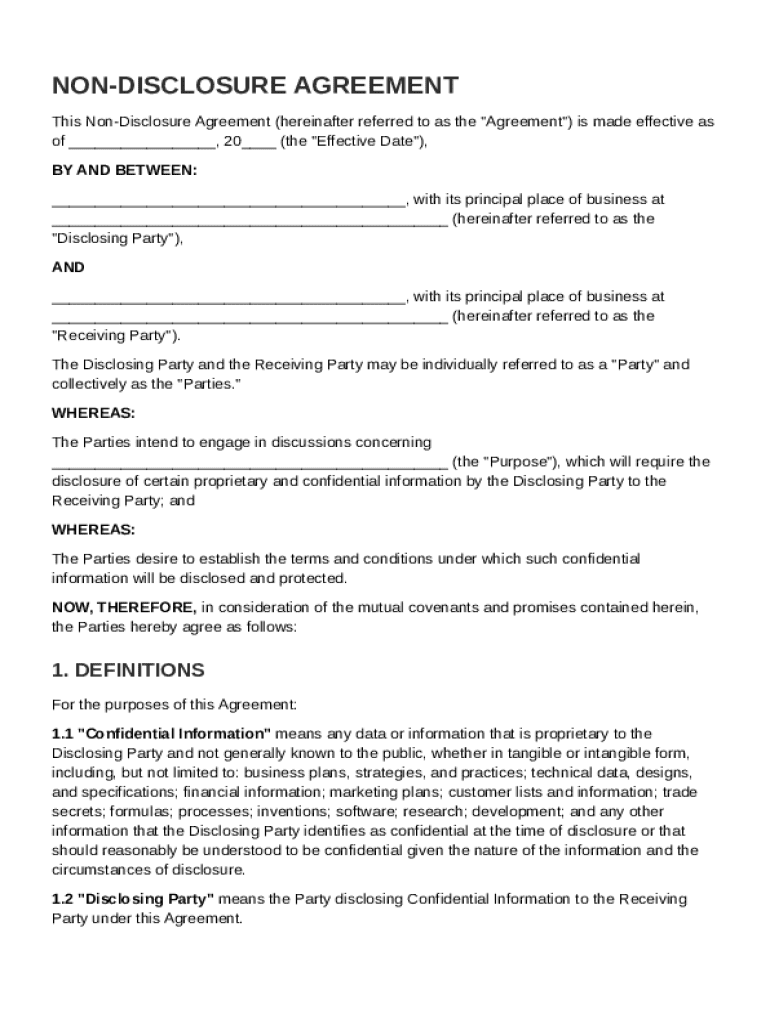







Definition and Purpose of the Non-Disclosure Agreement Template
A Non-Disclosure Agreement (NDA) is a legal contract between two or more parties who wish to share confidential information. It primarily protects sensitive data from being disclosed to unauthorized entities, ensuring privacy in various professional settings. NDAs are essential in situations where businesses need to collaborate or discuss proprietary processes, strategies, or intellectual property, such as partnerships, mergers, or project developments.
A typical NDA outlines key components, including the definition of what constitutes confidential information, obligations of the receiving party, and the conditions under which the information can be shared or used. This agreement provides a legal framework to enforce confidentiality and lays out the consequences for breach of contract. By using a template, businesses can efficiently draft a contract that suits their specific needs while ensuring that it complies with legal requirements.
Important Terms in Non-Disclosure Agreements
- Confidential Information: Specifies what information is considered confidential, including any exclusions such as publicly available data.
- Disclosing Party: The individual or entity that shares confidential information.
- Receiving Party: The individual or entity that receives the confidential information and is responsible for maintaining its secrecy.
- Breach of Contract: Occurs when a receiving party fails to uphold the confidentiality terms, leading to potential legal action.
- Term of the Agreement: The duration for which the NDA is valid, which can differ based on the nature of the relationship and information shared.
- Governing Law: The legal jurisdiction that will oversee the enforcement and interpretation of the agreement.
Obtaining and Using the No Disclosure Agreement Template
Templates for NDAs are widely available and can be customized to fit specific needs. They are often provided by legal software platforms or document management services like DocHub, which offer tools to personalize and prepare documents for signature. By using a template, businesses can ensure a consistent approach to confidentiality across various projects and transactions.
Steps to Utilize the Template
- Download the Template: Choose a reliable source that offers customizable NDA templates in compatible file formats like PDF, DOC, or TXT.
- Customize the Agreement: Personalize the template by filling in details relevant to the parties involved, including names, the scope of confidentiality, and specific terms applicable to your case.
- Seek Legal Advice: Consult a legal professional to review the customized NDA to ensure its legality and enforceability.
- Sign and Share: Use electronic signature solutions for signing. When necessary, set password protections and permission levels for document access.
- Storage and Access: Securely store the signed agreement in a document management system like DocHub for easy retrieval and future reference.
Key Elements of the Non-Disclosure Agreement Template
NDAs typically comprise sections that outline the following crucial elements to prevent unauthorized disclosure of confidential information:
- Purpose of Disclosure: Clarifies why the confidential information is being shared and what the receiving party can do with it.
- Obligations of the Parties: Specifies the level of care expected from the receiving party to prevent unauthorized use or disclosure of information.
- Exceptions: Lists any scenarios where confidential information might be disclosed, such as legal obligations or prior public knowledge.
- Jurisdiction and Governing Law: Identifies the state or country whose laws will be applicable, especially important in situations involving cross-border disclosures.
- Termination Clause: Details the process and conditions under which the NDA can be terminated by either party, if necessary.
Business Types That Benefit Most from Non-Disclosure Agreements
Various business situations benefit from implementing NDAs, particularly when sensitive information is at stake. Industries commonly using NDAs include:
- Technology and Innovation: Protect proprietary technologies, patents, and processes during development and before public release.
- Healthcare and Pharmaceuticals: Guard sensitive patient data, go-to-market strategies, and proprietary research.
- Manufacturing: Secure trade secrets and design specifications when collaborating with suppliers or partners.
- Media and Entertainment: Protect scripts, production details, and promotional strategies before official announcements.
Real-World Scenarios
- Startups: When pitching to investors, startups often use NDAs to secure their unique business ideas and innovative approaches.
- Corporate Partnerships: Large companies may use NDAs when entering into partnerships for joint ventures to protect mutually shared intellectual property.
Legal Use and Compliance of Non-Disclosure Agreements in the U.S.
In the U.S., NDAs must follow federal laws like the Defend Trade Secrets Act and state-specific contract laws. Legal enforceability requires clear language and reasonable terms regarding the confidentiality of exchanged information. States may have variations in their treatment of NDAs, particularly in terms of coverage scope and enforceability in employment contexts.
Compliance Considerations
- Reasonability: The duration and scope of confidentiality must not impose undue restrictions on the receiving party.
- Specificity: The agreement should be precise about what information is confidential and the purpose of the disclosure.
- Fairness: Both parties should have equal bargaining power to ensure the NDA is fair and not one-sided.
Variations and Alternatives to Traditional NDAs
While NDAs are standard, some situations might require different or additional legal agreements:
- Mutual NDA: When both parties plan to exchange sensitive information and need to protect each other's interests.
- Non-Compete Agreements: Focuses on restricting competition, which is different from confidentiality but may accompany NDAs.
- Confidentiality Clauses: Often embedded within larger contracts to specifically address confidentiality without a separate NDA.
Choosing the Right Agreement
Consider the nature and scope of the transaction and potential legal implications when deciding between a standard NDA, a mutual NDA, or incorporating confidentiality clauses into broader agreements.
State-by-State Differences in Non-Disclosure Agreements
While NDAs are generally consistent across the U.S., specific state laws can affect their enforceability and terms:
- California: Particularly stringent on non-compete clauses even when tied to NDAs, to ensure employee mobility.
- New York: Generally upholds NDAs but emphasizes clarity and limits on confidentiality duration.
- Texas: Enforces NDAs as long as they comply with state laws regarding reasonable scope and duration.
Practical Implications for Businesses
To ensure compliance, businesses should:
- Review state-specific contract laws relevant to their operations.
- Tailor NDAs to reflect the legal framework of the states where parties operate or reside.
- Engage local legal counsel to navigate variations and enhance enforceability within specific jurisdictions.
By focusing on these aspects, businesses can effectively protect their confidential information while adhering to regional variations in legal requirements.




