




01. Edit your form online
Type text, add images, blackout confidential details, add comments, highlights and more.

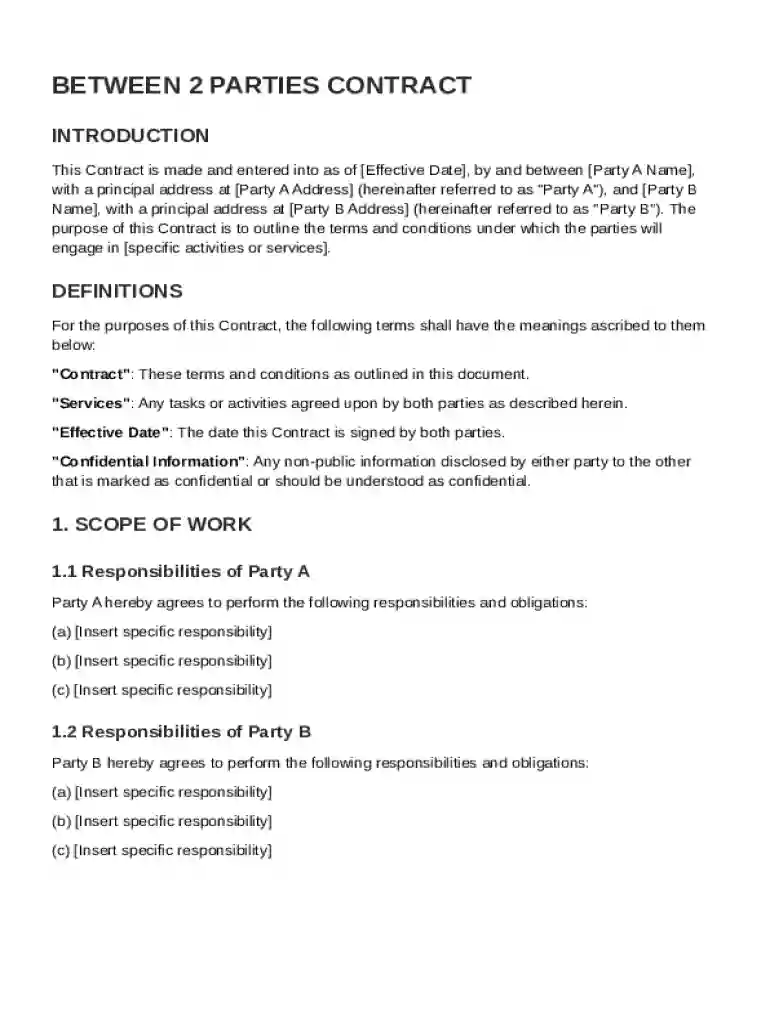
Type text, add images, blackout confidential details, add comments, highlights and more.

Draw your signature, type it, upload its image, or use your mobile device as a signature pad.

Send it via email, link, or fax. You can also download it, export it or print it out.
The "Between 2 Parties Contract Template" serves as a foundational document crafted to outline the terms and conditions between two distinct parties engaging in a specified activity or service. It stipulates the scope of responsibilities for each party, ensuring a mutual understanding is established between them. This type of contract is essential for delineating duties and rights, thus preventing potential disagreements. Elements such as compensation terms, duration, confidentiality agreements, and dispute resolution processes are clearly defined, making it a critical resource for formalizing arrangements across various contexts.
The template comprises several crucial sections:
Contracts using this template are legally binding and are typically upheld in U.S. courts as long as they meet basic contractual law requirements, such as capacity, consideration, and mutual consent. The ESIGN Act supports electronic signatures within these templates, ensuring that digital contracts remain enforceable. Parties must also adhere to any state-specific requirements, which may affect aspects of contract validity and enforceability.
This contract template is widely beneficial across multiple sectors, including:


Contractual requirements can vary significantly by state. For instance:
While both digital and paper versions of the contract template are valid, digital formats offer several advantages:
Integrating the "Between 2 Parties Contract Template" into Google Workspace simplifies document management. You can draft, share, and edit contractual agreements within the ecosystem such as Google Docs, facilitated by tools like DocHub for enhanced editing and signing capabilities. This integration supports collaborative drafting and immediate updates, reducing the need for additional emails or notifications.
At DocHub, your data security is our priority. We follow HIPAA, SOC2, GDPR, and other standards, so you can work on your documents with confidence.


To further the collaborative relationship between the Parties, the Parties agree to provide the following resources. Party A shall provide [enter resources
9.3 This agreement supersedes all prior maintenance agreements and understanding between the parties and may not be changed or terminated orally. 9.4 This
THIS PARTNERSHIP AGREEMENT is made this day of . 2XXX , by and between Partner 1 and Partner 2. Explanatory Statement. The parties hereto desire to


