Definition & Meaning
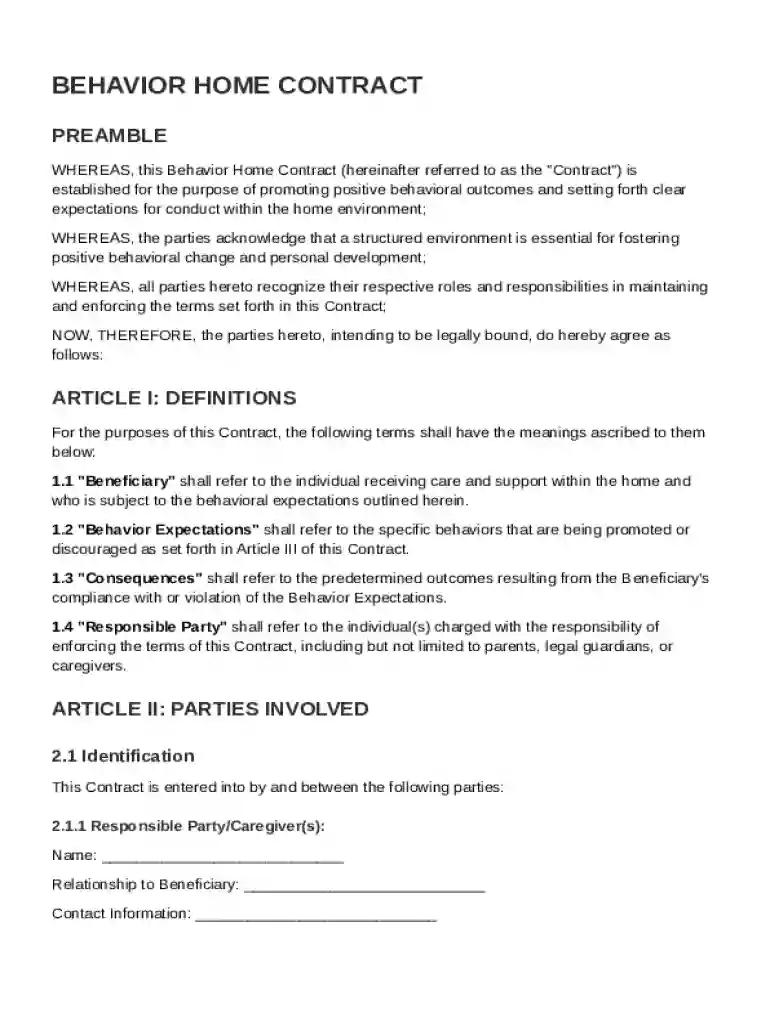
The Behavior Home Contract Template serves as a formal agreement designed to promote positive behavioral changes and outcomes for an individual, referred to as a beneficiary, within a home setting. This document outlines specific behavioral goals and expectations, setting a clear framework for all involved parties—typically including the beneficiary, caregivers, and any professional behavioral specialists participating in the process. It establishes terms that define roles and responsibilities, reinforcement strategies, and the mechanisms for monitoring progress. The contract is legally binding, incorporating the necessity for signatures from all parties to validate its effectiveness. By clearly delineating these components, this template helps create a structured and supportive environment aimed at achieving desired behavioral improvements.
Key Elements of the Behavior Home Contract Template
Within the Behavior Home Contract Template, several essential elements are meticulously outlined to ensure clarity and efficacy.
- Roles and Responsibilities: Each party’s role in the behavioral plan is detailed, ensuring that everyone is aware of their specific duties and expectations.
- Behavioral Goals: The contract stipulates explicit goals that the beneficiary is expected to achieve, which serve as measurable outcomes for desired behavioral changes.
- Reinforcement Strategies: This includes both positive reinforcement, such as rewards, and consequences for not meeting expectations, providing a balanced approach to behavioral modification.
- Confidentiality Clauses: These clauses help maintain the privacy of the beneficiary and involved parties, preventing unauthorized sharing of sensitive information.
- Modification Provisions: Space is given for adjustments to be made as necessary, allowing the contract to remain flexible and adaptable to changing needs.
How to Use the Behavior Home Contract Template
Using this template involves several straightforward steps that ensure the contract is both comprehensive and customized to the specific needs of the beneficiary.
- Identify the Participants: List all parties involved, including the beneficiary and supporting individuals or entities.
- Draft Behavioral Objectives: Clearly define achievable behavioral goals that align with the expectations and needs of the beneficiary.
- Establish Duration and Frequency: Set timelines for achieving goals, including how often behaviors are reviewed and assessed.
- Review and Finalize: Engage all parties in a final review session to discuss and agree upon the terms before finalizing signatures.
Steps to Complete the Behavior Home Contract Template
Completing the template involves a logical sequence of actions designed to ensure thoroughness and consensus among stakeholders.
- Preparation: Gather relevant information and identify all parties who must sign the contract. Ensure understanding among all stakeholders regarding the purpose and potential impact of the contract.
- Drafting: Fill in the contract template with the relevant details, ensuring clarity in the language used to describe goals and responsibilities.
- Consultation: Facilitate discussions with all parties to address concerns or questions, making adjustments to the template as necessary.
- Signing: Have all parties sign the document, confirming their commitment to the stipulated terms and conditions.
Legal Use of the Behavior Home Contract Template
The legal footing of the Behavior Home Contract Template is grounded in its comprehensive structure and requirement for clear, documented consent through signatures from all parties.
- Legality and Binding Nature: As a signed agreement, the template is enforceable in legal contexts if all elements align with state and federal laws regarding contracts.
- Dispute Resolution: Provides a framework for resolving disputes that may arise, stipulating the mechanisms and processes for reaching resolution.
- Documentation: Maintains a detailed record of behavior management strategies, which can be used for legal review if necessary.
Examples of Using the Behavior Home Contract Template
Several real-world applications illustrate the practical use of this template.
- Family Scenarios: Often used in households to manage specific behavioral challenges faced by children, promoting a supportive environment for change.
- Behavioral Therapy: Utilized by professional therapists to formalize treatment plans with clients, ensuring clear expectations and treatment goals.
- Educational Settings: Schools may adopt similar contracts to manage student behaviors, ensuring a structured approach to individual student needs.
Important Terms Related to Behavior Home Contract Template
Understanding the key jargon related to the template helps ensure accurate usage and understanding.
- Beneficiary: The individual whose behavior the contract seeks to modify.
- Reinforcement Strategies: Tactics used to encourage or discourage specific behaviors.
- Confidentiality: The requirement to protect the privacy of all involved parties and their information.
Who Typically Uses the Behavior Home Contract Template
The following groups are common users of this template, each leveraging it for different objectives and outcomes.

- Parents and Caregivers: Implement contracts for children to foster positive change within the home environment.
- Behavioral Specialists: Use the template to provide formalized plans that clients can follow with clarity and confidence.
- Educational Professionals: Apply the template to manage and improve student behaviors within a school setting, ensuring all activities align with educational goals.
Modification Provisions in the Behavior Home Contract Template
Flexibility is a crucial aspect of the Behavior Home Contract Template, ensuring it remains relevant as circumstances change.
- Adaptable Clauses: These allow for revisions to be made if the initial strategies are not producing the desired outcomes or if new challenges arise.
- Regular Reviews: Scheduled reviews help assess the effectiveness of the contract, presenting opportunities for necessary modifications to behavioral goals and expectations.
Software Compatibility with the Behavior Home Contract Template
Ensuring the template’s accessibility across various platforms and software is essential for broad usability.
- File Formats: The document is compatible with formats such as DOC, PDF, and TXT, allowing easy access and modification.
- Integration: Works seamlessly with common software such as Microsoft Word and Google Docs, facilitating easy editing and sharing across different devices.
This comprehensive coverage ensures that users are well-equipped to utilize the Behavior Home Contract Template effectively, maximizing its impact across various applications.