
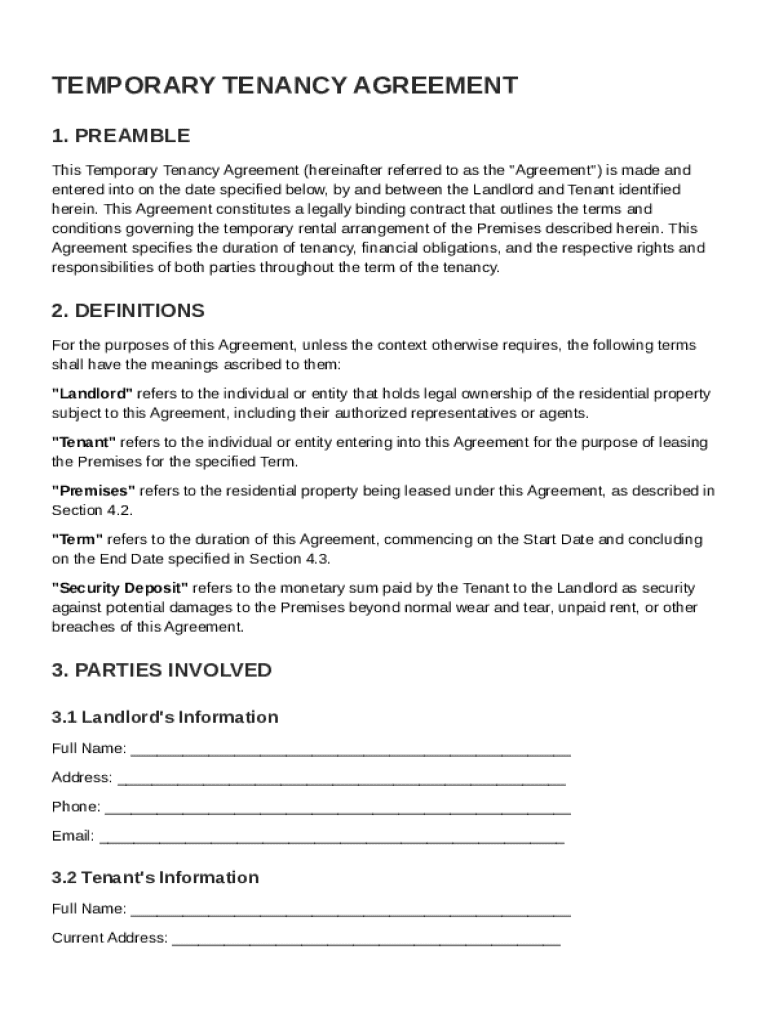







Definition and Meaning of a Temporary Tenancy Agreement Template
A Temporary Tenancy Agreement is a legal document that sets out the terms and conditions between a landlord and a tenant for a short-term rental arrangement. This type of agreement is crucial in establishing clear expectations regarding the use and occupancy of a property for a pre-defined period. It typically includes the duration of the tenancy, financial commitments such as rent and security deposit, responsibilities for utilities and maintenance, and rules for property use. By detailing these aspects, the Temporary Tenancy Agreement mitigates misunderstandings and disputes often associated with rental properties.
- Duration of Tenancy: Specifies the length of the rental period, distinguishing it clearly from long-term leases.
- Financial Obligations: Outlines rent amounts, payment schedules, and security deposit requirements.
- Rights and Responsibilities: Details the duties of both the landlord and tenant, including maintenance responsibilities and usage restrictions.
Key Elements of the Temporary Tenancy Agreement Template
This template encompasses several important components designed to protect both parties involved. Each section plays a vital role in ensuring a robust understanding of the lease terms.
- Duration Clause: Clearly defines the start and end dates of the tenancy.
- Rent Payment Terms: Specifies the amount, payment method, and due dates.
- Security Deposit Conditions: Details the amount, use, and conditions for return of the security deposit.
- Maintenance and Repairs: Assigns responsibility for property maintenance and specifies processes for requesting repairs.
How to Use the Temporary Tenancy Agreement Template
Utilizing this template involves following a series of steps to accurately and efficiently establish a temporary rental agreement.
- Review the Template: Familiarize yourself with all sections to ensure understanding.
- Customize Details: Fill in specific information such as names, addresses, and financial terms.
- Consult Legal Advice: Consider seeking legal counsel to ensure the agreement meets local regulations and adequately protects your interests.
Steps to Complete the Temporary Tenancy Agreement Template
Completing this template requires a systematic approach to ensure all necessary details are captured accurately.
- Gather Information: Collect personal details of both parties, property information, and agreed-upon terms.
- Complete the Template: Input the gathered information, paying special attention to financial and legal terms.
- Review and Revise: Thoroughly review the completed form to identify and correct any errors or omissions.
Legal Use of the Temporary Tenancy Agreement Template
This template serves as a legally binding contract and must be used in compliance with applicable laws and regulations.
- Local Housing Laws: Ensure the agreement adheres to state and local housing laws to avoid legal disputes.
- Legal Compliance: Include all necessary legal clauses to maintain compliance.
- Dispute Resolution: Outline procedures for resolving any disputes that may arise.
Important Terms Related to the Temporary Tenancy Agreement Template
Understanding the terminology used within this template is essential for all parties involved.
- Tenant: The individual or entity renting the property.
- Landlord: The property owner or authorized manager who rents out the dwelling.
- Lease Term: The agreed period for which the property is rented.
- Notice Period: The time required to notify the other party of intent to terminate or modify the agreement.
Who Typically Uses the Temporary Tenancy Agreement Template
This template is widely used by various parties involved in property rentals.
- Property Managers: Frequently use these templates to streamline temporary rental arrangements.
- Tenants Seeking Flexibility: Ideal for individuals requiring short-term housing solutions, such as business travelers or short-term workers.
- Landlords Offering Flexibility: Suitable for landlords looking to offer temporary housing without committing to long-term lease agreements.


State-Specific Rules for the Temporary Tenancy Agreement Template
While many elements of tenancy agreements are standardized, variations exist state-by-state that must be adhered to for legal compliance.
- State Laws: Different states may have unique requirements regarding deposits, notice periods, and tenant rights.
- Rental Caps: Some states may impose caps on rental amounts or stipulate specific terms around security deposits.
- Mandatory Disclosures: Local laws might mandate certain disclosures that must be included in tenancy agreements.
State-by-State Differences in Temporary Tenancy Agreements
Understanding the differences in state regulations is crucial in ensuring the legality and enforceability of your agreement.
- Rent Control Laws: States such as California have specific regulations around rent increments and tenant protections.
- Security Deposit Limits: Many states impose legal limits on the amount and handling of security deposits.
- Lease Modification Rules: Legal requirements for altering lease terms can vary significantly from one state to another.
Examples of Using the Temporary Tenancy Agreement Template
Instances where this template proves useful include various real-world and practical scenarios.
- Corporate Short-Term Housing: Companies may use temporary tenancy agreements for employees on short-term assignments.
- Temporary Relocation: Ideal for individuals relocating temporarily for work or personal reasons.
- Vacation Rentals: Often used in the context of renting holiday homes or short-term Airbnb rentals for limited periods.




