






Definition & Meaning
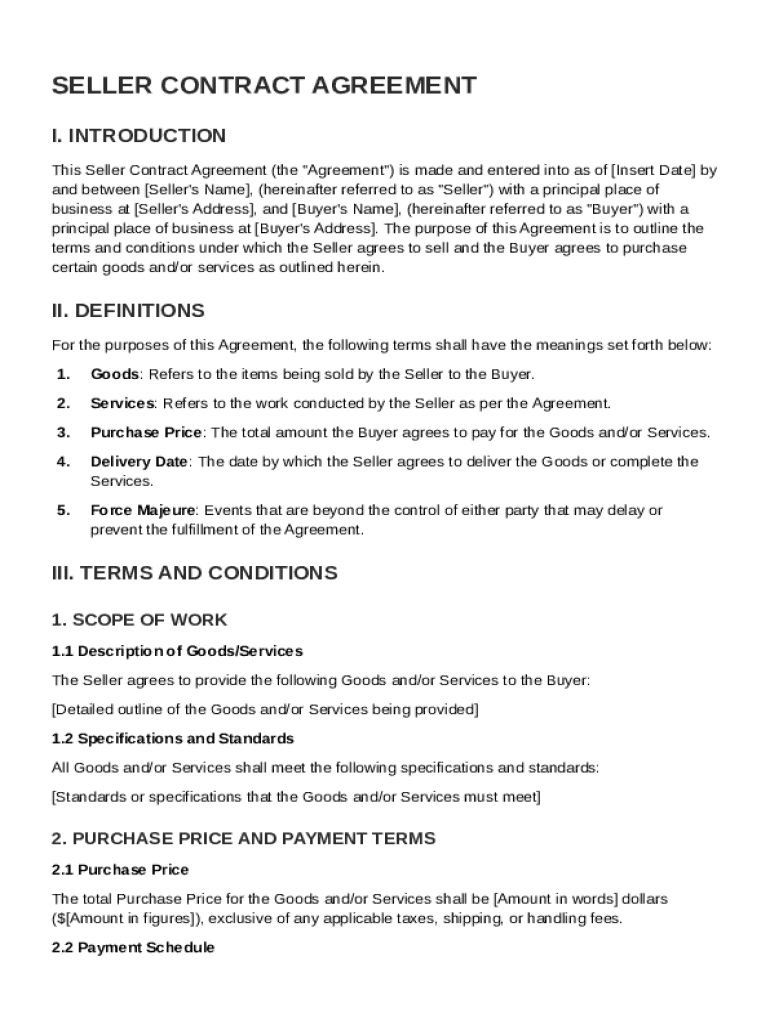
A "Seller Contract Template" is a structured document designed to formalize the sale agreement between a seller and a buyer. This template serves as a foundational framework that outlines the key terms and conditions governing the transaction. Its primary components include definitions, scope of work, purchase price, payment terms, delivery methods, warranties, liability, confidentiality, termination rights, and miscellaneous provisions. The document standardizes the process of selling goods or services, ensuring that both parties have a clear understanding of their rights and obligations.
Examples in Practice
- A small business using a seller contract template to sell goods to multiple buyers, thereby ensuring consistent terms.
- Individuals selling high-value items such as cars or real estate needing a comprehensive agreement to protect their interests.
Key Elements of the Seller Contract Template
The template encompasses several critical elements that ensure a comprehensive agreement between the parties involved. These elements include:
- Definitions: Clarifying specific terms used throughout the contract.
- Scope of Work: Detailing the products or services being sold.
- Purchase Price: Specifying the amount to be paid by the buyer.
- Payment Terms: Outlining how and when payments will be made.
- Delivery Methods: Describing how the products or services will be delivered.
- Warranties and Liability: Defining any warranties offered and liability limits.
- Confidentiality: Protecting sensitive information shared during the transaction.
- Termination Rights: Explaining conditions under which the contract may be terminated.
This structured approach ensures that all important aspects of the sale are covered, reducing the risk of disputes.
How to Use the Seller Contract Template
To effectively utilize a seller contract template, follow these steps:
- Select the Relevant Template: Choose a template suited to the specific type of sale.
- Customize the Details: Insert specific information related to the parties involved, the items or services for sale, and the terms agreed upon.
- Review Legal Compliance: Ensure the template complies with relevant legal standards and regulations.
- Obtain Mutual Agreement: Both parties should review and agree to the terms, making any necessary adjustments.
- Sign and Secure: Once finalized, both parties sign the document to formalize the agreement.
Customization Tips
- Adjust sections to reflect unique terms pertinent to the transaction.
- Incorporate specific legal wording required by state or local jurisdictions when necessary.
Legal Use of the Seller Contract Template
The seller contract template is legally binding when properly executed and meets certain criteria. It must:
- Clearly indicate offer and acceptance by both parties.
- Include consideration, which is something of value exchanged between the parties.
- Be lawful and not violate any legal regulations.
- Represent mutual consent without coercion or duress.
Utilizing a seller contract template helps ensure that all these legal foundations are met, providing a robust defense in case of legal disputes.
State-Specific Rules for the Seller Contract Template
While many elements of a seller contract are universally applicable, certain state-specific laws and regulations can influence the terms. For instance, some states may have specific disclosure requirements or caps on interest rates that could apply to sales on credit.
Examples
- In California, the law may require specific disclosures in the sale of residential property.
- Texas might have different requirements for contracts involving the sale of vehicles.
Who Typically Uses the Seller Contract Template
The seller contract template is versatile, making it suitable for various users, including:
- Small Business Owners: Regularly selling goods or services and needing standard contracts.
- Freelancers and Consultants: Offering services and requiring clear terms to protect their interests.
- Real Estate Agents: Facilitating property sales with defined terms.
- Private Individuals: Engaging in one-time sales of high-value items.
By addressing the needs of diverse groups, the template ensures consistent and fair transactions.


Important Terms Related to Seller Contract Template
Understanding key terms associated with the seller contract template is crucial for effective use. Some important terms include:
- Breach of Contract: Occurs when one party fails to fulfill their contractual obligations.
- Indemnity: A contractual obligation to compensate for any incurred losses or damages.
- Force Majeure: Relieves parties from obligations during unforeseen events beyond their control.
- Governing Law: Determines which state's laws will apply to the contract.
These terms ensure clear communication and help prevent misunderstandings.
Digital vs. Paper Version
Choosing between a digital and paper version of the seller contract template depends on user preference and practical needs:
-
Digital Version:
- Allows for easy customization and editing.
- Can be stored and shared electronically, facilitating remote transactions.
- Supports e-signatures, enhancing convenience.
-
Paper Version:
- Preferred when physical signatures are required.
- Necessary in scenarios where digital access is limited or impractical.
By understanding these differences, users can select the version that best suits their needs.