






Definition & Meaning
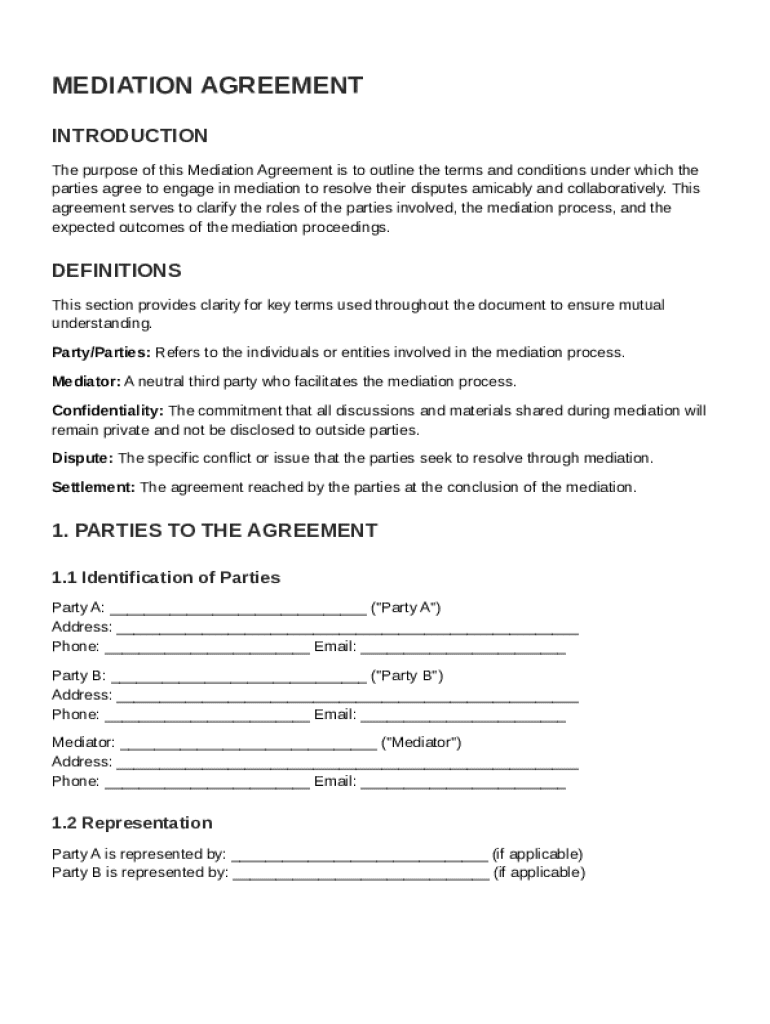
A Mediation Agreement Template encapsulates the terms and conditions under which parties enter into mediation. Mediation is a structured, voluntary, and confidential process where an impartial third party, known as a mediator, assists disputing parties in reaching a mutually acceptable settlement. The template serves as a foundational legal document that outlines the specifics of the mediation, the roles and responsibilities of all parties involved, and the general framework for conducting the mediation sessions. By clearly defining these elements, the template aims to create a structured process that facilitates open communication and fosters an amicable resolution to disputes without resorting to litigation.
Key Elements of the Mediation Agreement Template
The template is typically structured to cover several critical components essential for a successful mediation process:
- Identification of Parties: Clearly lists the parties involved in the dispute.
- Objective of Mediation: States the purpose and goals for entering mediation.
- Mediator's Role: Details the neutral role of the mediator and their responsibilities.
- Confidentiality Clause: Outlines the terms ensuring all discussions and materials remain confidential.
- Mediation Process: Describes the procedural steps of the mediation, including timelines and session formats.
- Fees and Costs: Provides an outline of any fees associated with the mediation and how they will be shared.
- Termination and Withdrawal: Establishes guidelines under which parties may terminate or withdraw from the mediation process.
- Governing Law: Specifies the jurisdiction’s legal framework that the agreement is subject to.
How to Use the Mediation Agreement Template
Users can employ the Mediation Agreement Template by following a series of well-defined steps. Firstly, parties involved should review the template in its entirety to ensure it aligns with their specific needs and expectations. This initial review sets the stage for incorporating any necessary adjustments, such as unique terms or specific clauses pertinent to the dispute. Subsequently, parties should engage the services of a qualified mediator and ensure they are comfortable with the individual’s style and methodology. Once a consensus is reached on the financial and procedural elements, parties can fill out the template accurately, reflecting all agreed-upon terms. The final step involves all parties, including the mediator, signing the document to give it legal standing.
Steps to Complete the Mediation Agreement Template
- Gather Relevant Information: Compile all necessary details about the parties involved, including contact information and relationship to the dispute.
- Determine Mediation Objectives: Clearly articulate the goals of the mediation and what each party hopes to achieve.
- Select a Mediator: Choose a neutral third party regarded as impartial and competent.
- Negotiate Terms: Discuss and agree upon the terms, such as fees, confidentiality, and procedural rules.
- Fill Out The Template: Complete the template using accurate information and explicitly define all agreed-upon terms.
- Legal Review: Optionally, have a legal professional review the completed document to ensure all legal aspects are covered.
- Sign the Agreement: After all terms have been agreed upon and incorporated, parties should sign the documentation to formally commence the mediation process.
Legal Use of the Mediation Agreement Template
The Mediation Agreement Template serves as a legally binding document once signed by all parties. Its legal use is based on adhering to the guidelines specified within the document itself, based on the governing laws of the jurisdiction in which the mediation occurs. It creates a legal framework that parties agree to follow, providing legal protections associated with confidentiality, impartiality of the mediator, and enforcement of any agreements reached during mediation. It is important to note that while the agreement facilitates the mediation process, any final settlement still requires explicit consent from all involved parties to be considered legally enforceable.
Who Typically Uses the Mediation Agreement Template
The template is widely employed by a diverse range of individuals and entities looking to resolve disputes amicably. This includes but is not limited to:
- Corporations: Engaging in commercial disputes that require confidential resolution mechanisms.
- Small Businesses: Addressing conflicts with vendors, partners, or customers without legal action.
- Families: Seeking resolutions in family-related disputes, potentially involving divorce or estate matters.
- Landlords and Tenants: Addressing disagreements over lease agreements or property conditions.
- Professional Associations: Resolving intra-organizational disputes among members.


Examples of Using the Mediation Agreement Template
- Commercial Disputes: A business owner and their supplier use the template to mediate over delayed shipments impacting their contractual agreements.
- Family Mediation: A couple undergoing divorce proceedings uses the mediation process to agree upon child custody arrangements.
- Employment Disputes: A company utilizes the template to mediate a conflict between management and employees regarding workplace policies.
- Community Conflicts: Neighbors employ mediation to resolve disputes over property boundaries or noise complaints.
Software Compatibility
The Mediation Agreement Template can be seamlessly integrated with various software platforms, ensuring compatibility across different systems. Users can access, complete, and manage the template using document editing platforms like DocHub or more comprehensive suites like Google Workspace, Microsoft Office, or Adobe Acrobat. This versatility allows users to utilize platforms they are already familiar with, thereby simplifying the completion and distribution process. Furthermore, the template’s compatibility with cloud-based services facilitates convenient access and collaborative editing, ensuring all parties can contribute to the document regardless of their location.
Confidentiality in the Mediation Agreement Template
Confidentiality is a cornerstone of the mediation process and is typically robustly addressed within the Mediation Agreement Template. This clause mandates that all information disclosed during mediation be kept confidential by all parties, the mediator, and any observers or representatives present. The agreement stipulates the legal consequences of breaching confidentiality, often deterring parties from pursuing legal claims based on discussions during mediation unless an exception is specifically delineated in the agreement. This protection encourages open communication, as parties can speak freely without fear of later repercussions, which is essential for effective dispute resolution.