






Definition & Meaning
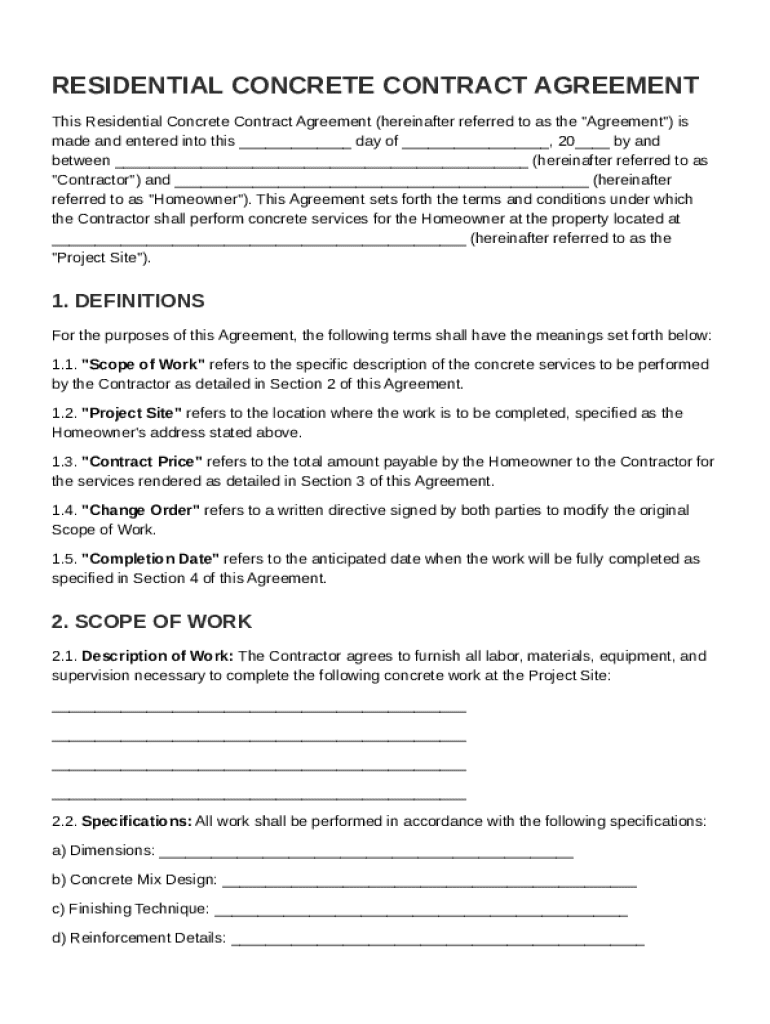
A Residential Concrete Contract Template is a legally binding document used to outline the specific terms and conditions between a contractor and a homeowner for concrete services. This document includes various elements such as definitions of key terms, the scope of work, and agreements on price and payment. The primary purpose of the template is to ensure that both parties have a clear understanding of the project details, expectations, and legal obligations. By defining responsibilities and protections, it reduces the risk of disputes and facilitates smooth project execution. This template is particularly valuable for residential projects involving concrete installations, repairs, or maintenance, ensuring legal and operational clarity.
How to Use the Residential Concrete Contract Template
Using a Residential Concrete Contract Template requires understanding the specific contractual elements that need to be customized according to the project’s scope. Begin by reviewing all sections of the template to familiarize yourself with its structure. Fill in details such as the names and contact information of both the contractor and homeowner, project location, and a detailed description of the work to be performed. Clearly define the payment schedule, including any initial deposits, progress payments, and the final payment upon project completion. Specify timelines for each phase of the project and outline procedures for potential change orders. Conclude by reviewing the contract alongside all involved parties to ensure mutual understanding and agreement before signatures are appended.
Key Elements of the Residential Concrete Contract Template
The key elements of this contract template include:
- Scope of Work: Clearly defined tasks that the contractor will perform, such as concrete pouring, finishing, and curing.
- Contract Price and Payment Schedule: Specify the total cost of the project, breaking it down into installments or milestones.
- Project Timeline: Outline the start and expected completion dates, along with any phases.
- Change Order Procedures: Establish a process for managing changes to the project scope and related costs.
- Warranties: Include any guarantees for the materials used and the work completed.
- Termination Clause: Define the conditions under which the contract may be terminated by either party.
- Dispute Resolution: Outline methods for resolving disagreements, which may involve mediation or arbitration.
These components ensure a structured agreement that fosters trust and cooperation.
Important Terms Related to the Residential Concrete Contract Template
Understanding the important terms related to this template is crucial. Key terms include:
- Contractor: The individual or company responsible for completing the concrete work.
- Homeowner or Client: The individual or entity hiring the contractor.
- Lien Waiver: A statement by which the contractor waives the right to place a lien on the homeowner’s property for unpaid balances.
- Inspection: The examination of the work done to ensure compliance with specified standards and codes.
- Subcontractor: Any third-party individual or business hired by the primary contractor to perform parts of the work.
- Retainage: Portion of the contract amount withheld until project completion to ensure satisfactory performance.
Grasping these terms is essential for navigating the contract effectively.
Steps to Complete the Residential Concrete Contract Template
- Review the Template: Understand the structure and sections of the template.
- Input Contractor and Client Details: Provide names, contact information, and the project site address.
- Define the Scope of Work: Clearly articulate the tasks to be performed.
- Determine Financials: Specify the total project cost, payment terms, and schedule.
- Set Timelines: Establish realistic deadlines for each phase of the project.
- Include Necessary Clauses: Such as warranties, change orders, and dispute resolution methods.
- Review and Finalize: Go over the entire document with all parties involved and make necessary adjustments.
- Sign the Document: Ensure both the contractor and homeowner sign the document to make it legally binding.
This step-by-step process guarantees a comprehensive and actionable contract.
Legal Use of the Residential Concrete Contract Template
This template serves as a lawful agreement under U.S. contract law, provided it meets basic requirements: mutual consent, offer and acceptance, consideration, competency, and legality. These elements are universally recognized, ensuring enforceability. Including state-specific provisions can address local compliance, such as licensing requirements for contractors, ensuring the contract abides by all applicable regulations. Using such a template not only secures your project but also upholds industry standards, offering protection against potential legal disputes or misunderstandings.
State-Specific Rules for the Residential Concrete Contract Template
State-specific rules impact the enforceability of contract elements, like contractor licensing and lien waiver stipulations. For example:
- California: Requires contractors to hold a valid license for projects exceeding a certain value. Mandates specific disclosures within the contract.
- Texas: Enforces strict lien waiver requirements and necessitates written contracts for certain home improvement projects.
- Florida: Imposes consumer protection laws that require detailed contractor credentials and project descriptions.
Familiarity with these state regulations ensures the contract adheres to local laws and minimizes risk.
Examples of Using the Residential Concrete Contract Template
This contract template is effectively used in various residential settings, such as:
- Driveway Installation: Ensures agreement on specifics like concrete type, driveway dimensions, and finish quality.
- Patio Renovation: Outlines renovation details, payment plans based on progress stages, and aesthetic expectations.
- Foundation Repairs: Allows homeowners to arrange for precise repair work while managing timeframes and costs transparently.
Real-world usage of this template highlights its versatility and importance in managing multiple types of concrete-related projects, ensuring all parties are on the same page.
Who Typically Uses the Residential Concrete Contract Template
This template is primarily utilized by:
- Residential Contractors: For outlining project specifications and payment terms.
- Homeowners: To secure quality work and legally bind contractors to project conditions.
- Property Managers: Ensuring maintenance and renovation projects align with budget and expected timelines.
- Real Estate Developers: Planning new developments with detailed scopes for subcontracted concrete work.
Understanding the roles of these users helps tailor the contract to protect interests and maintain project integrity.