
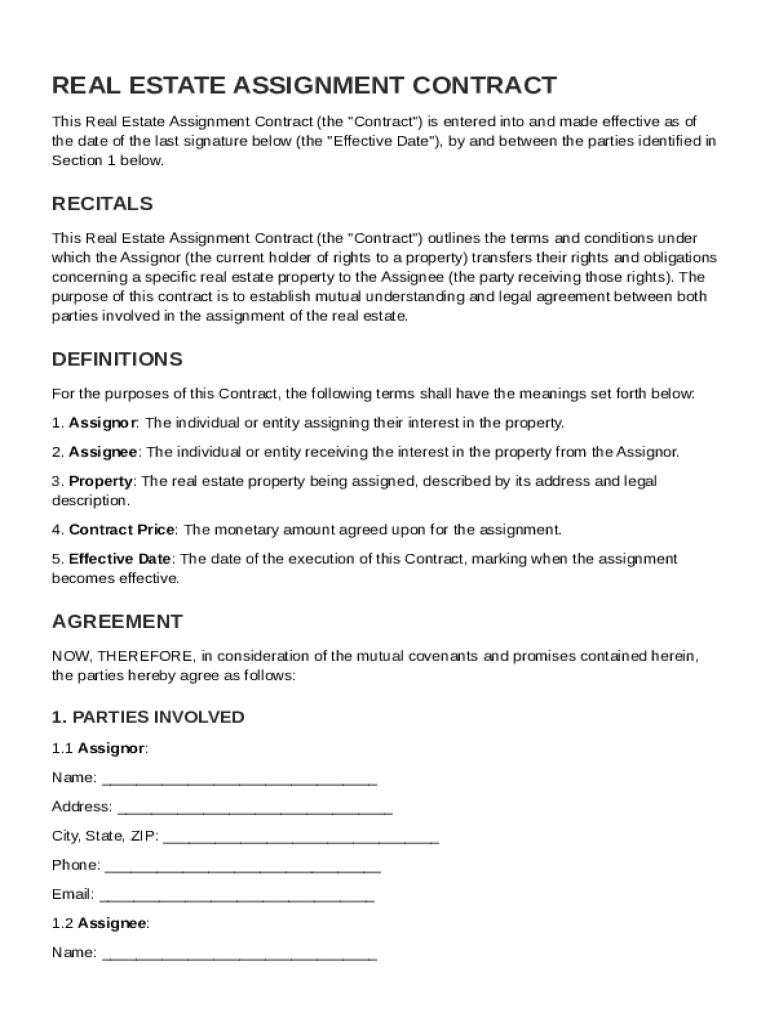







Definition & Meaning
The Real Estate Assignment Contract Template is a legal document that facilitates the transfer of rights and obligations concerning a specific property from one party, known as the Assignor, to another, known as the Assignee. The contract spells out the terms under which the transfer occurs, ensuring both parties are aware of their obligations. It includes various sections such as property details, assignment of rights, and compensation terms, offering a structured approach to formalizing real estate deals. This document serves as a cornerstone in real estate transactions, establishing a clear legal framework for all involved parties.
Key Components
- Property Details: Describes the real estate involved, including location and legal descriptions.
- Assignment of Rights: Specifies the rights being transferred from the Assignor to the Assignee.
- Compensation Terms: Outlines the financial agreement between parties, including payment structure.
- Representations and Warranties: Legal assurances about the property's condition and status.
- Closing Procedures: Details the steps to finalize the transfer.
- Default Remedies: Specifies actions if either party fails to meet their obligations.
How to Use the Real Estate Assignment Contract Template
Successfully using the Real Estate Assignment Contract Template requires attention to detail and a clear understanding of the involved parties' roles and responsibilities. Follow these steps to ensure effective utilization:
- Understand Each Party's Role: Identify the Assignor and Assignee and clarify their respective roles in the transaction.
- Fill in Property Details: Accurately complete the sections regarding the property description and legal identifiers.
- Specify Assignment Details: Clearly delineate which rights and obligations are being assigned.
- Outline Financial Agreements: Clearly state the compensation terms, ensuring mutual agreement.
- Review Legal Disclosures: Carefully examine all representations and warranties to avoid future disputes.
- Establish Closing Procedures: Agree on a timeline and specific steps for finalizing the contract.
- Define Default Terms: Clearly explain the actions that will be taken if contract terms are not met.
Practical Scenarios
- Transaction Between Investors: Often used when a real estate investor wishes to transfer a property interest to another investor before closing.
- Intermediary Assignments: Utilized when an intermediary party assigns their interest to a final buyer.
Steps to Complete the Real Estate Assignment Contract Template
Completing this form requires precision and careful attention to detail. Follow this step-by-step guide:
- Gather Information: Assemble all necessary documents and information about the property, parties, and financial terms.
- Complete Property Details: Input legal descriptions and specific identifiers for the property.
- Specify Assignor and Assignee Details: Include full legal names and contact information for both parties.
- Detail Assignment of Rights: Clearly define the rights being transferred, with specific terms and conditions.
- Enter Financial Terms: Record compensation arrangements, including any deposits or installment plans.
- Review Representations and Warranties: Ensure all legal disclosures accurately reflect the property's condition and ownership status.
- Outline Closing Procedures: Agree upon a closing date and method, indicating any third parties or escrow services involved.
- Signature and Notarization: Parties must sign the document, and notarization may be necessary for legal compliance.
Who Typically Uses the Real Estate Assignment Contract Template
This form is primarily used by individuals or entities involved in real estate transactions who wish to transfer their rights to another party prior to final property closing. Typical users include:
- Real Estate Investors: Looking to transfer contracts to potential buyers for profit.
- Developers: Seeking to assign contractual obligations to financiers or partners.
- Intermediaries: Brokers or agents facilitating deals between buyers and sellers.


Common Use Cases
- Flipping Contracts: Investors use assignment contracts to profit from increased property values.
- Partnership Transfers: Real estate partnerships assigning interests to new members.
Key Elements of the Real Estate Assignment Contract Template
The contract encompasses several critical sections necessary for effective use. Understanding these elements helps ensure successful transactions:
- Legal Descriptions and Property Details: Exacting details ensure correct identification of the property in question.
- Financial Agreement Terms: Clearly articulated compensation agreements prevent misunderstandings.
- Rights and Obligations Transfer: Specification of the exact rights being assigned ensures clarity of purpose.
- Default and Escape Clauses: Provisions for handling breaches or contract non-fulfillment provide security for both parties.
Examples in Practice
- Investor Assignments: Quick resale opportunities when market conditions favor contract flipping.
- Joint Ventures: Assignment contracts clarify terms when partners seek to adjust ownership “on-paper” without altering fundamental investment strategies.
Important Terms Related to Real Estate Assignment Contract Template
Familiarity with specific terms enhances understanding and ensures accuracy in contract completion. Key terms include:
- Assignor: The original party assigning their rights and obligations.
- Assignee: The recipient of assigned rights and obligations in the contract.
- Consideration: The agreed-upon financial compensation or exchange under contract terms.
- Closing Date: The specified date by which all contractual obligations must be finalized.
- Default: Failure by either party to meet their contractually agreed obligations.
Clarifications and Misunderstandings
- “Double Closing:” Occasionally confused with assignments, this term refers to a separate transaction where the intermediary simultaneously buys from the seller and sells to the end buyer, using two distinct contracts.
Legal Use of the Real Estate Assignment Contract Template
It's essential to recognize the legal frameworks surrounding the use of assignment contracts. Adhering to these ensures compliance and validity:
- Compliance with State Laws: Contracts must align with state regulations, which can affect clauses like default remedies or assignment permissions.
- Use of Third-Party Escrow or Legal Review: Utilizing an escrow service or legal professional for review secures both parties' interests.
- Document Notarization Requirements: Some jurisdictions may require notarization for contracts to be legally binding.
Legal Precedents and Scenarios
- Binding Agreements: Courts regularly uphold assignment contracts, provided they adhered to legal standards at inception.
- Legal Advice: Active consultation with legal professionals ensures comprehensive understanding and compliance.
State-Specific Rules for the Real Estate Assignment Contract Template
Real estate laws can vary significantly by state, affecting the application and acceptance of assignment contracts. Understanding these nuances is vital for compliance:
- State Regulations Affecting Assignments: Some states impose additional regulatory compliance or disclosure requirements.
- Jurisdictional Differences: Influences contract terms, parties’ rights, and obligations under the law.
Examples of State Variations
- Texas: Requires explicit disclosure of assignment terms in equitable real estate contracts.
- California: Stipulates additional environmental disclosures that must accompany contract terms.




