Definition and Meaning of the Shared Kitchen Agreement Template
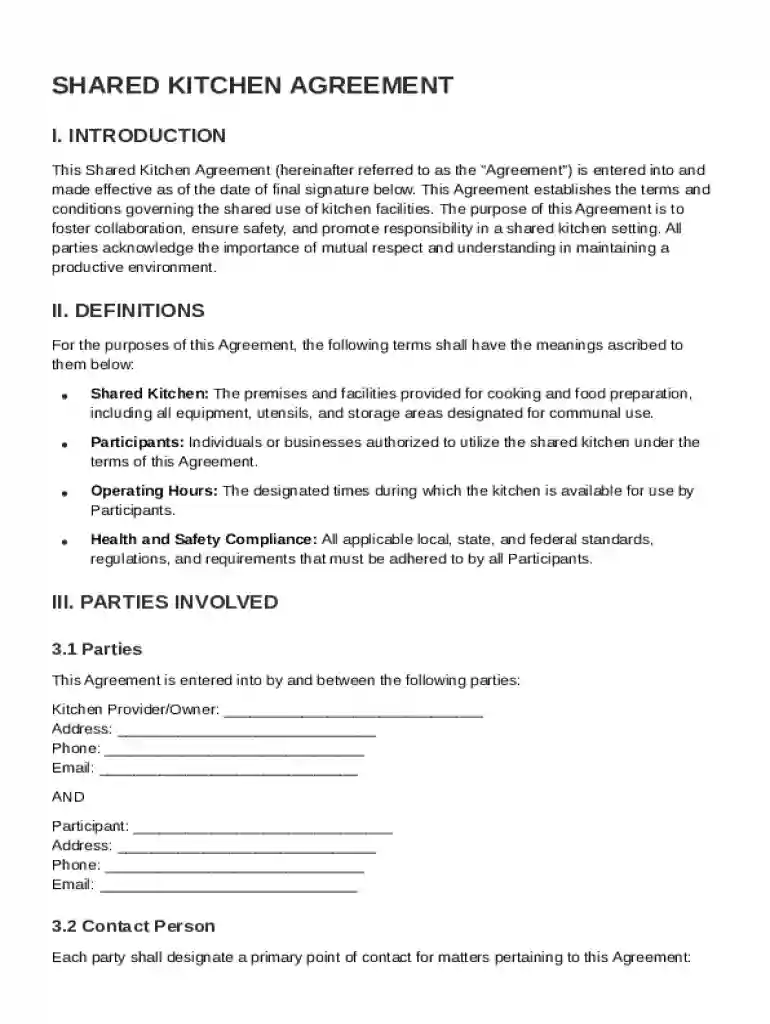
A Shared Kitchen Agreement Template is a formal document that outlines the terms and conditions associated with the use of shared kitchen facilities. This agreement serves to foster collaboration and ensure mutual respect among users while clarifying individual responsibilities. Typically used in settings where multiple parties share kitchen space, the template covers essential aspects such as operational timings, usage limits, hygiene requirements, equipment use, and compliance with health and safety standards. By clearly defining these elements, the agreement aims to create an organized and conflict-free environment.
Key Elements of the Shared Kitchen Agreement Template
The Shared Kitchen Agreement Template includes several critical elements:
- Operating Hours: Specifies when the kitchen is available for use, preventing scheduling conflicts.
- Usage Limitations: Details any restrictions on how the kitchen facilities can be used, such as specific types of equipment usage or food preparation.
- Responsibilities: Outlines participant obligations, particularly in maintaining cleanliness and proper equipment handling.
- Fees and Payments: Covers the financial aspects, including rental fees, deposit requirements, or other payments associated with using the facility.
- Liability and Insurance: Addresses the legal responsibility for damages or injuries and any insurance requirements that must be met.
- Termination Clause: Describes the conditions under which the agreement may be terminated by either party.
Importance of Using a Shared Kitchen Agreement Template
Utilizing a Shared Kitchen Agreement Template is crucial in formalizing the expectations and duties of all parties involved. It serves several important purposes:
- Preventing Disputes: By having clear guidelines, the agreement mitigates potential conflicts related to kitchen use.
- Ensuring Compliance: The document helps to ensure all users are aware of and adhere to health and safety regulations, reducing the risk of violations.
- Financial Transparency: Establishing upfront costs and payment terms promotes financial clarity and responsibility.
- Protecting Interests: The agreement provides legal protection by detailing terms related to liability and indemnification.
Who Typically Uses the Shared Kitchen Agreement Template
Various entities can benefit from implementing a Shared Kitchen Agreement Template, including:

- Culinary Incubators: Facilities that provide kitchen access to startup food businesses or chefs looking to test new concepts.
- Co-working Spaces: Locations offering shared kitchens as an amenity to businesses renting office space.
- Nonprofit Organizations: Community kitchens often require agreements to manage shared use among different groups.
- Event Venues: Locations hosting events that involve multiple vendors or caterers using the same kitchen facilities.
Steps to Complete the Shared Kitchen Agreement Template
Completing the Shared Kitchen Agreement Template involves several key steps:
- Gather Necessary Information: Collect contact details, organization names, and any relevant identification for all parties involved.
- Define Terms Clearly: Specify the operational hours, usage limitations, and participant responsibilities.
- Outline Financial Details: Include all fees, payment schedules, and any deposit requirements in the agreement.
- Include Liability and Insurance Clauses: Ensure these sections are comprehensive, specifying the necessary insurance coverage.
- Review and Customize: Adjust the template to fit specific needs or legal requirements unique to the state or venue involved.
- Sign and Distribute: Once finalized and agreed upon, have all parties sign the document and distribute copies for their records.
Legal Use of the Shared Kitchen Agreement Template
While the Shared Kitchen Agreement Template provides a helpful framework, it's essential to ensure its legal standing:
- Consult Legal Counsel: Before finalizing the agreement, consider seeking legal advice to confirm it meets all relevant laws.
- Ensure Compliance with Local Laws: Different states may have specific requirements for shared kitchen operations, so understanding these is crucial.
- Document Revision: Periodically review and update the agreement to reflect any changes in regulations or operational practices.
Software Compatibility for Editing
The Shared Kitchen Agreement Template can be easily managed using document-editing platforms like DocHub, which provides several advantages:
- File Format Compatibility: Edit and share documents in various formats, including PDF, DOC, and more.
- Collaboration Tools: Enable multiple users to interact with the document, leave comments, and suggest changes in real time.
- Secure Access: Use encryption and authentification protocols to ensure secure handling of sensitive information.
- Integration with Google Workspace: Seamlessly work with documents stored in Google Drive, allowing for streamlined editing and sharing within the Google ecosystem.
State-Specific Rules for the Shared Kitchen Agreement Template
Considering state-specific rules is vital when using a Shared Kitchen Agreement Template. Regulations can differ significantly depending on the jurisdiction:
- Health and Safety Codes: States may have distinct requirements regarding kitchen cleanliness standards and health inspections.
- Licensing and Permits: Ensure that all necessary state-specific licenses and permits are obtained for legal operation.
- Insurance Requirements: Liability insurance mandates can vary, affecting the clauses included in the agreement.
Understanding and incorporating these state-specific nuances are crucial to ensuring the agreement's effectiveness and compliance.