




01. Edit your form online
Type text, add images, blackout confidential details, add comments, highlights and more.

Type text, add images, blackout confidential details, add comments, highlights and more.

Draw your signature, type it, upload its image, or use your mobile device as a signature pad.

Send it via email, link, or fax. You can also download it, export it or print it out.
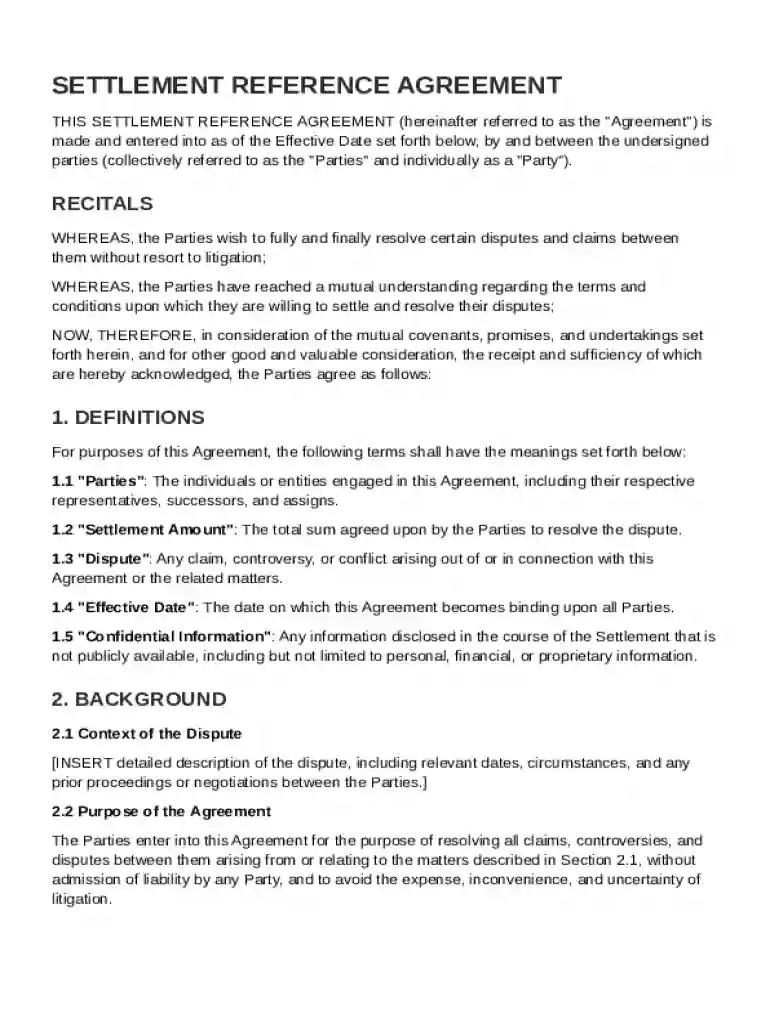
The Settlement Reference Agreement Template is designed to facilitate the resolution of disputes without resorting to litigation. This legal document outlines the conditions under which all involved parties agree to settle their disagreements. Key elements typically included are the definitions of crucial terms, an explanation of the dispute's background, details of the settlement amount, obligations of each party, and mechanisms for dispute resolution. A central aspect of the Agreement is ensuring confidentiality and non-admission of liability, creating a framework crucial for compliance and enforcement.
Understanding the main elements of the Settlement Reference Agreement Template is vital for its effective use. These components include:
The legal use of the Settlement Reference Agreement is mainly to provide a structured pathway to resolve disputes amicably. By choosing this route, parties can avoid lengthy litigation processes, saving time and resources. The Agreement serves as a legally binding contract, ensuring that any breach is subject to legal consequences. The confidentiality clause is particularly crucial in preserving the privacy of the settlement details, which can be essential in sensitive disputes.
Completing the Settlement Reference Agreement Template involves several detailed steps:
The template is commonly used by businesses, legal entities, and individuals involved in disputes requiring formal resolution. By offering a structured means of settling disagreements, it is popular among companies looking to avoid the costs and unpredictability of courtroom battles. Many times, parties include corporations involved in business disputes, individuals part of personal legal disagreements, and partnerships facing internal conflicts.


There are multiple reasons why utilizing a Settlement Reference Agreement Template is beneficial:
Technological advances make integrating the use of templates into document processes easier than ever. The Settlement Reference Agreement Template is compatible with a variety of document management platforms like DocHub, which supports different file formats, including PDF, DOC, PPT, and more. This ensures flexibility and ease of editing, sending, and signing digital versions of the template, especially useful for remote teams or parties situated in different locations.
In practice, settlement agreements have been pivotal in various scenarios. For example, companies undergoing merger disputes may use the template to resolve disagreements regarding asset distribution or contractual obligations. Similarly, individuals settling personal injury claims may rely on the template to reach a financial agreement without the stress of a trial. These examples highlight the adaptability and usefulness of the template across different contexts and industries.
At DocHub, your data security is our priority. We follow HIPAA, SOC2, GDPR, and other standards, so you can work on your documents with confidence.



This settlement agreement (Agreement) is entered into between Edward D. Jones . Co., L.P. (Edward Jones), a licensed securities broker-dealer, on one side
Oct 17, 2024 This agreement is between MiraCosta College and Ayuma House Planning Company regarding a project with disputes, and the final payment is $86,
This Settlement Agreement and Mutual Release (the Agreement) is made as of. December 5, 2007 (the Effective Date), by and between RELIABLE HEALTH CARE.


