Definition & Meaning
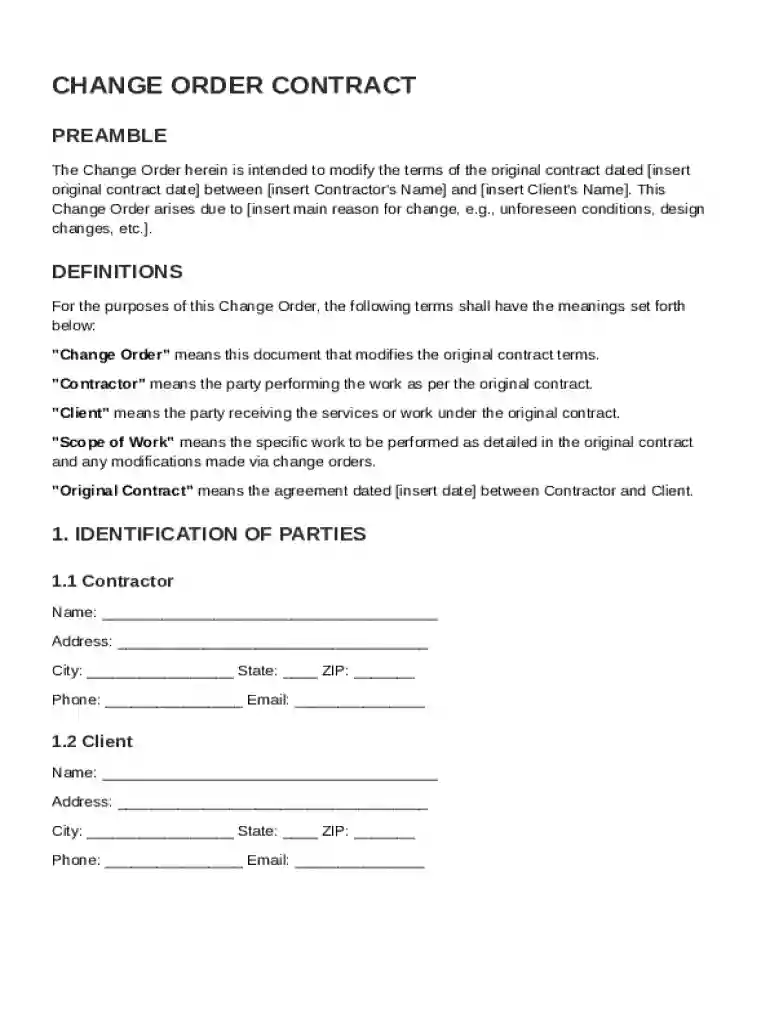
A Change Order Contract Template is a formal document used to capture and communicate amendments to an existing contract between a contractor and a client. This template serves as an official record of changes that could encompass a variety of terms such as cost, time frames, scope of work, and even contractual obligations. The purpose of this template is twofold: to ensure all parties involved acknowledge and consent to the changes and to maintain a clear paper trail for reference during project audits or potential disputes. The contract not only clarifies what is altered but also the reasons behind these changes, which helps in reducing misunderstandings and preserving a harmonious contract relationship.
Key Elements of the Change Order Contract Template
When crafting a Change Order Contract Template, ensure it includes key components that delineate every aspect of the changes being implemented. These elements often comprise:
- Identification of Parties and Contract: Clearly specify the names and roles of each party involved in the original contract.
- Definitions of Terms: Any specific terms used should be clearly defined to avoid ambiguity.
- Details of Original Contract: A brief overview of the terms from the original agreement that are being altered.
- Description of Changes: This section should comprehensively describe the change in scope, cost implications, and any timeline adjustments.
- Agreement and Signature: Both parties must sign the change order, indicating their consent to the modifications.
These elements ensure that all parties have a shared understanding of the implications and responsibilities entailed in the change order.
How to Use the Change Order Contract Template
To effectively use a Change Order Contract Template, follow a systematic approach:
- Review the Original Contract: Start by revisiting the initial agreement to understand the context and terms that need modification.
- Outline Proposed Changes: Clearly delineate what needs alteration, whether it’s quantitative (e.g., cost increase) or qualitative (e.g., scope expansion).
- Discuss with Involved Parties: It is crucial to engage in discussions with all stakeholders impacted by the changes to obtain their inputs and ensure alignment.
- Fill Out the Template: Use the template to formally document the changes, ensuring all sections are completed with accurate and sufficient details.
- Secure Approval and Signatures: Obtain the necessary signatures from all involved parties to legitimize the change order.
This structured process ensures all modifications are agreed upon and documented adequately.
Steps to Complete the Change Order Contract Template
Completing the Change Order Contract Template involves several detailed steps:
- Download the Template: Obtain a digital copy of the Change Order Contract Template from a trusted source, ensuring it's compatible with your document format preference.
- Fill in Basic Information: Begin by inserting the details of the original agreement, including parties involved and contract ID.
- Specify Changes: Systematically list all changes, providing specifics on revised project timelines, adjusted costs, and scope modifications.
- Clarify Reasons for Change: Offer a succinct explanation of why these changes are necessary.
- Legal Provisions: Incorporate clauses related to dispute resolution, should disagreements occur in the future.
- Verify and Sign: Have all parties review the entries for accuracy, provide feedback, and once satisfied, sign the document to enforce the changes.
These steps are designed to facilitate the effective completion of the change order in a manner that is comprehensive and transparent.
Who Typically Uses the Change Order Contract Template
Various stakeholders in a contractual agreement are likely to engage with a Change Order Contract Template, most notably:
- Contractors: Often use it to formally request changes due to unforeseen conditions impacting projects, such as material price increases.
- Clients: Utilize the template to document amendments required from their side, particularly for timing and scope changes.
- Project Managers: Oversee the entire change request process, using the template to manage project logistics and ensure all changes are properly documented and approved.
- Legal Teams: May review and advise on the document to ensure compliance with contractual, state, or industry-specific regulations.
Thus, the template is employed by multiple parties to maintain clarity and contractual compliance.

Legal Use of the Change Order Contract Template
The use of a Change Order Contract Template is governed by specific legalities that ensure its enforceability:
- Adherence to Contract Laws: The change order must comply with local and federal contract laws to be considered a valid amendment.
- Mutual Consent Requirement: All changes documented in the template must be mutually agreed upon by all parties for the alterations to be legally binding.
- Documentation for Dispute Resolution: The template plays a crucial role in dispute resolution by providing a written record of agreed changes, thus carrying legal weight.
- Verification of Signatures: Authentication of signatures is necessary to confirm that the parties who signed the document are authorized to make those changes.
An understanding of these legal applications ensures the Change Order is both valid and enforceable under legal scrutiny.
Important Terms Related to Change Order Contract Template
Knowing specific terminology related to a Change Order Contract Template enriches understanding and eases communication:
- Addendum: An additional document modifying an existing contract.
- Scope of Work: Details the specific tasks and obligations required to complete a project.
- Project Milestones: Key stages in a project where specific objectives must be achieved.
- Breached Contract: Occurs when one party fails to fulfill the terms of the contract without legal justification.
- Force Majeure: A clause that frees parties from obligation due to unforeseen events beyond their control.
A solid grasp of these terms ensures clear comprehension and communication when dealing with change orders.
Examples of Using the Change Order Contract Template
Real-world applications of a Change Order Contract Template illustrate its utility:
- Construction Projects: When unexpected site conditions arise, like discovering poor soil requiring additional groundwork.
- IT and Software Development: Adjustments to project deliverables due to evolving client requirements or technological advancements.
- Event Planning: Changing vendors or venue logistics following updated client specifications.
- Manufacturing: Modifications in production specifications or timelines due to supplier delays.
These scenarios highlight the versatility and necessity of change orders in maintaining project integrity across various industries.
State-Specific Rules for the Change Order Contract Template
Understanding state-specific regulations concerning change orders is vital for compliance:
- California: Often requires written and consistent documentation for any substantial changes to ensure these are legally enforceable.
- Texas: Mandates that change orders address scope, time, and cost changes with detailed rationale to be upheld in court.
- New York: Focuses on ensuring clarity in any amendments to construction contracts, often requiring the inclusion of labor and materials specifics.
- Florida: Encourages detailed record-keeping of any alterations, emphasizing clear mutual agreements to prevent legal challenges.
Familiarity with diverse state rules facilitates the creation of compliant and enforceable change orders.