




01. Edit your form online
Type text, add images, blackout confidential details, add comments, highlights and more.

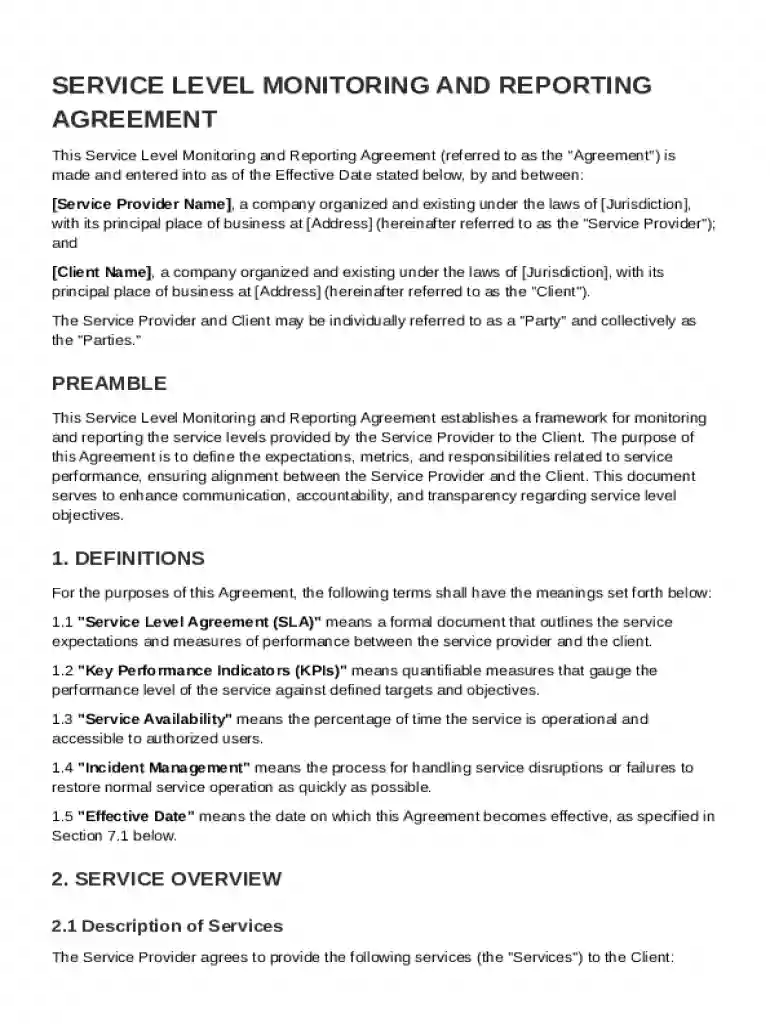
Type text, add images, blackout confidential details, add comments, highlights and more.

Draw your signature, type it, upload its image, or use your mobile device as a signature pad.

Send it via email, link, or fax. You can also download it, export it or print it out.
The Service Level Monitoring and Reporting Agreement Template is a detailed document that outlines the frameworks necessary for monitoring and reporting service levels between a Service Provider and a Client. This type of agreement ensures that both parties have a clear understanding of performance metrics, responsibilities, and expectations. It sets the foundation for maintaining service quality and includes key elements like performance metrics, reporting requirements, and termination conditions. Understanding the true essence of this agreement helps prevent misunderstandings and ensures accountability.
The template comprises several crucial components that guarantee thorough service monitoring and reporting:
Performance Metrics (KPIs): Establishes specific key performance indicators to assess the service quality.
Service Level Definitions: Details the expected service standards and objectives for the provider.
Monitoring Responsibilities: Assigns roles to ensure continuous oversight of service performance.
Reporting Requirements: Specifies formats, frequency, and content standards for regular reporting.
Review Processes: Outlines procedures for evaluating service performance at regular intervals.
Non-compliance Penalties: Defines the consequences for failing to meet the agreed service standards.
Confidentiality Obligations: Protects sensitive information involved in service operations.
Termination Conditions: Lists scenarios under which the agreement can be terminated.
Identify the Parties: Clearly define who the Service Provider and the Client are within the agreement.
Set Performance Metrics: Agree on the KPIs that will quantify the service levels.
Assign Monitoring Tasks: Specify which roles or teams will be responsible for monitoring performance.
Design Reporting Frameworks: Develop formats and schedules for how often reports will be generated and shared.
Establish Review Protocols: Create structured processes to periodically assess the service quality.
Agree on Penalties and Incentives: Define the repercussions for not meeting service standards, as well as any incentives for surpassing them.
Outline Confidentiality Terms: Ensure both parties understand their obligations regarding sensitive information.
Determine Termination Clauses: List conditions that could lead to the termination of the agreement.
While legal enforceability varies, the template is crafted to be in line with U.S. laws, ensuring that it can safely define service expectations. It’s vital to review the agreement with legal advisors familiar with contractual law to ensure all clauses are compliant with the local legal framework. The ESIGN Act compliance for electronic signatures within the template assures that signatures are legally binding.
It is important to understand several critical terms related to service agreements:
SLAs (Service Level Agreements): The metrics that are required to be met in the service provision.
KPIs (Key Performance Indicators): Measurable values that help track the effectiveness of the service provided.
Non-Compliance: Situations where the service level does not meet the agreed standards.
Termination Clause: The section that outlines conditions for ending the agreement.
Confidentiality Clause: Part of the agreement that ensures protection of sensitive data.
Each term has implications on how the Service Level Monitoring and Reporting Agreement operates in practice.
This template is generally used by businesses and organizations that provide or receive services as part of their operations, including:
IT Service Providers: To guarantee uptime and service quality to their clients.
Consulting Firms: For establishing service standards with corporate clients.
Telecommunications Companies: To set expectations with enterprise or individual customers.
Outsourcing Agencies: For defining performance expectations and protocols with clients.


Typically, the Service Provider or an administrative body associated with the service delivery issues the Service Level Monitoring and Reporting Agreement Template. It formalizes the expectations between the provider and the client and assists in outlining and recording performance agreements.
The flexibility of the template allows it to be compatible with various standard software platforms, such as:
Microsoft Word: For document creation and editing.
Google Docs: For cloud-based, collaborative editing.
Adobe Acrobat: For secure PDF versioning and sharing.
Using these platforms ensures easy integration into existing workflows, helping to maintain seamless document management and modifications.
Several scenarios highlight the practical applications of this template:
An IT firm agrees on a 99.9% uptime with a client, using the agreement to track and report its service levels systematically.
A management consultancy firm utilizes the template to outline deliverables and reporting schedules with a corporate client.
A telecommunications provider sets service standards and response times, documented within the agreement, for their customer service teams.
In each case, the template serves as a critical tool to maintain and monitor service quality, ensuring that both parties have a shared understanding of expectations.
At DocHub, your data security is our priority. We follow HIPAA, SOC2, GDPR, and other standards, so you can work on your documents with confidence.
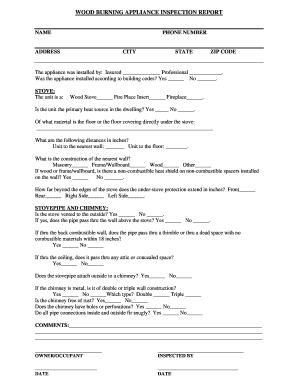

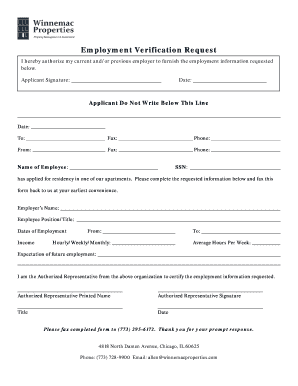

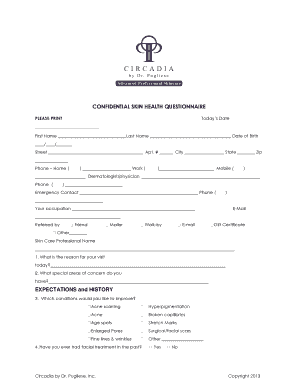

SLA Manager allows users to define SLAs based on service quality and service availability, define the conformance period as well as configurable levels for
Initiates the creation of Service Level Agreements. Reports all system outages and degradation to the Enterprise Service Desk in a timely manner. Adheres to


