Definition and Purpose of the Assignment Agreement Template
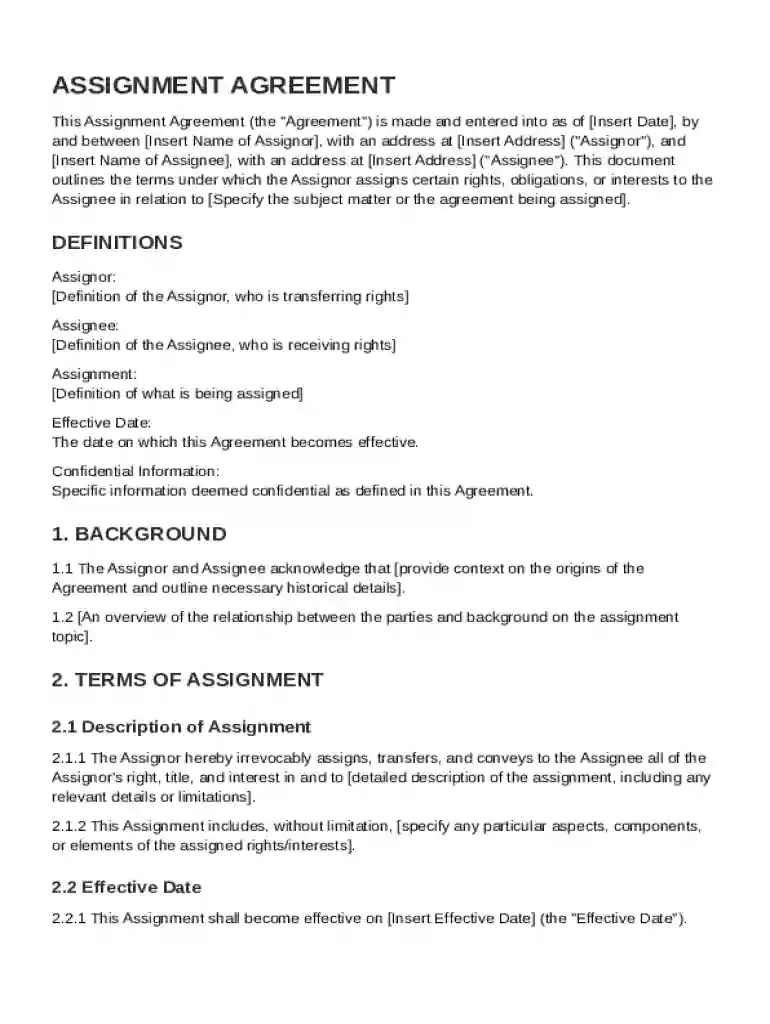
The Assignment Agreement Template is a legal document that facilitates the transfer of rights, obligations, or interests from one party, known as the Assignor, to another party, known as the Assignee. This document outlines the specific terms and conditions under which the assignment takes place, ensuring both parties' interests are protected. Important components include definitions of key terms, a detailed description of the assignment itself, and the roles and responsibilities each party will assume. By using an Assignment Agreement Template, parties can formalize the process of transferring contractual rights, whether for financial instruments, intellectual property, or other legal agreements, thereby reducing potential disputes or misunderstandings.
Key Elements of the Assignment Agreement Template
An Assignment Agreement Template typically includes several crucial sections:
- Identification of Parties: The agreement must clearly identify the Assignor and Assignee, including their legal names and contact details. This establishes the entities involved in the transfer.
- Description of Rights or Interests: Detailed description of what is being assigned, such as a contract, rights to payments, or any obligations that must be met by the Assignee post-transfer.
- Representations and Warranties: Statements that assert the legal standing and capacity of both parties to engage in the assignment, ensuring that both the Assignor and Assignee are fully authorized and have no outstanding legal impediments.
- Confidentiality Clause: Ensures that any sensitive information exchanged during the assignment process is protected and not disclosed to unauthorized parties.
- Termination Conditions: Terms under which the agreement may be terminated, either by mutual consent or due to breach, providing a clear exit strategy if required.
Steps to Complete the Assignment Agreement Template
- Download the Template: Begin by obtaining the Assignment Agreement Template from a reliable source such as DocHub, which offers a range of customizable document templates.
- Populate Party Information: Fill in the Assignor and Assignee's details accurately to avoid future disputes.
- Specify Assigned Rights: Clearly describe the rights and obligations being transferred to ensure comprehensive understanding and agreement by both parties.
- Attach Representations and Warranties: Include standard representations and warranties to affirm that all parties have the capacity and authority to enter into the agreement.
- Include Additional Clauses: Add any bespoke clauses necessary for the context of the assignment, such as specific confidentiality measures or unique termination triggers.
- Review and Sign: Both parties should review the completed document to ensure accuracy and clarity before signing, either physically or using DocHub’s legally binding electronic signature feature.
Legal Considerations and Compliance
The Assignment Agreement Template must comply with relevant legal standards to be enforceable:
- State Laws: Since legal requirements can vary by state, it's imperative that the agreement adheres to local laws where the parties operate or where the rights are executed.
- ESIGN Act Compliance: If using electronic signatures, ensure that these adhere to the ESIGN Act requirements to maintain legal validity of the document.
- Notarization: In some instances, especially for significant transfers of rights, notarization may be advisable to further substantiate the agreement’s authenticity.
Practical Examples of Assignment Agreement Usage
The Assignment Agreement Template finds application in various scenarios:
- Business Sales: Transfer of rights and obligations from one business owner to another, particularly concerning ongoing contracts and employee agreements.
- Real Estate Transactions: Assigning lease obligations to a new tenant when the current tenant exits a lease before its expiration.
- Intellectual Property: Transfer of patent rights or trademark usage rights to different entities or individuals as part of collaborative ventures.
Differences in State-Specific Rules
When dealing with assignments, state-specific nuances can affect the application and enforcement of an Assignment Agreement:
- California: Requires specific disclosure formats concerning the nature of the assigned rights, especially if they relate to financial interests.
- New York: Often necessitates explicit language regarding the non-assignment of future obligations unless specifically agreed upon by parties.
- Texas: Has distinct requirements concerning the notification of assignment to third parties who are involved indirectly, such as creditors.
Software and Compatibility for Electronic Management
For seamless digital management of the Assignment Agreement Template:
- DocHub Integration: Best for integration with Google Workspace for importing, editing, and managing documents directly from cloud services.
- File Format Support: Compatibility with diverse file formats such as PDF, DOC, PPT, ensuring accessibility irrespective of original document structure.
- Real-Time Collaboration: Ideal for teams needing collaborative input on complex assignment agreements, allowing multiple individuals to contribute in real time.
Potential Penalties for Non-Compliance
Failing to properly complete or adhere to an Assignment Agreement can result in:
- Contractual Disputes: Potential invalidation of the assignment if not executed in compliance with legal requirements or state-specific regulations.
- Financial Liabilities: Damages or restitution claims by the aggrieved party if any assigned obligations are not fulfilled due to improper agreements.
- Reputational Damage: Legal challenges can affect the credibility of a business, especially if assignments form a regular part of operational transactions.
Maintaining thorough compliance with all aspects of an Assignment Agreement is thus crucial to its effectiveness and enforceability.