






Definition and Functionality of the Key Employee Agreement Template
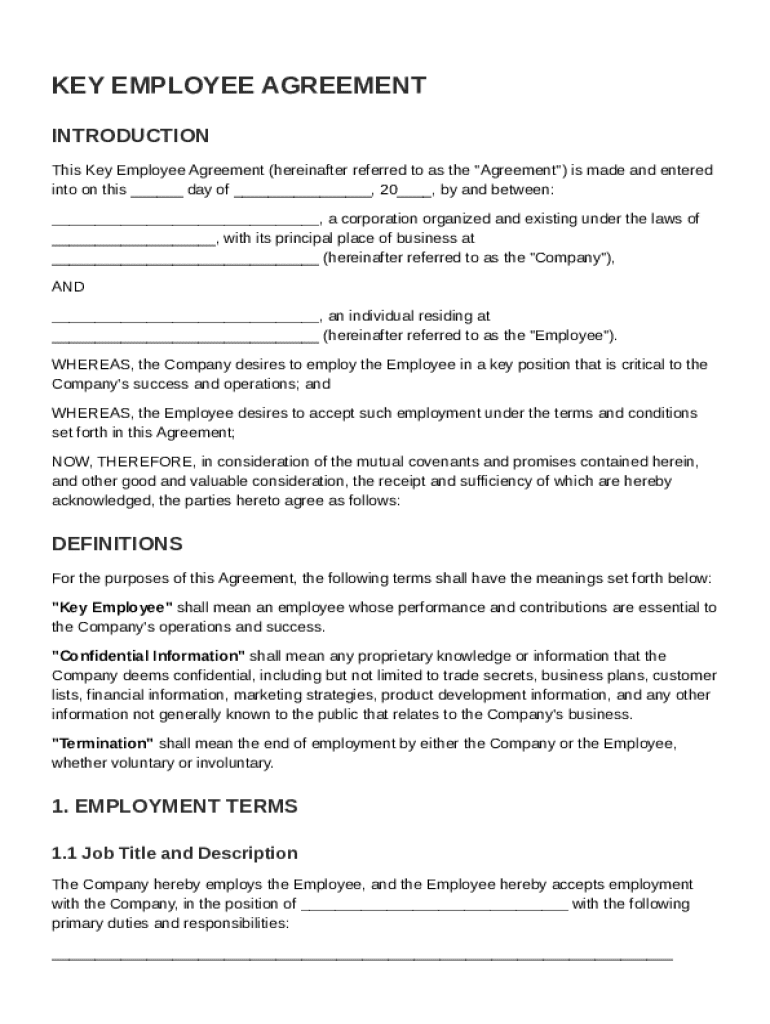
The Key Employee Agreement Template is a structured legal document designed to define the terms of employment for an individual regarded as a key employee within a company. This template is integral in establishing legal expectations and responsibilities between the employer and the key employee, encompassing various essential sections.
Core Components
- Employment Terms: Detailed conditions under which the employee will operate, including job title, duties, and expectations.
- Compensation and Benefits: Clear articulation of salary, bonuses, insurance options, and other financial benefits provided to the employee.
- Confidentiality Obligations: Specific guidelines on how the employee should handle company proprietary information and trade secrets.
- Non-compete Clause: Restrictions on the employee's ability to compete with the company post-employment, aiming to protect the company's interests.
- Termination Conditions: Procedures and scenarios under which the employment relationship can be concluded.
Importance of Key Employee Designation
The designation of a "key employee" signifies an individual's role as critical to a company's operations and strategy. This template helps formalize this status and related expectations, ensuring that both the company and employee understand their mutual dependencies and legal obligations.
Using the Key Employee Agreement Template
The Key Employee Agreement Template serves multiple purposes, primarily in aiding employers in crafting consistent and legally robust employment contracts for pivotal roles within their organizations.
Steps to Utilize the Template
- Customization: Tailor each clause to match the specific job role and industry standards, ensuring compliance with state and federal laws.
- Review: Engage legal counsel to review the agreement for accuracy and enforceability, particularly the non-compete and confidentiality clauses.
- Implementation: Use the template consistently during the hiring process for key roles to maintain uniformity and mitigate potential legal disputes.
Benefits of Use
- Clarity and Consistency: Provides a uniform approach to employment agreements for key employees, reducing ambiguity.
- Legal Protection: Shields the company from potential disputes related to employment terms, confidentiality, and post-employment activities.
Steps to Complete the Key Employee Agreement Template
Completing the Key Employee Agreement Template involves several precise steps to ensure that the document meets legal standards while reflecting the specific employment scenario accurately.
-
Identification Details: Start by completing basic information, including names and contact details of both the employer and the employee.
-
Compensation Description: Clearly define the compensation structure, including any performance-based incentives or stock options.
-
Duties and Responsibilities: Outline the specific duties expected from the employee, along with any metrics for performance assessment.
-
Legal Clauses: Insert or verify clauses related to confidentiality, non-compete, and termination, adapting the language to suit the particular role and jurisdiction.
-
Finalize and Sign: After both parties agree on terms, ensure the document is signed and dated to confirm acceptance of conditions.
Key Elements of the Key Employee Agreement Template
Understanding the critical components of the Key Employee Agreement Template is essential for leveraging its full potential.
Confidentiality
Enforcing the confidentiality obligations ensures that key employees protect sensitive information acquired during their tenure. It's imperative to define what constitutes confidential information and the repercussions of breaches.
Non-compete Provisions
Non-compete clauses restrict the employee's capacity to engage in competitive activities that could harm the company after employment ends. These clauses must be reasonable in terms of duration, geographical area, and the nature of restricted activities to be legally enforceable.
Termination Clauses
The template includes scenarios under which termination could occur, such as breach of contract, gross misconduct, or insolvency. It specifies notice periods and severance provisions, ultimately safeguarding both parties' interests.
State-Specific Rules for the Key Employee Agreement Template
Enforcing a Key Employee Agreement can vary depending on state-specific legislation. It is critical to adapt the template to comply with these nuances.
Non-compete Enforceability
In states like California, non-compete clauses are typically unenforceable, necessitating alternative strategies for protecting company interests, such as emphasizing confidentiality agreements.
Employment-At-Will Doctrine
The majority of U.S. states operate under the employment-at-will doctrine, allowing either party to terminate the agreement with proper notice. Knowing the exceptions and limitations in specific states is crucial.
Legal Use of the Key Employee Agreement Template
The agreement carries significant legal weight and should be executed with careful consideration, ensuring all terms align with current employment laws and guidelines.
Compliance with Federal and State Laws
Each employment agreement must comply with relevant employment laws, including the Fair Labor Standards Act (FLSA) and any state-mandated labor conditions to guarantee essential ethical and legal standards are upheld.
Ensuring Enforceability
Having legal experts review significant clauses such as non-compete restrictions and confidentiality commitments enhances enforceability, ultimately protecting the company from potential liabilities and disputes.
Examples of Using the Key Employee Agreement Template
Examples abound in various industry sectors, utilizing this agreement template to safeguard critical company interests while fostering transparent employment relationships.
Technology Sector
In technology firms, the Key Employee Agreement Template is pivotal to maintaining competitive advantage by ensuring proprietary software and innovations remain confidential and protected through stringent non-compete clauses.
Healthcare Industry
For healthcare providers, utilizing this template helps establish clear expectations about job roles, compensation, and ethical obligations, particularly concerning patient data confidentiality and competitive restrictions.
Who Typically Uses the Key Employee Agreement Template
The Key Employee Agreement Template is predominantly used by companies that rely heavily on individuals whose roles significantly affect the business's path and decision-making.


Industries and Roles
- Tech Companies: In roles such as Lead Developer, CTO, or Head of Product, where intellectual property protection is crucial.
- Manufacturing: For key personnel involved in process design or supply chain management.
- Finance Sector: For senior executives handling sensitive market information.
Companies of All Sizes
Whether a startup ensuring foundational growth or a multinational corporation enforcing strategic direction, the consistency and depth afforded by this template provide invaluable protection and clarity across varied business contexts.