
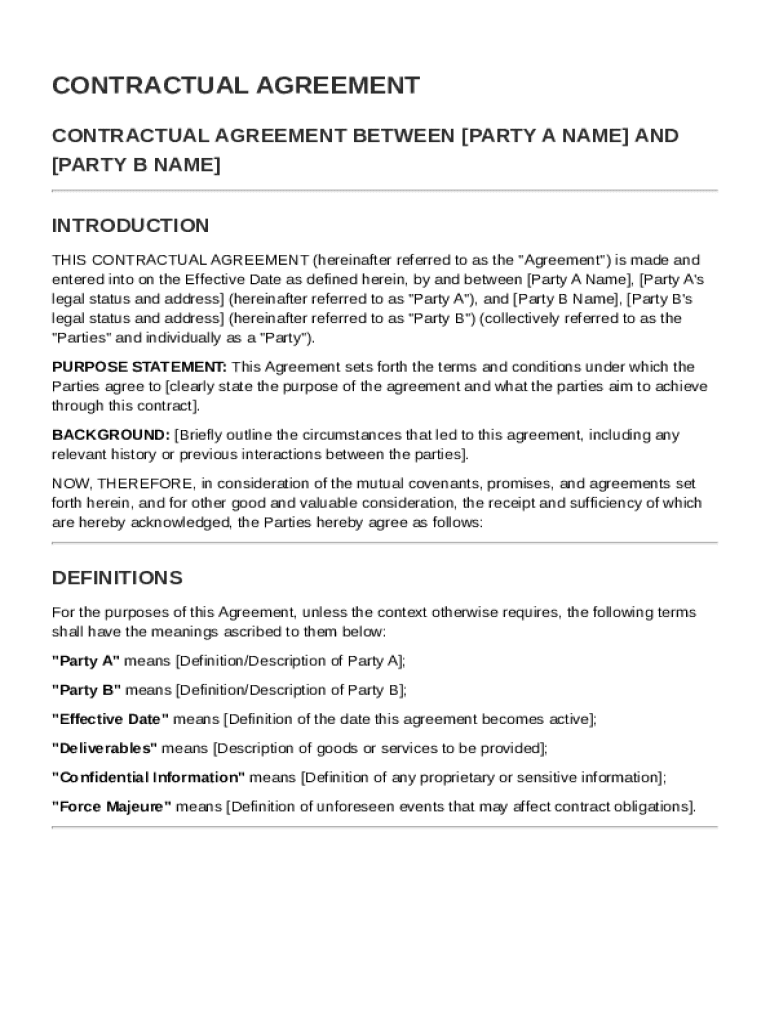







Definition & Meaning
A Contractual Agreement Template is a standardized document used to outline the terms and conditions agreed upon by two or more parties in a business relationship. These templates serve as a roadmap for the partnership by detailing obligations, rights, and responsibilities of each participant. The contract often includes sections such as payment terms, confidentiality clauses, intellectual property rights, indemnification terms, and dispute resolution processes. Utilizing a well-structured template helps ensure clarity and legal validity, reducing potential disputes and misunderstandings.
Key Elements of the Contractual Agreement Template
The Contractual Agreement Template encompasses several essential elements fundamental to any agreement:
- Parties Involved: Clearly identifies all entities partaking in the agreement, often referred to as "Party A" and "Party B."
- Obligations and Duties: Details the specific responsibilities and expected deliverables of each party.
- Compensation Terms: Outlines the payment structure, including amounts, schedules, and any incentives or penalties.
- Confidentiality: Specifies how proprietary and sensitive information is to be handled, including any non-disclosure agreements.
- Intellectual Property Rights: Establishes ownership and usage rights over any creations or ideas developed during the collaboration.
- Indemnification: Provides protection against potential claims or losses incurred as a result of the agreement.
- Dispute Resolution: Defines the procedure for handling disagreements, whether through arbitration, mediation, or legal action.
How to Use the Contractual Agreement Template
To effectively utilize a contractual agreement template, follow these steps:
- Identify the Parties: Clearly define the parties involved in the contract, using legal names to avoid ambiguity.
- Customize the Template: Tailor the template to your specific needs by filling in relevant sections with accurate, detailed information.
- Review Terms: Ensure all obligations, rights, and duties are clearly specified. Double-check sections related to compensation, confidentiality, and dispute resolution.
- Legal Review: Have a legal professional review the document to confirm compliance with relevant laws and regulations.
- Execution: Have all parties sign the document. Use DocHub’s electronic signature feature for a legally binding agreement.
Steps to Complete the Contractual Agreement Template
Completing a Contractual Agreement Template involves a series of meticulous steps to ensure accuracy and compliance:
- Gather Essential Information: Collect details about all parties involved, including names, contact details, and roles.
- Define Terms and Obligations: Clearly outline each party's responsibilities, timelines, and deliverables.
- Draft Compensation Terms: Specify payment conditions, including methods, schedules, and amounts.
- Set Confidentiality and IP Terms: Outline how confidential information and intellectual property will be handled.
- Insert Legal Clauses: Add applicable indemnification clauses and dispute resolution procedures.
- Verify with Legal Counsel: Have the draft reviewed by legal professionals for validity and compliance.
- Finalize and Sign: Use a secure platform like DocHub to finalize and collect electronic signatures from all parties.
Who Typically Uses the Contractual Agreement Template
The Contractual Agreement Template is generally utilized by:
- Businesses: To formalize partnerships, collaborations, or service agreements.
- Freelancers: To outline project deliverables, payment terms, and intellectual property rights.
- Non-Profits: To define partnership terms and responsibilities in joint initiatives.
- Consultants: To establish terms with clients related to project work or advisory services.


Legal Use of the Contractual Agreement Template
The legal application of a Contractual Agreement Template involves compliance with local, state, and federal laws, ensuring the document's enforceability. The template:
- Follows the ESIGN Act for electronic signatures, making it legally binding.
- Complies with State-Specific Laws: Adapt the template to meet jurisdictional requirements.
- Includes Standard Legal Clauses: Utilizes indemnification and confidentiality clauses preferred in standard legal practices for enforceability.
State-Specific Rules for the Contractual Agreement Template
Each state may have unique legal requirements affecting contractual agreements:
- Jurisdiction Clauses: Specify which state's laws govern the agreement.
- Local Regulations: Adjust clauses to reflect differences in employment laws, no-compete stipulations, and statutory requirements.
- Notarization Requirements: Ensure adherence to state rules regarding the notarization of both signatures and certain contractual elements.
Examples of Using the Contractual Agreement Template
Here are detailed examples of scenarios where a contractual agreement is beneficial:
- Partnership Agreements: Formalize roles, investment levels, and profit-sharing arrangements in joint ventures.
- Vendor Contracts: Establish terms of service, delivery schedules, and payment terms with suppliers.
- Employment Contracts: Detail work expectations, compensation, and confidentiality for new employees.
- Service Agreements: Define terms for freelance services such as web development, marketing consultations, and design work.
The effective implementation of these templates ensures that all parties have a clear understanding of their commitments, fostering a trustworthy business relationship.




