







Definition and Meaning
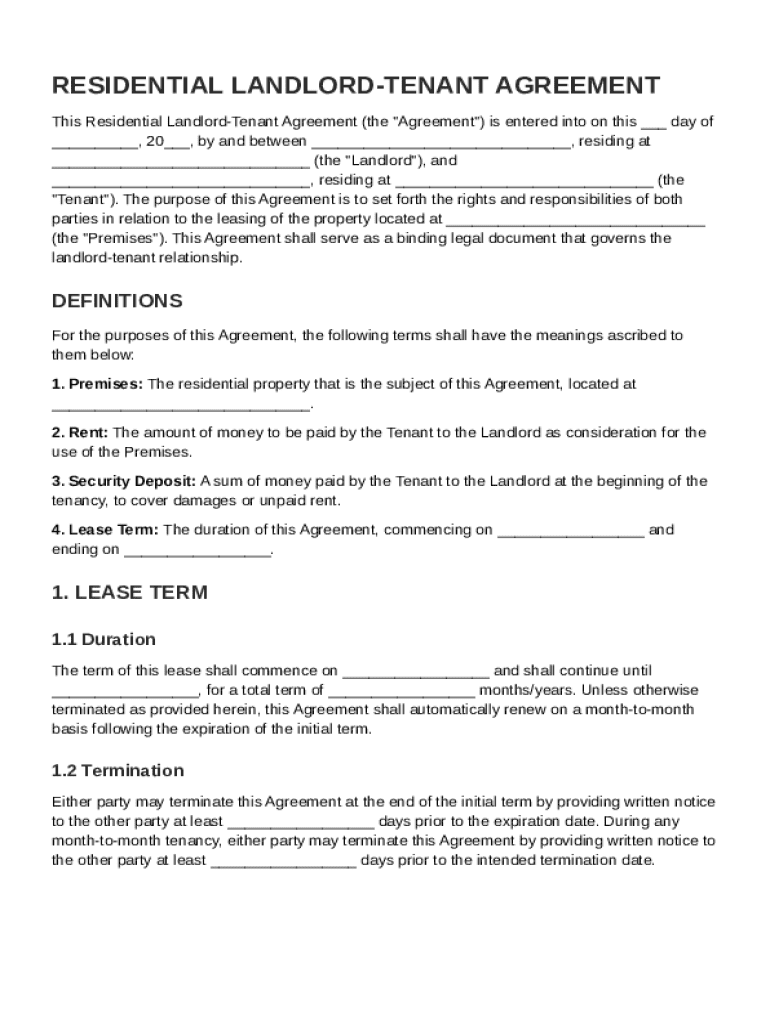
A Residential Landlord-Tenant Agreement Template serves as a legally binding document, outlining the rights and responsibilities of both landlords and tenants in the leasing of residential properties. This comprehensive template ensures clarity in several key areas—such as the duration of the lease, rent payment procedures, and the roles of each party concerning maintenance and alterations. By providing a standardized format, this template helps prevent conflicts by clearly defining expectations and obligations from the outset.
Landlords can use the template to specify rules regarding security deposits, allowable modifications to the property, and other necessary conditions to maintain the property's integrity and ensure a harmonious landlord-tenant relationship. Tenants, on the other hand, benefit by understanding their rights concerning privacy and permissible use of the premises. This document ultimately serves as a protective measure for both parties, legally safeguarding their interests.
Key Elements of the Residential Landlord-Tenant Agreement Template
The Residential Landlord-Tenant Agreement Template includes several crucial elements that cater to the needs of both landlords and tenants. These elements ensure a transparent and fair leasing process.
-
Lease Term: Clearly outlines the start and end dates of the tenancy, whether it be a fixed-term lease or a month-to-month agreement.
-
Rent Payment Details: Specifies the rent amount, due date, acceptable payment methods, and any penalties for late payments.
-
Security Deposit Conditions: Covers the amount of the deposit, conditions for its return or deductions, and the timeline for returning the deposit after lease termination.
-
Use of Premises: Details acceptable uses of the property, including any restrictions or conditions, to maintain its residential nature.
-
Maintenance Responsibilities: Both parties' responsibilities for maintaining the property, including repairs and upkeep.
-
Alterations: Guidelines regarding any modifications the tenant wishes to make, and under what conditions permission may be granted.
These elements ensure the agreement is comprehensive and addresses common areas of concern in residential tenancies.
Steps to Complete the Residential Landlord-Tenant Agreement Template
Completing the Residential Landlord-Tenant Agreement Template requires a systematic approach to ensure all pertinent information is accurately documented.
-
Gather Required Information: Both parties should collect pertinent details, including personal information, property address, and lease terms.
-
Customize the Template: Amend the template’s sections to reflect the specific terms agreed upon, such as rent amount, due date, and lease length.
-
Review Legal Obligations: Both parties should review the document to ensure that it complies with state and federal laws.
-
Finalize the Document: Make final adjustments after mutual review and ensure all critical information is included accurately.
-
Sign the Agreement: Both parties should sign the document to acknowledge agreement to the terms laid out.
-
Distribute Copies: Each party should retain a copy for their records to avoid disputes or misunderstandings in the future.
Legal Use of the Residential Landlord-Tenant Agreement Template
The Residential Landlord-Tenant Agreement Template must be employed in compliance with applicable federal, state, and local laws concerning residential leasing. It provides a clear legal framework that establishes mutual obligations relating to the property rental. Both parties need to verify that the agreement adheres to fair housing laws, rent control statutes, and any specific regional regulations. This ensures the template's validity and enforceability.
Landlords must include all mandatory disclosures required by law, such as lead paint notifications for older buildings. Tenants should review all lease conditions, ensuring they are not agreeing to any illegal terms, such as discriminatory clauses.
State-Specific Rules for the Residential Landlord-Tenant Agreement Template
The effectiveness and enforceability of a Residential Landlord-Tenant Agreement can vary significantly depending on jurisdictional rules. State-specific guidelines can impact several aspects of the agreement, such as:
-
Security Deposit Limits: States often place limits on the maximum security deposit a landlord can charge and stipulate how it must be handled.
-
Eviction Procedures: Each state has specific processes and timelines related to tenant eviction, which must be adhered to.
-
Lease Termination Notices: Variations exist in the required notice periods for lease termination by either party, affecting both fixed-term and month-to-month leases.
It is crucial to incorporate these state-specific legal requisites when customizing the agreement to ensure compliance and protect both parties' rights.
Examples of Using the Residential Landlord-Tenant Agreement Template
Consider a scenario where a property owner wishes to lease an apartment to a new tenant in California. Using the Residential Landlord-Tenant Agreement Template, the owner can specify the rent amount and due date, conforming to California's requirements for disclosure of security deposit handling and procedures. The agreement can also detail how alterations by tenants are managed, according to the state’s building regulations.
Another example is a tenant who wants assurance that their occupancy will not be subjected to arbitrary entries by the landlord. Through specific provisions in the template, they can agree on predefined circumstances under which the landlord can enter the property, ensuring their privacy rights are preserved.
Important Terms Related to the Residential Landlord-Tenant Agreement Template
Understanding key terminology within the Residential Landlord-Tenant Agreement Template is vital for both parties.
-
Lessee/Lessor: Terms referring to the tenant (lessee) and landlord (lessor), highlighting their distinct roles.
-
Premises: Refers to the property being rented, including any associated common areas.
-
Default: Actions or omissions that constitute a breach of the agreement terms, potentially leading to legal action or termination.
-
Holdover Tenant: A tenant who remains in the property post-lease expiration without legitimate renewal, which can lead to eviction.
-
Indemnification: Often included to allocate risk, protecting one party from claims resulting from the other party’s negligence.
-
Quiet Enjoyment: A covenant assuring tenants the right to use the property without unnecessary disturbance.
Grasping these terms facilitates better negotiation and understanding of responsibilities and rights outlined in the agreement.
Versions or Alternatives to the Residential Landlord-Tenant Agreement Template
While the Residential Landlord-Tenant Agreement Template provides a robust structure for most situations, occasionally, alternative or customized versions might be necessary. Differences in property types—such as condos, family homes, or apartment complexes—could necessitate adjustments to the template to address unique considerations.
Furthermore, some property owners and tenants might opt for alternative agreements for specialized living arrangements, like lease-to-own agreements, which include purchase options at the lease's conclusion. Whether applying alternative forms or modifying existing templates, both parties should ensure that any changes remain legally compliant and mutually agreeable.




