






Definition and Purpose of a Conditional Sale Agreement
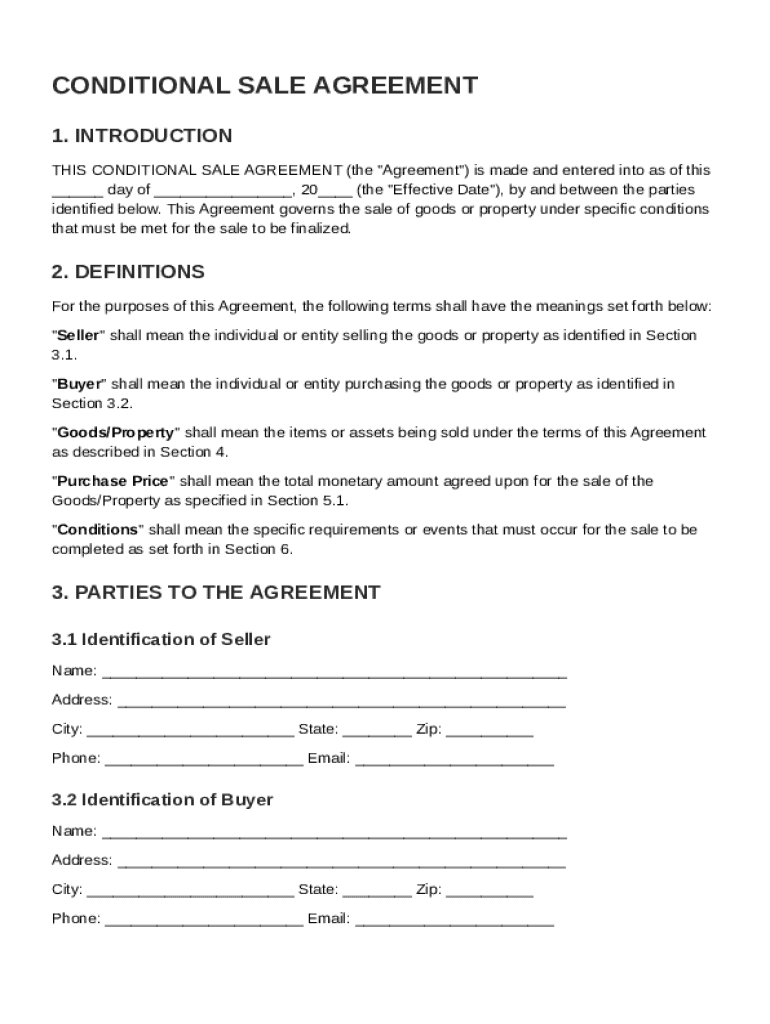
A Conditional Sale Agreement is a legally binding document that details the specific terms and conditions set forth between a seller and a buyer regarding the sale of goods or property. This type of agreement stipulates that the sale is contingent upon certain conditions being met. Once these conditions are satisfied, ownership of the goods or property is officially transferred to the buyer. The document typically includes definitions of key terms, identification of involved parties, description of the goods or property, purchase price and payment terms, as well as the conditions precedent required for completing the sale. Additionally, it covers transfer of ownership, representations, warranties, default and termination clauses, governing law, dispute resolution procedures, and other miscellaneous provisions.
Importance of Conditional Sale Agreement
Conditional Sale Agreements offer protection and clarity for both buyers and sellers in the transaction process. These agreements help ensure that there are clear expectations for each party, with laid-out procedures for both the fulfillment of conditions and the transfer of ownership. This helps prevent misunderstandings or disputes by providing a comprehensive framework that both parties have agreed upon. Consequently, the agreement supports legal enforcement should any discrepancies occur during the transaction.
Key Elements of the Conditional Sale Agreement Template
Identification of Parties
This section provides essential details regarding who is involved in the transaction. This includes full names, addresses, and contact information for both the seller and the buyer. Such information helps to clearly distinguish responsibility and assign roles within the agreement. It's vital for each party to ensure their identification details are meticulously defined to avoid any issues related to ambiguity or misidentification.
Description of Goods/Property
The document must provide a thorough description of the goods or property being sold. This may encompass models, serial numbers, physical conditions, and any other relevant criteria that precisely identify the subject of the sale. Such descriptions are crucial to ensure that both buyer and seller have a mutual understanding of what is being bought and sold, thereby minimizing potential disputes over discrepancies.
Purchase Price and Payment Terms
Clear stipulation of the purchase price, along with detailed payment terms, is fundamental to a Conditional Sale Agreement. The agreement should specify the total amount due, any deposits or down payments, due dates, as well as acceptable payment methods. In addition, any interest rates, installment plans, or penalties for late payment must be outlined to provide a comprehensive financial framework for the transaction.
Conditions Precedent to Completion
Conditions precedent are essential criteria that must be satisfied before the sale can proceed to completion. This may include passing inspections, securing financing, or receiving necessary approvals from relevant authorities. The agreement should precisely outline these conditions to provide clear guidance on the steps required for the transaction to be fulfilled successfully.
Important Terms Related to Conditional Sale Agreement Template
Representations and Warranties
This section includes assertions by both parties regarding the condition of the goods or property and the authority to enter into the agreement. Representations assure the buyer that the seller has clear title to sell the property, while warranties are guarantees that certain conditions, such as quality or performance, hold true. Breaches in representations and warranties typically provide grounds for termination or legal action.
Default and Termination Clauses
Default clauses detail the consequences if either party fails to fulfill their obligations under the agreement. Termination clauses, similarly, outline the conditions under which the agreement can be voided. These sections are critical as they set the parameters for addressing breaches and resolving potential disputes without resorting to lengthy litigation.
Applicable Legal Considerations
Governing Law and Dispute Resolution
This section details the legal jurisdiction under which the agreement is governed. It may also include terms for dispute resolution, specifying whether disagreements will be resolved through mediation, arbitration, or litigation. By clearly defining these legal frameworks, the agreement helps streamline the resolution process and mitigates potential legal costs.
State-Specific Rules and Differences
While the core structure of a Conditional Sale Agreement may remain consistent, certain state-specific regulations influence how these contracts are executed and enforced. It's crucial for parties to be aware of any regulations specific to their jurisdiction to ensure compliance. Legal advice may be necessary to navigate these discrepancies and incorporate them into the agreement correctly.
Practical Use Cases and Scenarios
Who Typically Uses the Conditional Sale Agreement Template
Conditional Sale Agreements are commonly utilized in sectors that involve high-value transactions or those requiring significant financing, such as real estate, automobile, or large equipment purchases. Businesses engaging in the trade of large assets often rely on these agreements to safeguard their investments and manage the complexities of conditional sales effectively.


Examples of Using the Conditional Sale Agreement Template
Consider a business purchasing a fleet of vehicles. The Conditional Sale Agreement would specify conditions for transfer, such as the requirement for financing approval from a lending institution. This scenario showcases the utility of such agreements in managing conditional sales that involve multiple compliance and logistical steps.
Steps to Complete the Conditional Sale Agreement Template
- Gather Information: Before filling out the template, collect pertinent details about the buyer, seller, and property or goods involved.
- Fill in Party Details: Enter the identification information for both parties, ensuring accuracy and completeness.
- Describe Goods/Property: Provide a detailed description of the items involved in the sale.
- Outline Financial Terms: Specify the purchase price, payment schedule, and any financial contingencies.
- Define Conditions Precedent: Clearly state any necessary conditions that must be met before the sale can be finalized.
- Review Representations and Warranties: Carefully assess and modify standard representations and warranties as needed to reflect the specifics of your transaction.
- Complete Legal Sections: Fill out governing law and include any state-specific stipulations.
- Finalize and Review: Thoroughly review the agreement with all involved parties before signing.
Persevere through each stage with diligence to ensure that the agreement is accurate, legally compliant, and reflective of the mutual understanding reached between the buyer and seller.