






Definition and Purpose of a Company Confidentiality Agreement Template
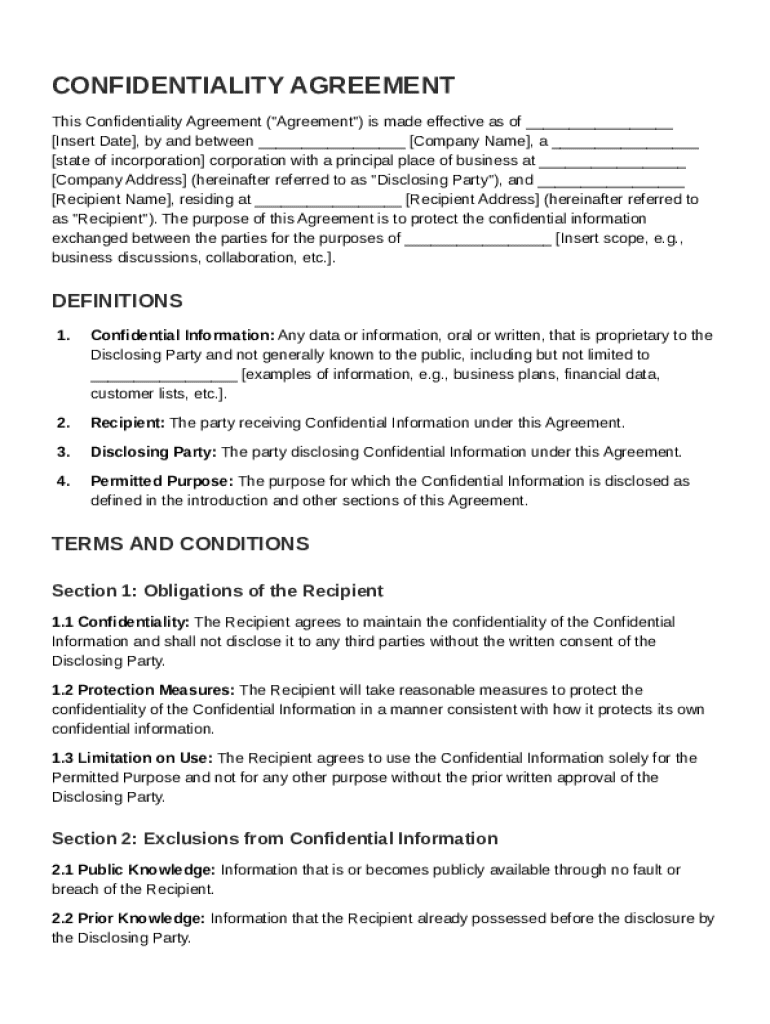
A Company Confidentiality Agreement Template is a foundational document designed to formalize the protection of confidential information shared between a disclosing party and a recipient. This legal instrument serves to outline the obligations of the receiving party when handling sensitive data, ensuring it is used solely for the purpose intended and not disclosed to unauthorized individuals. It establishes critical terms, such as the definition of confidential information, exclusions, and obligations of the parties involved. The template also commonly addresses the duration of confidentiality obligations and includes specific provisions related to governing law and severability. In practice, this agreement ensures a mutual understanding of privacy expectations, safeguarding business interests.
Core Components Included
- Definitions: Clearly defines what constitutes confidential information, ensuring both parties understand what is protected.
- Obligations: Details the responsibilities of the recipient, including restrictions on use, disclosure, and measures to safeguard information.
- Exclusions: Specifies scenarios and types of information not considered confidential, such as publicly available knowledge or data independently developed by the recipient.
- Duration: Specifies how long the confidentiality obligations remain in effect, which may vary from project length to a fixed number of years.
- Governing Law: Identifies the jurisdiction whose laws will govern the agreement's interpretation and any disputes.
How to Use the Company Confidentiality Agreement Template
Steps to Implement the Template
- Review and Customize: Carefully read through the template to ensure it aligns with your specific needs. Modify sections, such as the definition of confidential information and obligations, to reflect the unique requirements of your business relationship.
- Consult Legal Counsel: To ensure all legal bases are covered and the agreement is enforceable, consult with a lawyer familiar with your industry and jurisdiction.
- Discuss with the Other Party: Before finalizing, discuss major points with the recipient to address any concerns or clarifications they might need.
- Finalize and Sign: Once both parties agree on the terms, sign the document electronically using platforms like DocHub for a legally binding agreement.
Practical Scenarios
- Vendor Relations: Use when sharing proprietary process details with third-party suppliers.
- Employee Agreements: Essential for protecting company secrets when onboarding new employees who may have access to sensitive information.
Key Elements of the Company Confidentiality Agreement Template
Essential Clauses to Include
- Non-Disclosure Requirements: Clearly outlines the actions the recipient must refrain from taking, including any direct prohibition on discussing sensitive information with unauthorized parties.
- Return or Destruction of Information: Explains the process by which the recipient must return or destroy all confidential documents upon request or termination of the agreement.
- Remedies for Breach: Details the consequences and potential legal actions if the agreement is breached, including any claims for damages.
Specific Examples
- A technology firm sharing software codes with a potential partner might include stringent non-disclosure requirements and detailed remedies for breach due to the high value and sensitivity of the information shared.
Legal Use of the Company Confidentiality Agreement Template
Ensuring Compliance and Enforceability
- Alignment with Laws: The template should align with applicable laws, such as the Defend Trade Secrets Act in the United States, to ensure the agreement is enforceable.
- Judicial Precedents: Incorporate legal language that reflects the latest judicial precedents in confidentiality and trade secret protection to bolster the agreement's strength in court.
Real-World Cases
- A court upholding an NDA due to robust language defining 'confidential information' and 'non-compete' obligations demonstrates the importance of precise legal drafting.
Who Typically Uses the Company Confidentiality Agreement Template

Common Users
- Businesses Engaging in Collaborations: Companies in industries like technology, pharmaceuticals, and finance often use these templates when partnering with other entities or handling sensitive data internally.
- Startups: During the initial stages of product development, when they are more vulnerable to intellectual property theft, startups frequently employ such templates.

Benefits for Different Users
- Large Corporations: Protects a wide range of sensitive information, from manufacturing processes to client lists.
- Freelancers and Consultants: Helps maintain client trust by ensuring any sensitive information exchanged during the contract's execution is kept confidential.
How to Obtain the Company Confidentiality Agreement Template
Accessing the Template
- Online Platforms: Utilize online document management services like DocHub, which offer customizable templates. These platforms allow users to edit, sign, and share documents without the need for additional software installation.
- Legal Service Providers: Many law firms and legal document service providers offer access to professionally drafted templates for a fee, ensuring high-quality content tailored to specific needs.
Considerations for Selection
- Reputation of Provider: Assess the provider's reliability by checking reviews or seeking recommendations to ensure the template's legal robustness and usability.
State-Specific Rules for the Company Confidentiality Agreement Template
Importance of Jurisdictional Adaptation
- Variations in State Law: Different states may have unique adaptations or additional requirements for NDAs and confidentiality agreements, especially concerning enforcement and the scope of non-compete clauses.
Practical Example
- California's Strict Policies: In California, where non-compete clauses deemed restrictive can be unenforceable, specifying considerations to align with state policies is crucial to uphold the agreement’s validity.
Important Terms Related to Company Confidentiality Agreement Template
Key Terminology Explained
- Trade Secret: Defined in legal terms, usually encompassing any information that provides a competitive edge by being secret, disclosed in the template with examples such as client lists or proprietary formulas.
- Non-Compete: Often included to restrict the recipient from engaging in business activities that compete with the disclosing party’s business within specified parameters, particularly useful when dealing with former employees or contractors.
Nuanced Interpretations
- Understanding the difference between "confidential information" and a "trade secret" can influence the level of protection afforded under the agreement.