






Definition and Meaning of a Common Law Agreement
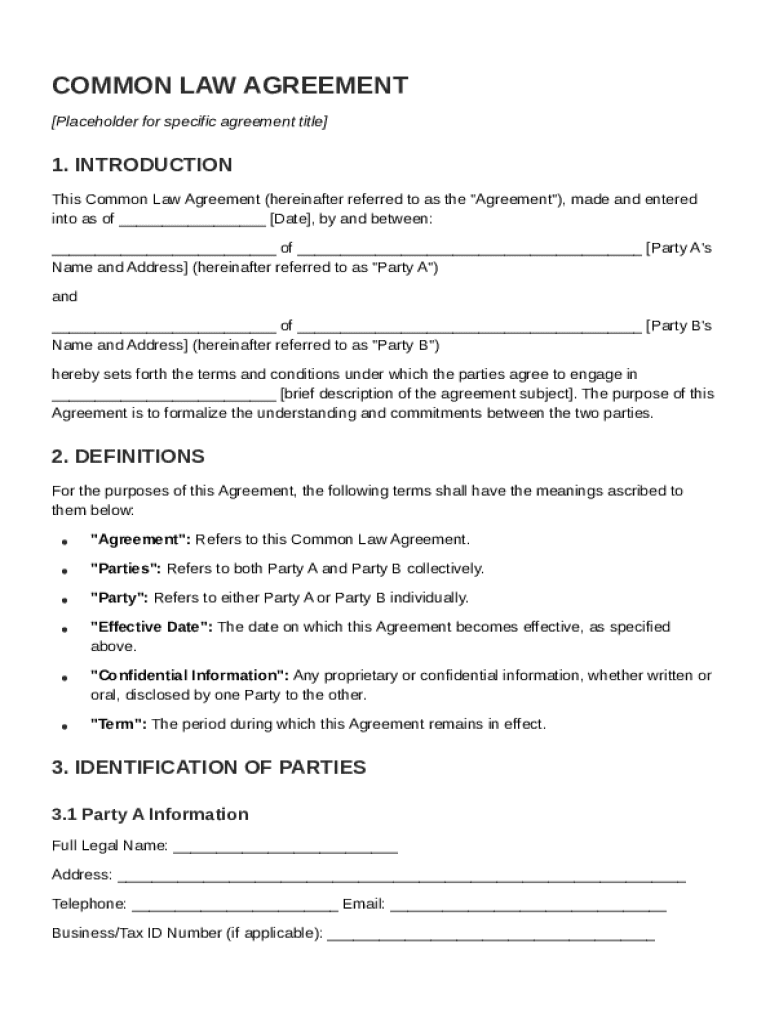
A Common Law Agreement outlines the terms and conditions legally binding two parties. Typically referred to as Party A and Party B, these agreements formalize an understanding concerning mutual obligations, responsibilities, and specific engagements. They are crucial in ensuring both parties clearly understand their roles, rights, and duties under the agreement, minimizing risks of disputes or misunderstandings. This type of agreement includes definitions, obligations, payment terms, confidentiality clauses, dispute resolution processes, governing law, and various miscellaneous provisions. It serves as a guiding document outlining each party's commitments.
Key Elements of the Common Law Agreement Template
Certain components are integral to any Common Law Agreement.
- Definitions: Clearly outlines specific terms used in the agreement, providing clarity and precision.
- Obligations: Details both parties' duties, delineating responsibilities to prevent disputes.
- Payment Terms: Specifies payment conditions, including amounts, schedules, and methods.
- Confidentiality Clauses: Protects sensitive information exchanged between parties during the agreement.
- Dispute Resolution: Outlines how conflicts will be resolved, specifying processes like mediation or arbitration.
- Governing Law: States which jurisdiction's laws will apply, crucial for alignment with legal standards.
Comprehending these elements ensures both parties are well-informed about their commitments and rights.
Steps to Complete the Common Law Agreement Template
- Review the Template: Begin by reading the entire agreement thoroughly. Ensure all sections pertain to your specific needs and understand every clause.
- Fill in Details: Enter parties' names, contact information, and specific roles. Maintain precision to avoid legal loopholes.
- Define Terms: Clearly specify definitions of frequently used terms to enhance clarity.
- Outline Obligations: Articulate each party's responsibilities, guaranteeing there is no ambiguity.
- Set Payment Conditions: Clearly mention what payments are due, their schedule, and preferred payment methods.
- Address Confidentiality Concerns: Add clauses that protect proprietary information.
- Determine Dispute Resolution: Choose your preferred method and specify a location if necessary.
- Finalize Draft: Verify all the entered information, ensuring everything aligns with the initial engagement terms.
Legal Use of the Common Law Agreement Template
The use of a Common Law Agreement Template must adhere to legal standards to ensure enforceability. These agreements must capture the lawful exchange of promises and obligations clearly. Ensuring the document is aligned with both state and federal regulations is crucial since different American states have varying requirements. Legal counsel can often provide guidance to confirm every aspect of the contract complies with applicable laws. Properly executed, this agreement becomes legally binding, providing legal protection to each party.
State-Specific Rules for the Common Law Agreement Template
Given the United States' legal diversity, understanding state-specific requirements is necessary. Certain states may have unique clauses and provisions that must be included or omitted depending on local laws. For instance, some jurisdictions have specific requirements on limitations of liability or differently defined acceptable methods for dispute resolution. Ensuring compliance with these rules is key to preventing legal issues later.
Who Typically Uses the Common Law Agreement Template
Common users of this type of agreement include:
- Businesses looking to formalize vendor or partner relationships.
- Freelancers engaging clients for specific projects.
- Service Providers needing clarity on service terms.
- Consultants setting out engagement terms with clients.
- Contractors and Subcontractors outlining project roles and timelines.
These parties find the template valuable for clearly outlining terms without misunderstandings or conflicts regarding expectations and deliverables.

Examples of Using the Common Law Agreement Template
An independent contractor may use the template to formalize an agreement with a business for marketing services. Both parties can cement terms about service scope, deadlines, and payment conditions. Similarly, two collaborating businesses might leverage the agreement to detail their obligations and share risks on a joint project. Such agreements help ensure smooth operations, offering legal recourse should one party fail to meet their obligations.
Software Compatibility and Integration
DocHub facilitates ease of use by being compatible with various document formats, ensuring seamless integration and editing. Users can access and manage their agreements directly from cloud services like Google Drive, Dropbox, and OneDrive. The platform also supports importing and exporting documents in formats like PDF, DOC, PPT, XLS, and TXT. When dealing with online document management, ensuring compatibility across platforms and devices enhances flexibility and convenience for users editing and finalizing agreements.