
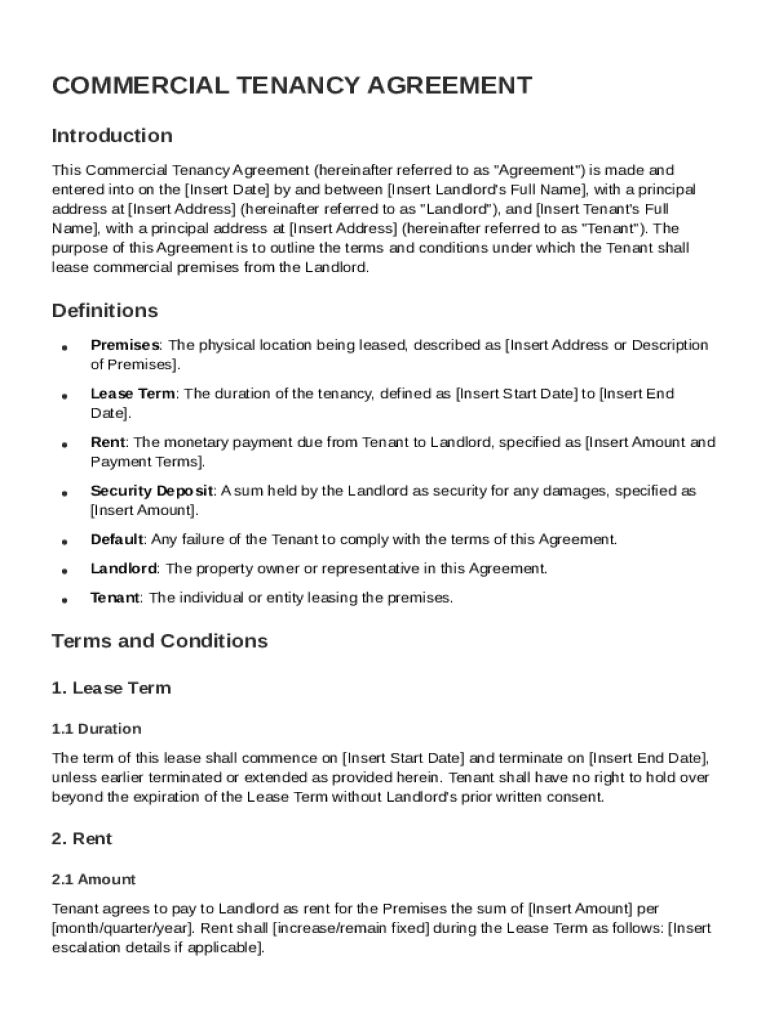







Definition and Purpose of the Commercial Tenancy Agreement Template
The Commercial Tenancy Agreement is a crucial legal document that outlines the terms and conditions between a landlord and a tenant for leasing commercial property. It establishes the parameters of the relationship, detailing responsibilities and rights of each party. These agreements are essential for ensuring stability and clarity in business operations, as they help prevent disputes by clearly defining each party's obligations. This document typically encompasses aspects such as rent payment structure, lease term, permitted usage, maintenance responsibilities, and more. The template serves as a standardized starting point, which can be customized to fit the specific needs of the involved parties.
How to Use the Commercial Tenancy Agreement Template
Utilizing the Commercial Tenancy Agreement Template involves several steps to ensure it meets both the landlord's and tenant's needs:
- Download the Template: Access this document from a reliable source or software like DocHub, ensuring you have the most updated version.
- Customize the Template:
- Adapt clauses to suit the specific property and jurisdictional requirements.
- Modify rent terms, maintenance responsibilities, and security deposit clauses based on negotiated terms.
- Review and Revise: Both parties should meticulously review the terms, possibly with the assistance of legal counsel, to ensure mutual understanding and agreement.
- Finalize: Confirm all details are accurately reflected and no sections are incomplete.
- Sign and Execute: Both parties need to sign the agreement, making it legally binding.
Key Elements of the Commercial Tenancy Agreement
The agreement includes several critical components:
- Lease Term: The duration of the lease, including start and end dates.
- Rent Details: The amount of rent, payment schedule, and methods accepted.
- Security Deposits: Requirements and conditions for a security deposit, including refund policies.
- Use of Premises: Permitted uses of the leased space, ensuring tenant's business activities are in line with zoning laws.
- Maintenance and Repairs: Responsibilities of the tenant and landlord in maintaining the premises.
- Insurance Requirements: Type and amount of insurance each party must maintain.
- Amendment Procedures: How changes to the agreement can be made legally.
Legal Use of the Commercial Tenancy Agreement Template
This template should be used in compliance with state laws governing commercial leases. It's advisable to customize the template based on jurisdictional requirements, such as statutory disclosures or specific legal protections for either party. Professional legal advice can be invaluable here to ensure the template covers all necessary bases and aligns with applicable local statutes.
Steps to Complete the Commercial Tenancy Agreement Template
Completing the template involves:
- Filling In Basic Information: Names and contact details of the landlord and tenant, property address.
- Customizing Terms and Conditions: Tailor clauses to accurately reflect the negotiated terms.
- Reviewing Legal Requirements: Verify compliance with local and state laws.
- Drafting Specific Clauses: Include any unique agreements like renewal options or exclusivity clauses.
- Proofreading and Finalizing the Document: Ensuring the document is free from typographical errors and is complete.
- Signatures: Have both parties sign and date the document to formalize the agreement.
Who Typically Uses the Commercial Tenancy Agreement Template
This template is primarily used by landlords and tenants in commercial real estate transactions. These can include:
- Business Owners: Looking to lease office or retail space.
- Property Management Companies: Managing multiple commercial properties and seeking standardized agreements.
- Landlords: Leasing out commercial buildings or complexes.
- Legal Practitioners: Advising clients in commercial real estate dealings.


Important Terms Related to the Commercial Tenancy Agreement Template
Understanding key terms is critical:
- Lessee/Lessor: Tenant and landlord, respectively.
- Net Lease: A lease agreement where the tenant pays additional expenses like taxes and insurance.
- Triple Net Lease (NNN): Tenant is responsible for property taxes, insurance, and maintenance.
- Common Area Maintenance (CAM) Charges: Shared costs for maintaining common areas within a property.
State-Specific Rules for the Commercial Tenancy Agreement Template
Commercial tenancy laws can vary significantly by state. Some states may have specific disclosures that must be included, such as:
- Environmental Regulations: Specific mentions if the property is subject to environmental restrictions.
- Zoning Laws: Acknowledgement of the property’s compliance with local zoning codes.
- Tenant Rights: Any state-specific rights afforded to commercial tenants, such as early termination clauses.
Benefits of Using the Commercial Tenancy Agreement Template
Using a structured template ensures consistency and legal compliance. It simplifies the negotiation process by providing a clear framework upon which to build individualized terms. Additionally, it aids in protecting the interests of both parties by detailing obligations and rights, thus reducing potential for future disputes.
By understanding these critical aspects of the Commercial Tenancy Agreement Template, both landlords and tenants can effectively manage their leasing relationships, ensuring a mutually beneficial and legally sound agreement.




