






Definition & Meaning
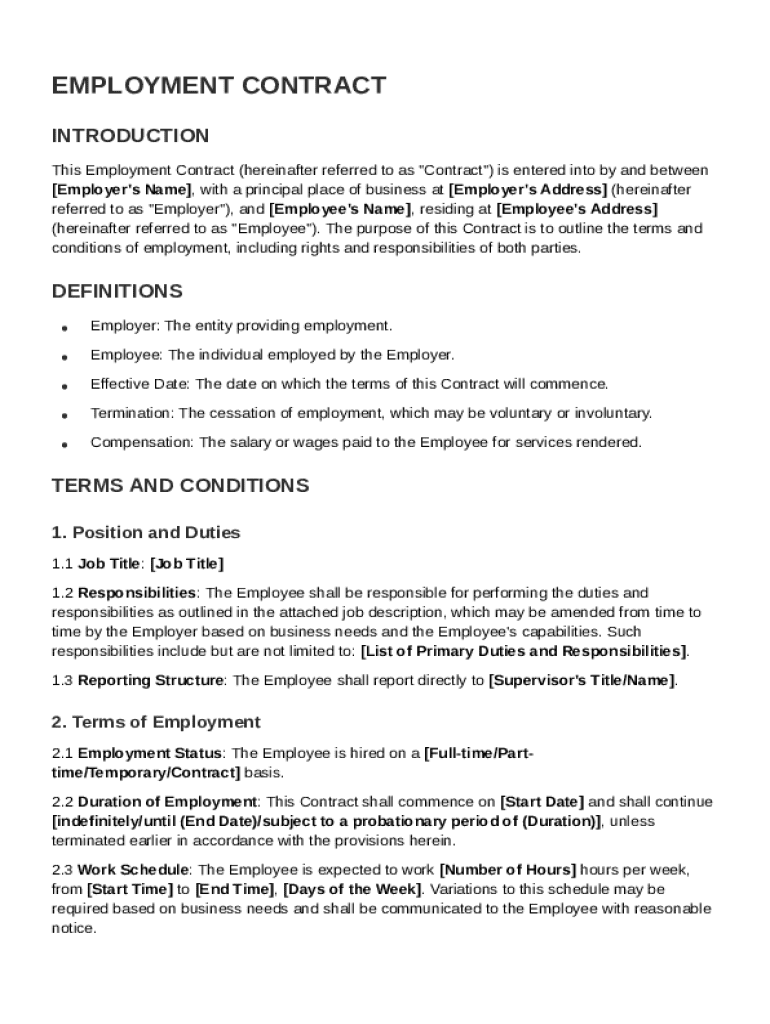
An "Employment Contract Template" serves as a foundational document that defines the working relationship between an employer and employee. It specifies the roles, responsibilities, and rights of both parties. This legal document is crucial for establishing clear and mutual expectations, covering critical aspects such as job duties, salary, benefits, and confidentiality terms. By providing a standardized format, it facilitates the creation of comprehensive and customized employment agreements, ensuring compliance with legal standards while addressing the specific needs of each employment scenario.
Key Elements of the Employment Contract Template
A well-structured employment contract template includes several vital components to ensure all necessary details are covered:
- Job Description: Clearly outlines the employee's role and responsibilities, along with the expectations for job performance. It is essential for setting performance benchmarks and avoiding misunderstandings.
- Compensation and Benefits: Breaks down salary details, payment schedule, and any additional benefits like health insurance, retirement plans, and bonuses. This section ensures transparency in remuneration and aligns with employment laws.
- Confidentiality and Non-Disclosure: Protects the employer's proprietary information and trade secrets. This is crucial for roles that have access to sensitive data or strategic plans.
- Leave Policies: Details the employee's entitlement to vacation, sick leave, and parental leave. This aligns with labor laws and ensures employees understand their rights.
- Termination Conditions: Outlines the circumstances under which the contract can be terminated, including notice periods and severance pay. It is critical for defining the process of employees exiting the organization.
Steps to Complete the Employment Contract Template
Completing an employment contract involves several methodical steps to ensure accuracy and legal compliance:
- Review the Template: Begin by reviewing the template comprehensively to understand each section's relevance to your situation.
- Fill in Job-Specific Details: Customize sections such as job title, description, and compensation based on the specific position.
- Consult with Legal Experts: To ensure compliance with state and federal laws, it's advisable to have a legal expert review the contract.
- Finalize Benefits and Policies: Clearly document any company-specific policies concerning wages, benefits, and leave.
- Gather Signatures: Once the document is finalized, both parties should agree and sign the contract to make it legally binding.
Who Typically Uses the Employment Contract Template
Employment contract templates are widely used across various sectors and by different entities:
- Human Resource Departments: Used by HR professionals to streamline the onboarding process and maintain consistency in employee agreements.
- Small Business Owners: Entrepreneurs and small companies use templates for efficient contract creation without incurring high legal fees.
- Freelancers and Contractors: Independent workers use scaled templates to solidify their engagements with clients, ensuring payment terms and deliverables are mutually agreed upon.


Legal Use of the Employment Contract Template
An employment contract template must align with legal standards to be valid. Key legal considerations include:
- Compliance with Labor Laws: Ensure the contract adheres to relevant local, state, and federal regulations, such as the Fair Labor Standards Act.
- Inclusion of Mandatory Clauses: Certain clauses, such as anti-discrimination policies, are legally required to protect employee rights.
- Review and Updating: Periodically review contracts to comply with changes in laws or company policies, maintaining legal integrity.
State-Specific Rules for the Employment Contract Template
Employment contracts can vary significantly by state due to differing labor laws and regulations:
- At-Will Employment: In many states, employment is at-will, meaning either party can terminate the relationship at any time. Contracts should note if at-will employment is applicable.
- Minimum Wage Laws: State-specific minimum wage requirements must be reflected in compensation sections.
- Unique Provisions: States like California and New York might have additional workforce regulations influencing contract content, especially concerning employee benefits and rights.
Examples of Using the Employment Contract Template
Practical applications of an employment contract template span multiple scenarios:
- Onboarding New Employees: Simplifies the process of integrating new hires by providing a clear framework for job and company expectations.
- Modifying Existing Agreements: Provides a basis for negotiating changes in roles, responsibilities, or compensation for existing employees.
- Cross-Border Employment: Facilitates contracts for remote or cross-state employees by incorporating relevant legal and tax considerations.
Digital vs. Paper Version
With technological advancements, employment contracts can now be managed digitally:
- Digital Advantages: Enhanced accessibility, easier sharing, and faster updates characterize digital contracts. Platforms like DocHub support electronic signatures, making the process efficient.
- Security Measures: Digital versions require robust security protocols, such as encryption and authentication, to safeguard sensitive information.
- Paper-Based Contracts: Though less common, paper contracts are still used in settings where digital tools are not readily available, necessitating secure physical storage solutions.
By comprehensively detailing these essential aspects, the "Employment Contract Template" facilitates structured, legally compliant, and transparent employment relationships.